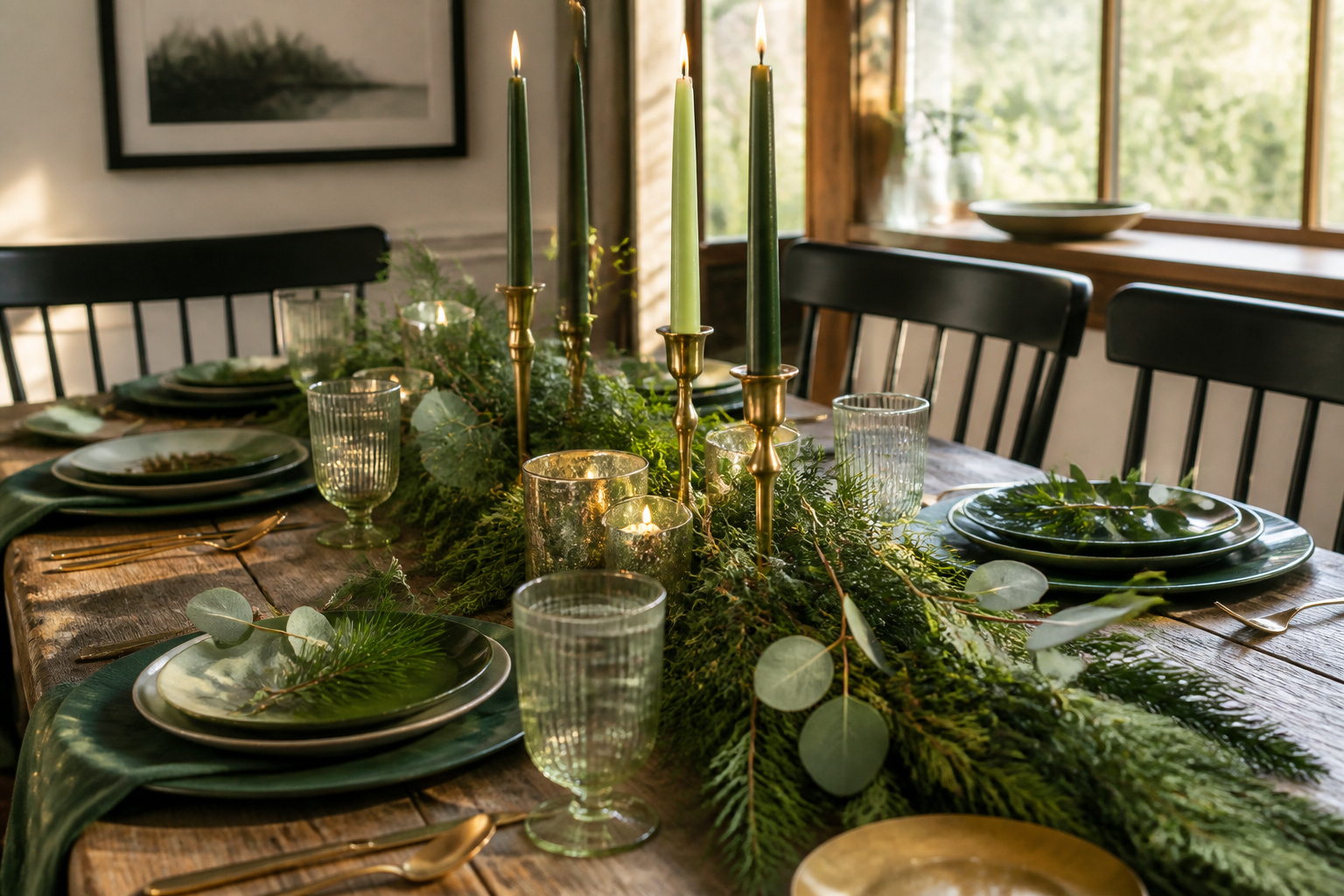
A green Christmas table setting is a table built around evergreen tones, from deep forest to pale mint, paired with metals and natural textures rather than red accents.
The catch is that green reads heavy or flat without careful layering: too much of one shade and the table looks like a single slab, too little and it disappears into generic holiday decor.
Braiding three garlands, a cedar base with eucalyptus and metallic thread, fixes this by catching light at different heights so the runner has actual depth.
Color Combinations
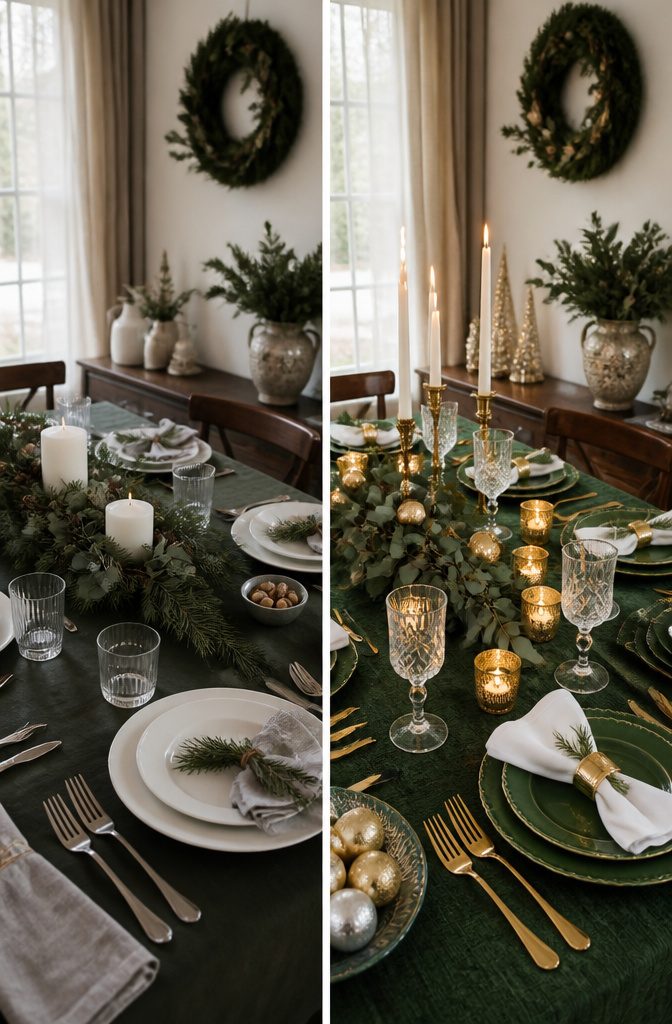
Green paired with gold, white, and silver carries a restrained warmth that reads as festive without shouting. The gold adds richness against deep forest or emerald tones, while silver cools the pairing just enough to keep it from feeling heavy.
White breaks up the metallics so the eye has somewhere to rest; a white linen or plain ceramic plate between green chargers and gold flatware keeps the table from looking like a single slab of color.
Mint green shifts the whole mood toward something lighter and less expected. A reader who left her decor up through January used jadeite plates with silver and white, and the pale tone felt intentional rather than leftover.
The risk with mint is that it can read as spring-like, so the surrounding materials matter more: mercury glass, real silver, or cable-knit textiles in dark green ground it in winter.
I would skip mixing all three metallics at once. Gold and silver together need a clear ratio, roughly two to one, or the table starts to look like you ran out of one set of flatware.
Choose which metal leads, then let the other appear in just one element: candlesticks, napkin rings, or the rim on a glass.

CHRISTMAS GARLAND: This Christmas garland is made of artificial green plants, paired with Velvet balls and berries. It has a delicate appearance and can meet your personalized decoration needs, making it an important element of your Christmas decoration.

Quantity: Package includes a 6' long artificial eucalyptus and pine Christmas garland winter greenery garland. This Christmas garland has a mix of silver dollar eucalyptus, baby eucalyptus, pine needles, fir sprigs, and accented with 5 pine cones and 10 clusters of plump red berries for a gorgeous, lush, and full look. Ideal for winter or Christmas decorating, this artificial pine garland has a natural outdoorsy look and will bring warmth to your house. It has a loop on one end for easy hanging.

【Original Design-Emerald Lover】This Christmas garland showcases a lush array of artificial evergreens, beautifully embellished with green-gold ornaments. Delicate gold leaves, berries, and Pine Cone complete the look, offering a refined yet refreshing holiday decoration
Centerpiece Ideas
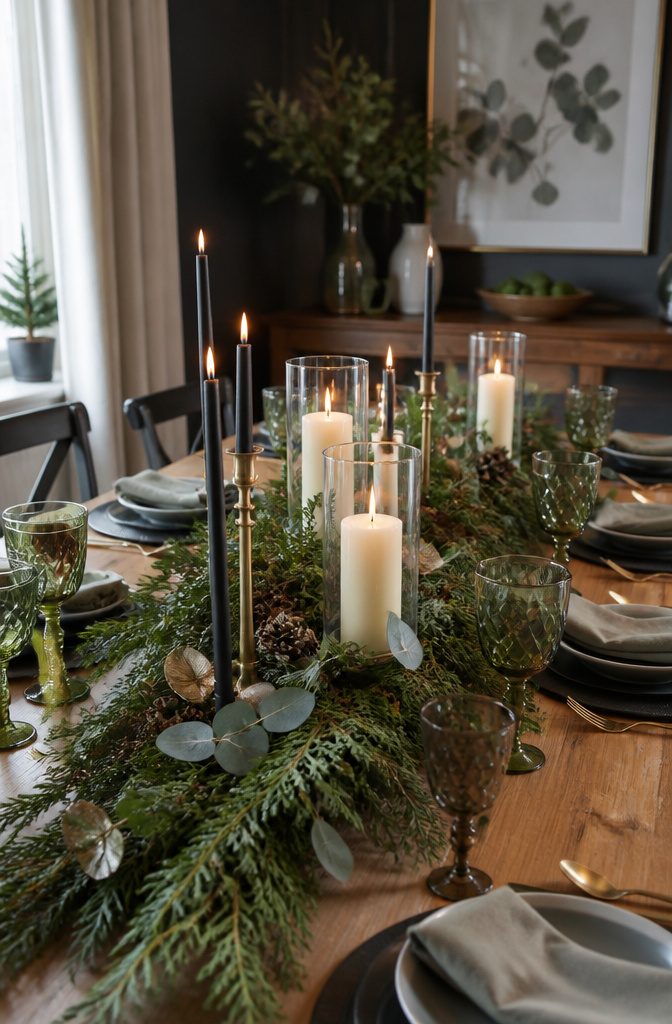
A green Christmas table setting lives or dies at the center, where the eye lands first and guests talk across. Layered garlands give that focal point its weight.
Three strands braided down the middle, one traditional faux cedar, one lush with eucalyptus worked in, one threading gold and pine cones through the green, reads as a single thick runner without the fuss of arranging individual stems.
The braid fills space better than scattered arrangements and sits low enough that faces stay visible.
Candlesticks in black and brass, mixed heights up and down the table, break up the green without fighting it.
Cream pillars inside hurricane vases keep the center even lower, while taper candles in green and gold pick up the garland’s accent colors.
Flameless candles with moving flames and a remote timer handle the practical side if children reach across or the dinner runs long.
Pine cones already in the garland layer carry the texture through; extra picks of eucalyptus or faux cedar can beef up thin spots where the braid shows gaps.
The whole thing comes together in about the time it takes to unpack the garlands, and the low profile means no one is bobbing around a floral tower to ask for the potatoes.

【1-Pack 2.7M (8.9ft) Ultra-Realistic Cedar Garland】This single 2.7-meter (9-foot) artificial cedar garland features lush, norfolk pine garland,thick foliage. It is a staple Christmas garland for all decorating needs and fits full-scene Christmas display setups.Package:1 Pcs 2.7M Cedar Christmas Garland Only, No Extra Decorations, Bows, Balls Or Other Ornaments Are Not Included.

Packaging: This eucalyptus garland set comes with 1 artificial vine strands, measuring approximately 6.5 feet in full length when completely stretched out, including the end iron wire. It supports flexible DIY combinations with flower heads, berries and other ornaments. You can use a single strand or splice multiple strands according to your actual needs to create unique and delicate decorative scenes for various occasions.
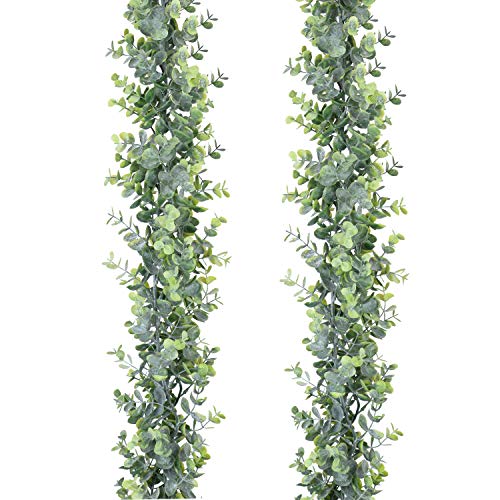
Quantity:2 Pack Faux eucalyptus garland , Each pack with 134 Pcs large fake eucalyptus leaves, total 268 Pcs Eucalyptus Leaves,This eucalyptus garland has many branches,Looks very realistic and Three-dimensional.
Table Setting Elements
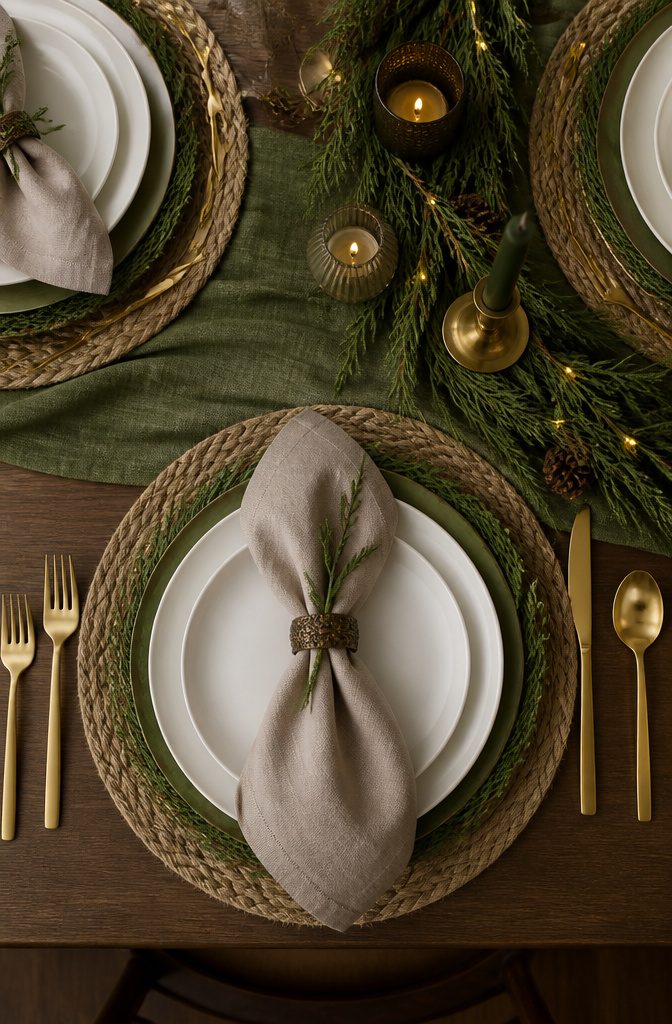
Jute placemats handle the heavy lifting year-round, so starting there keeps the budget sane. On top of that, a faux cedar charger frames each plate with texture that reads as greenery without stealing the show.
White plates slip into the middle of the stack and let the green layers breathe; everyday dishes work fine here, not everything needs to be holiday-specific.
The napkin can stay neutral, something picked up at a craft store years back and paired with whatever salad plate is on hand, even a dollar-store winter tree if the mood strikes.
Cutlery is where I would bend the rule: gold plastic flatware fools the eye across a candlelit table and spares you the polishing later.
Layering these four pieces, mat to fork, builds depth that a single plate and napkin never achieve; each ring of texture makes the setting feel considered rather than decorated.
The charger does most of the color work, so the rest of the table stays flexible.

High Quality & Durable : Made of 100% spun polyester, sturdy sewing, soft and durable, protecting your table's surface from hot pans, scratches, and spills

Size: Each Package Includes 1 Piece 13Width x 36Length(33x92cm), which are designed to fit rectangular, round, and square tables alike.
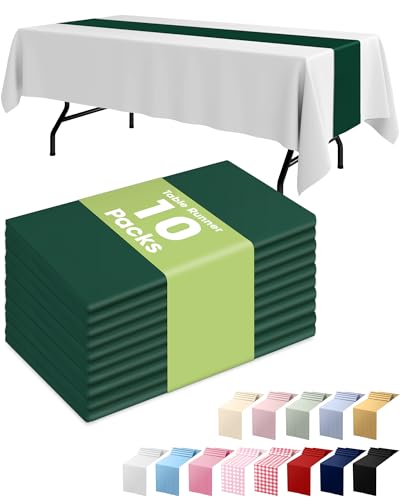
UNIVERSAL FIT: Pureegg disposable plastic table runner measures 14'' x 108'', making it appropriate for tables 6 to 8 feet long and seating 6 to 8 guests. Its universal size delivers coverage along the table's center, creating a neat and polished look for your table setting.
Decorative Accents
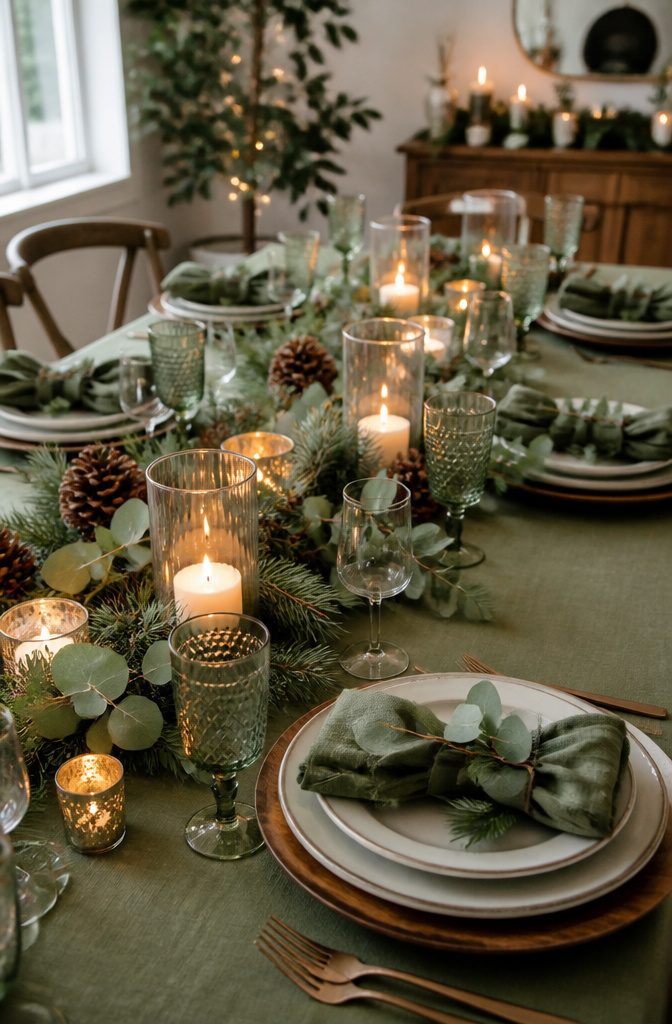
Pine cones and eucalyptus carry most of the weight in my favorite green Christmas table settings, and the reason is texture.
A table layered only in green fabrics reads flat, even monotonous, once the candles are lit. Scatter a few pine cones down the center and the whole surface breaks into something you want to touch.
Eucalyptus works the same way, but softer.
Its muted blue-green sits quietly against deeper evergreen garlands without competing. I braid it into garland runs the way I’d layer a runner, letting the stems overlap so the silver-dollar leaves catch light differently from the needles around them.
The result feels gathered, not arranged, which is exactly the organic note a green palette needs.
The restraint matters more than the objects themselves. Three or four pine cones per place setting, one eucalyptus strand braided through a cedar base, and the table stops before it turns into a forest floor.
Low profiles keep sightlines open across the table, so conversation still flows. That’s the balance: natural elements should invite a hand, not block a face.

Vintage Decor Candle Holder: Victorian Style tapered candle stick holder set, the candelabra at different heights create an undulating candlelight creating a romantic and warm atmosphere

【TAPER CANDLE HOLDERS】- This beautiful candle holder set comes in 3 heights, sleek, slender and highly industrial style. This cast iron candlesticks adds a flair of style and romance to any room in your home

Modern Decor Candle Holder: Minimalist farmhouse tapered candle stick holder set, the candelabra at different heights create an undulating candlelight creating a romantic and warm atmosphere
Casual vs. Formal Settings
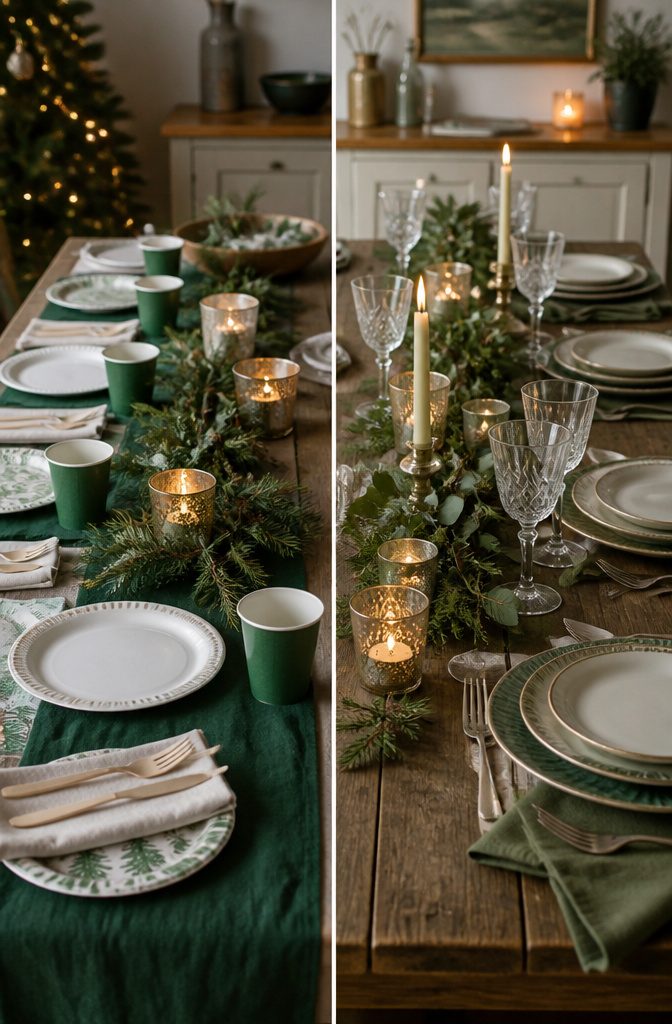
A green Christmas table setting shifts easily between paper plates and polished silver because the color itself does the unifying work.
Last year I noticed how a plastic cup in forest green looked deliberate, not cheap, when it sat on the same emerald runner I use for formal dinners.
The casual version swaps a linen tablecloth for a green one from Amazon, trades crystal for disposable cups from Home Goods, and tucks votives into greenery instead of raising tapers on brass sticks.
The formal build keeps the green palette but adds Royal Horticultural Collection plates, gold-plated flatware, and crystal glasses that catch candlelight across a longer table.
The napkins are where the two meet.
Natural linen reads "business casual" against china; white gives a crisper contrast if you want to push toward black tie. Either way, green stays the constant that lets guests know this was considered, not thrown together.
My own rule now: if children outnumber adults, the paper plates come out and nobody apologizes. The color scheme does the hosting.

10 Keys Remote and Automatic Timer: Homemory have customized the functions you need. (1). 2 light modes, flickering or normal light. (2). The 2-4-6-8 hours cycle timer function turns on at the same time every day. (3) Create the warmest lighting effect through simple lighting brightness adjustment.

MUTED SAGE GREEN, CARVED LOOK: Fluted 10" LED taper candles in a sage green (loden) tone with olive undertones, ribbed like classic hand-carved wax candlesticks. A sculpted flameless accent for sage green decor, from fall tables to Christmas mantels, without fire risk

10 Keys Remote and Automatic Timer: Homemory have customized the functions you need. (1). 2 light modes, flickering or normal light. (2). The 2-4-6-8 hours cycle timer function turns on at the same time every day. (3) Create the warmest lighting effect through simple lighting brightness adjustment.
Layering Techniques
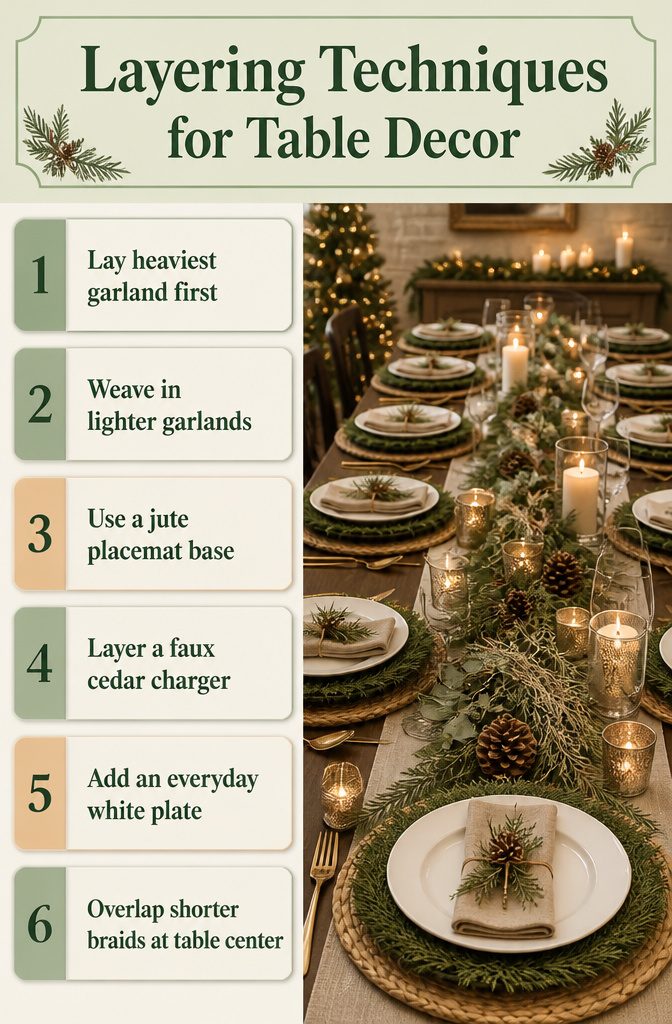
A single garland across the table reads flat, no matter how lush it is.
Braiding three garlands together fixes that: a traditional faux cedar, a mixed eucalyptus piece, and something with pine cones or metallic thread. The different textures catch light at different heights, so the runner has actual depth instead of just length.
I lay the heaviest garland down first as the base, then weave the lighter two through it at slightly different angles.
They do not need to match. In fact, the slight clash between a stiff traditional cedar and something softer, like eucalyptus, is what makes the finished braid look gathered rather than bought-as-one.
The same idea works lower down. A jute placemat under a faux cedar charger, then an everyday white plate, builds three distinct levels before the napkin even lands.
The charger does the visual work of something expensive; the plate underneath can be the same dish you use on Tuesday.
For a long table, two shorter braids overlapped in the middle read fuller than one stretched garland that goes thin at the ends.
The overlap hides where each starts, and the extra bulk at center anchors whatever you set on top.

【Real Touch Christmas Garlands】Made from premium solf plastic material, these norfolk pine garlands are very flexible and can be shaped to fit any space. The realistic presentation of pine needles adds beauty to the placement environment and can be used as delicate Christmas filling, built a good stage for Christmas celebration activities


Versatile Holiday Garlands: Perfect for tables, mantels, doors, walls, and fireplaces. Instantly elevate your Christmas decor or add festive charm to everyday spaces.
Functional Decor
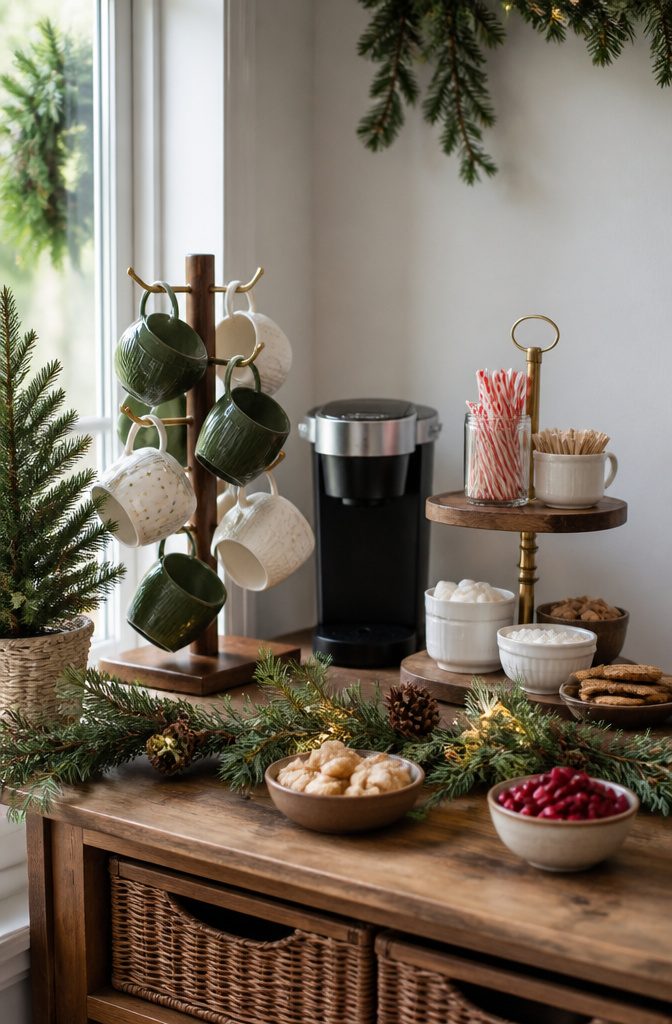
A drink station at the edge of the room, not the middle of the table, keeps the green scheme intact without turning dinner into an obstacle course.
I set coffee on one side table and water on the other, using a wood and brass mug tree for gold Christmas tree mugs I found secondhand. The Keurig K-Mini sits nearby because the footprint stays small.
Guests need the function first: stirrers, sugar, creamer, somewhere to set a used spoon.
I stock a tiered tray with peppermint stirrers, biscotti, cinnamon, and ginger, plus disposable to-go cups for anyone leaving early. The gold metal stirrers read as decoration until someone actually needs one.
Snack bowls work the same way. A low, footed compote of Christmas candy at the table’s center keeps the green palette moving without blocking faces across the table.
The rule I follow: nothing above eye level once people sit down, and nothing that requires two hands to pass. If a guest has to ask someone else to hand the water pitcher, the layout has failed.

Real Touch Garland: Made of high-quality, soft rubberized PVC that closely mimics the texture of real cedar. The garland designed with dense, flexible branches and internal wire, it’s very flexible for easy fluffing and shaping.

Please Note: We make every effort to display the true color of our garland. However, brightness may look a little different depending on the lighting or phone cameras. Rest assured, the garland you receive will match the product shown in our pictures

【LED String Lights】: This Christmas garland comes with a long string of LED lights, meticulously crafted and powered by 3 AA batteries. The lights offer 8 different modes for you to customize the lighting, creating various atmospheres and scenes as desired.
DIY Elements
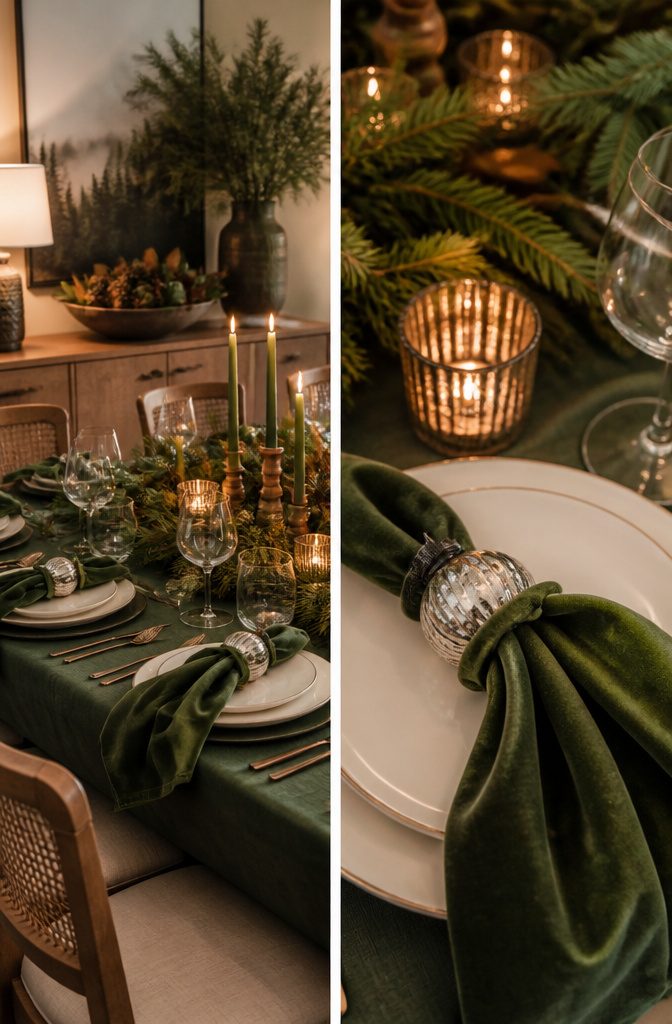
Velvet ribbon from the craft store makes napkin rings worth stopping at each place setting.
I thread a twelve-inch length through the holder of a mercury glass ornament, tie a simple bow, and the soft green against the glass does more than a printed place card ever would.
A bowl on the sideboard filled with what you already have, pine cones and magnolia leaves, some spilling over the marble edge, costs nothing extra and carries the green from the table through the room.
The same olive velvet ribbon ties a gift box tucked inside, or hangs a wreath on the mirror above.
Cut velvet green pillows in the dining chairs flanking the buffet add the color where guests actually sit.
The chiffon and velvet ribbons there match the weight at the napkin rings, so the whole room reads as considered rather than decorated in a rush.
None of this needs ordering online.
Craft-store ribbon, grocery-store pine cones, the ornaments already on the tree. The individual touch is in the threading and the tying, not in anything bought finished.

CLASSIC DESIGN: Vintage-inspired floral pattern in elegant green and gold tones, featuring intricate botanical motifs perfect for traditional and classic home decor
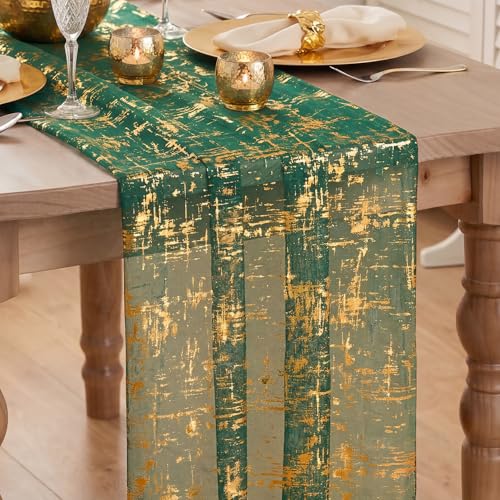
High Quality & Durable : Made of 100% spun polyester, sturdy sewing, soft and durable, protecting your table's surface from hot pans, scratches, and spills

🌸【What You Get】:You can get a set comes with 12 pieces satin table runners,100% polyester satin table runners,The solid color satin table runners suitable for your various occasion needs, enough quantity is suitable for wedding banquets and various parties.
Non-Traditional Color Twists
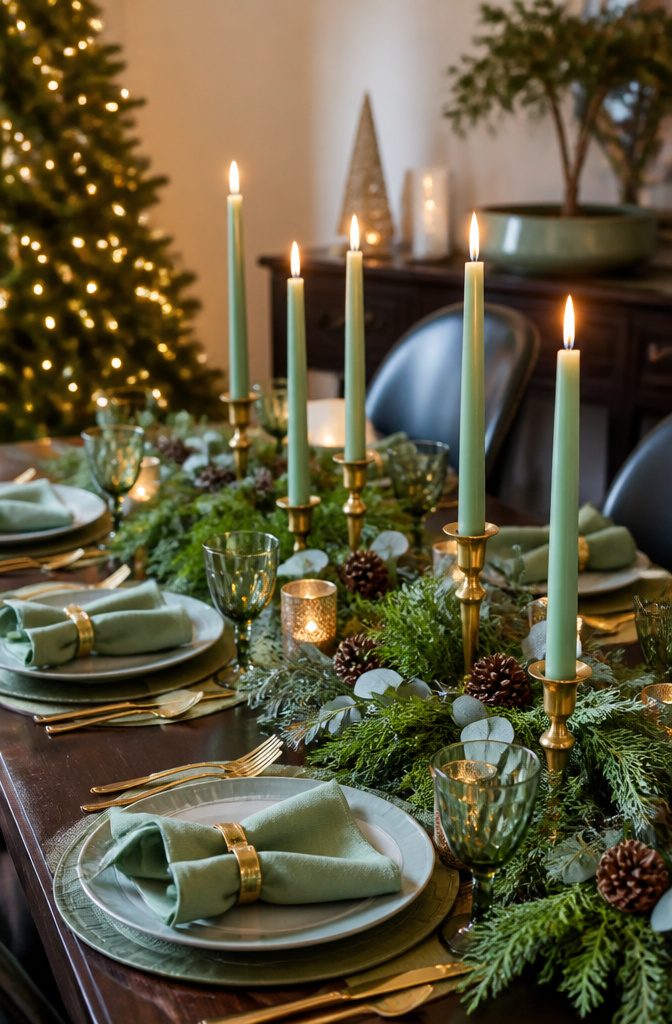
Mint green reads as a deliberate choice rather than a pastel afterthought when you pair it with weathered juniper or eucalyptus.
I tried this last year after seeing a blue-white-green scheme that worked year-round, and the cool undertone kept the table from feeling like a St. Patrick’s Day spillover.
The trick is committing fully: mint napkins against deeper green garland, or mint taper candles alternating with brass holders, rather than letting the color peek out as an accident.
Lime edges even further from tradition, though it needs grounding.
I layer it with golds and natural evergreens, no red in sight, since my living room already runs orange-rust in fall and the shift to lime keeps things seasonal without clashing.
Magnolia leaves, if you can find them, bridge that gap between bright and classic.
Braiding multiple garlands helps: a traditional cedar base, a eucalyptus layer, then that green-gold accent with pine cones. The texture keeps non-traditional colors from looking like you ran out of the real thing.

【12 Pcs Set】This set includes 12 black candlestick holders, featuring 3 sizes taper candle holders. The varied heights create layered displays, suitable for both individual use and group arrangements. Candles are not included, allowing you to pair with your preferred taper candles for personalized decor

Elegant 2025 New Design: This gold candle holders for taper candle with a matte finish and heavy duty base, vintage and unique.,Complements any home decor, adding a stylish and rustic touch.

Vintage Brass Taper Candle Holders Set: 12Pcs gold candle holder for taper candles, Size is 2.56''x6.3''(6.5cmx16cm), 2.56''x7.48''(6.5cmx19cm), 2.56''x8.66''(6.5cmx22cm). Each size is 4 pcs. The candle cup inner diameter is 0.87 inches (2.2 cm), Candles are not included
Frequently Asked Questions
What are some ideas for a green Christmas table setting?
Pair green with gold, white, and silver for a restrained warmth that feels festive without shouting.
Layer jute placemats, faux cedar chargers, white plates, and gold flatware to build depth, or shift the mood lighter with mint green balanced by mercury glass and cable-knit textiles in dark green.
Natural accents like pine cones and eucalyptus keep the palette from reading flat.
How can I create a festive centerpiece?
Braid three garlands down the middle of the table, one traditional faux cedar, one with eucalyptus, and one threading gold and pine cones through the green.
Mix black and brass candlesticks at varied heights, and tuck cream pillars inside hurricane vases to keep sightlines low. The whole arrangement sits below face level so conversation flows across the table.
What tableware should I use for a Christmas table setting?
Start with jute placemats year-round, then add a faux cedar charger to frame each plate with texture. Everyday white dishes work fine in the middle; the charger does the color work.
Gold plastic flatware fools the eye in candlelight and spares polishing later. Neutral napkins from any craft store round out the stack without requiring holiday-specific purchases.