The main dishes for Thanksgiving dinner here range from $2 cabbage to $90 lobster, and the right pick depends on whether your table wants to argue, to stretch, or simply to skip the oven queue entirely. Two lobsters feed eight only if you stretch the meat into a proper sauce, not if you treat it like a seafood boil with noodles on the side; that math is what trips people up.
1. Char Siu Wellington
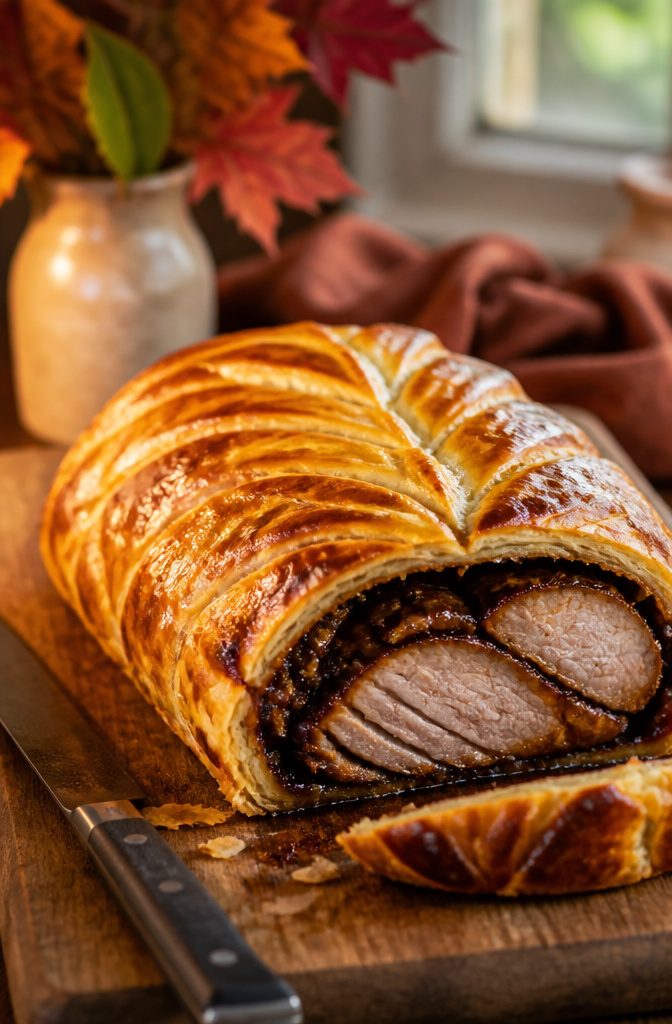
My sister announced she was done with poultry two Novembers ago, and that was the year I first put something other than turkey in the center of the table. Char siu wellington starts with pork shoulder, slow-roasted until it pulls apart, then glazed with the sweet-savory Chinese barbecue sauce before it gets wrapped in puff pastry. The molasses and five-spice in the char siu cut straight through the butter-heavy richness of the pastry in a way cranberry sauce never managed with dry breast meat.
The prep runs about 45 minutes of actual work, but the glazed pork needs to cool completely before you wrap and bake it. Hot filling turns the pastry soggy before the oven can crisp it, so that cooling step is non-negotiable. I build the whole thing the morning of, slide it in while the sides go through their final moves, and it slices clean at the table like any proper wellington should.
The fusion lands better than I expected with my parents’ generation. The familiar shape comforts them; the flavor profile wakes them up.

No hydrogenated fats or high fructose corn syrup allowed in any food

GOURMET FLAKY TEXTURE: Experience professional-grade puff pastry that rises into light, buttery layers for a perfect crunch.

PREMIUM QUALITY: Authentic Italian puff pastry made with natural ingredients, delivering a light and flaky texture perfect for both sweet and savory dishes
2. Lobster Pasta
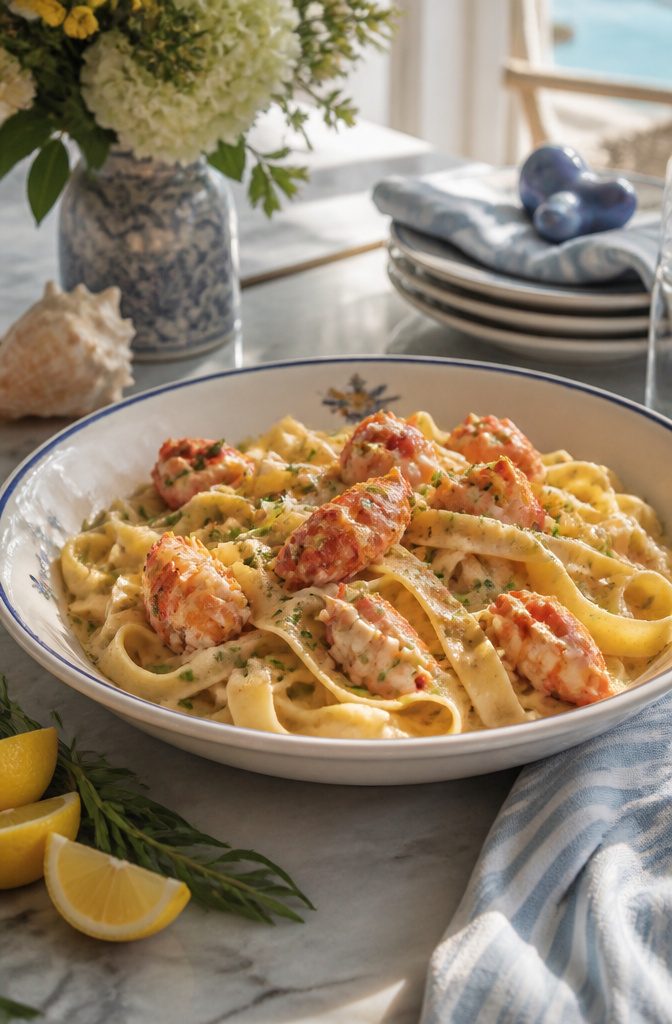
A Thanksgiving main built around two lobsters sounds coastal and indulgent, but the math is what trips people up. Back in 2019, I planned this for eight guests and bought what looked like plenty of shellfish. The pasta expanded more than I expected, and the dish ended up skimpy, almost apologetic. Two lobsters feed eight only if you stretch the meat into a proper sauce, not if you treat it like a seafood boil with noodles on the side.
The sauce carries it. I fold picked meat into a tarragon cream, something sharp enough to cut the richness, then toss with pappardelle, which has the width to grab something substantial. The result feels festive without trying to imitate turkey.
The cost is real. Shellfish for the table runs about $90, which is not hidden-cheap and not trying to be. For families skipping tradition entirely, or for anyone who lives where lobster is ordinary weeknight protein, the tradeoff makes sense. For landlocked budgets, this is probably not the Thanksgiving to start.

Organic Italian herb pasta sauce made with premium tomatoes

25 oz organic arrabbiata pasta sauce

3. Roast Beef Tenderloin With Garlic and Rosemary
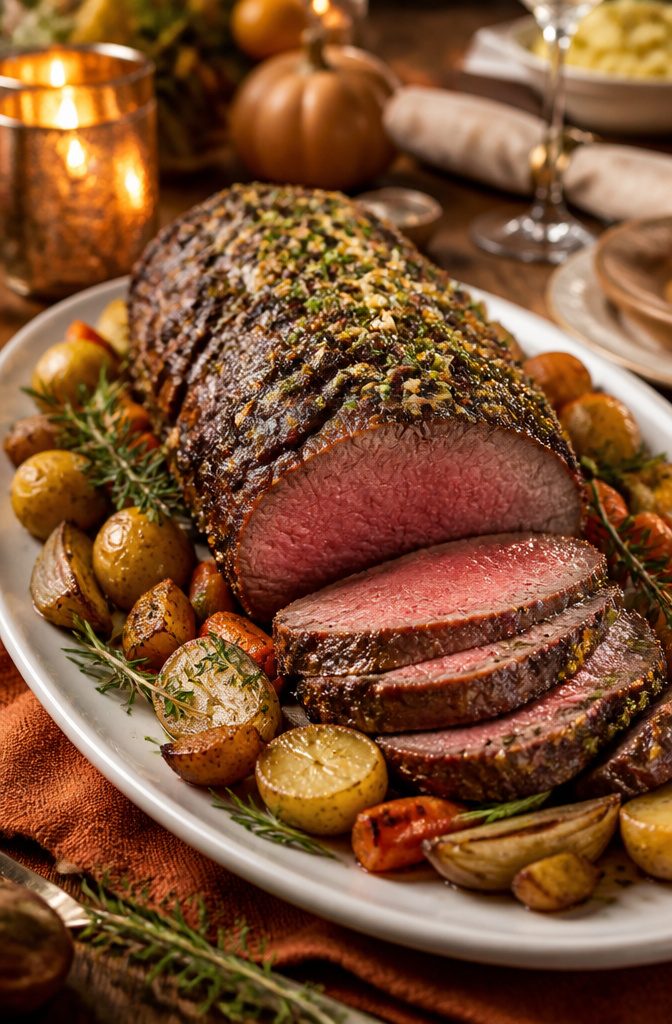
A center-cut beef tenderloin, two pounds and boneless, feeds ten without the waste of a bird carcass. The whole roast sits in the oven for about forty-five minutes, which leaves the kitchen free for sides.
The crust is just minced garlic and chopped rosemary pressed onto the surface with salt and pepper. Nothing else adheres well to the smooth meat, so the herbs need to be almost a paste.
I pull it at 125°F internal temperature for medium-rare. Carryover heat takes it to 130°F while it rests. Until 2021 I rested roasts flat on a cutting board, where the bottom steams and turns gray against the warm wood. Now I use a wire rack set over a sheet pan. Air circulates underneath, the crust stays crusty on all sides, and the juices collect where I can pour them into a pan sauce instead of soaking a board. The meat carves like butter after ten minutes of that rest.

Meets standards for animal welfare, feed, and more, so you can know about what you're buying (and eating)

AUTHENTIC FLAVORS: Our Traditional Rub Beef Tenderloin Roast, 32 oz each, boasts authentic flavors, infused with savory garlic, sweet onion, and classic thyme, ensuring an unparalleled dining experience that satisfies every palate.

Meets standards for animal welfare, feed, and more, so you can know about what you're buying (and eating)
4. Spicy Skillet Lasagna With Ricotta and Spinach
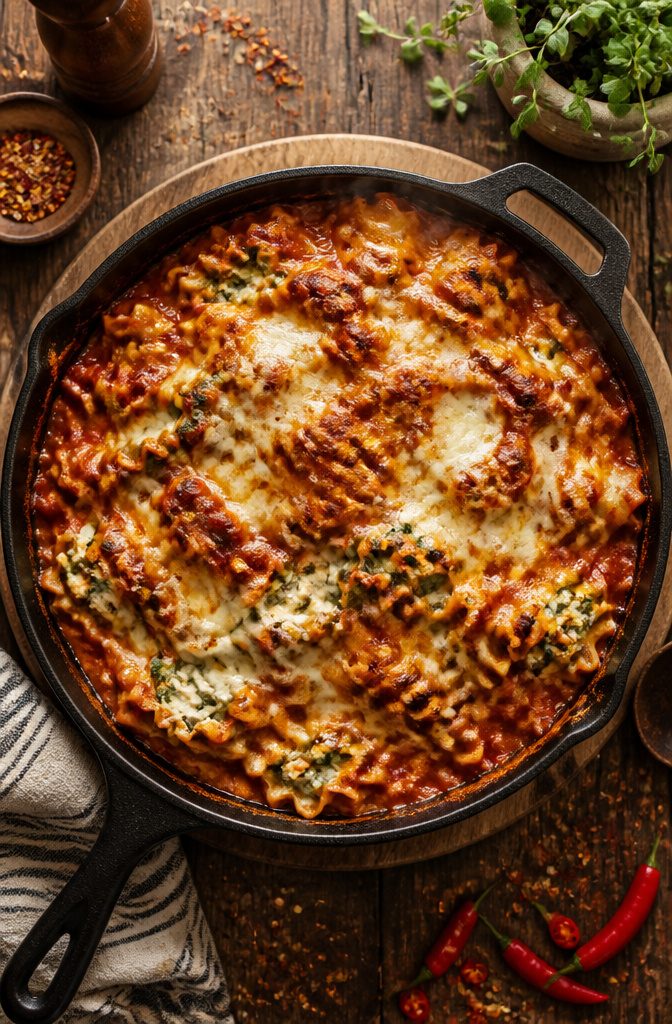
A cast-iron skillet lasagna keeps the oven free for stuffing and pie, which matters more than you think on Thanksgiving when every rack slot has a waiting list. No-boil noodles go straight in dry; they drink up the sauce as the whole thing simmers and bakes under a lid. The ricotta and spinach layer goes in raw, dotted right over the noodles with nothing more than an egg and some salt. Twenty minutes at a covered simmer sets the cheese into something you can cut with a spoon edge, and the spinach wilts down to a thin green ribbon you barely notice is there.
The heat comes from a full tablespoon of chopped Calabrian chiles, the kind packed in oil that stains your cutting board orange. With children at the table I pull that back to two teaspoons, which still registers but does not send anyone reaching for milk. The whole thing moves from stove to trivet and stays hot through the first round of passing. Cleanup is the one pan, wiped while it is still warm.

Product Includes: our Thanksgiving activity for family set includes 1 wooden turkey card holder, 1 turkey card, 24 pieces of tail feather card paper and 1 double-headed pen, which can meet the needs of various Thanksgiving parties or dinner activities

-Start a New Family Tradition and Share What You are Grateful For With this Heartwarming Kit

Package Includes: you will receive 1 inflatable roasted turkey and 1 inflatable turkey leg; The glossy roasting print replicates the appearance of cooked turkey, with detailed charred spots and sauce drips; The realistic and quirky designs make them ideal decorative pieces for Thanksgiving and harvest parties
5. Porchetta-Style Roast Turkey Breast
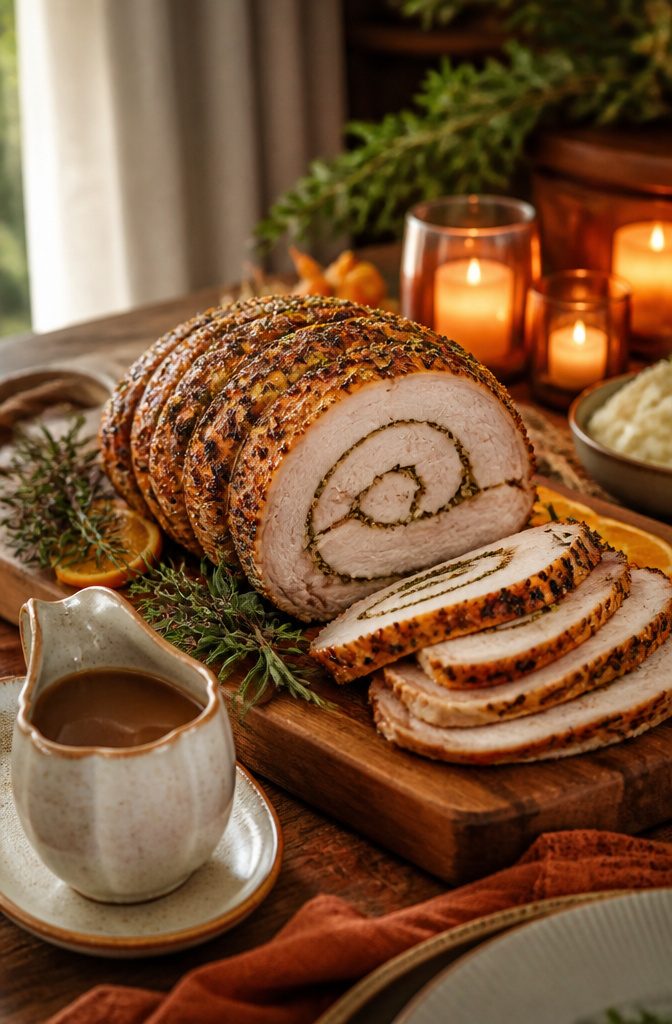
A bone-in turkey breast carries the same Thanksgiving flavor without the twelve-pound commitment. The porchetta treatment comes from sliding a paste of fennel seed, garlic, and rosemary directly under the skin, then rolling the meat into a tight cylinder and tying it with kitchen twine. That shape cooks evenly from end to end, and a three-pound breast feeds six cleanly with no dark-meat negotiations at the table.
The crackling skin is the part worth getting right. Twenty minutes at 450°F before you drop to 325°F renders the fat fast and leaves the outside shattering while the interior stays moist. The lower temperature finishes the gentle roasting without tightening the meat. A rolled breast also slices into neat pinwheels that look intentional on a platter, not apologetic for skipping the whole bird.

Coastal-inspired lobster design: Each piece in the Beach House Lobster dinnerware set features a striking lobster motif in bold red and white hues, adding a fun and nautical...
6. Fried Chicken With Cranberry-Mustard Sauce
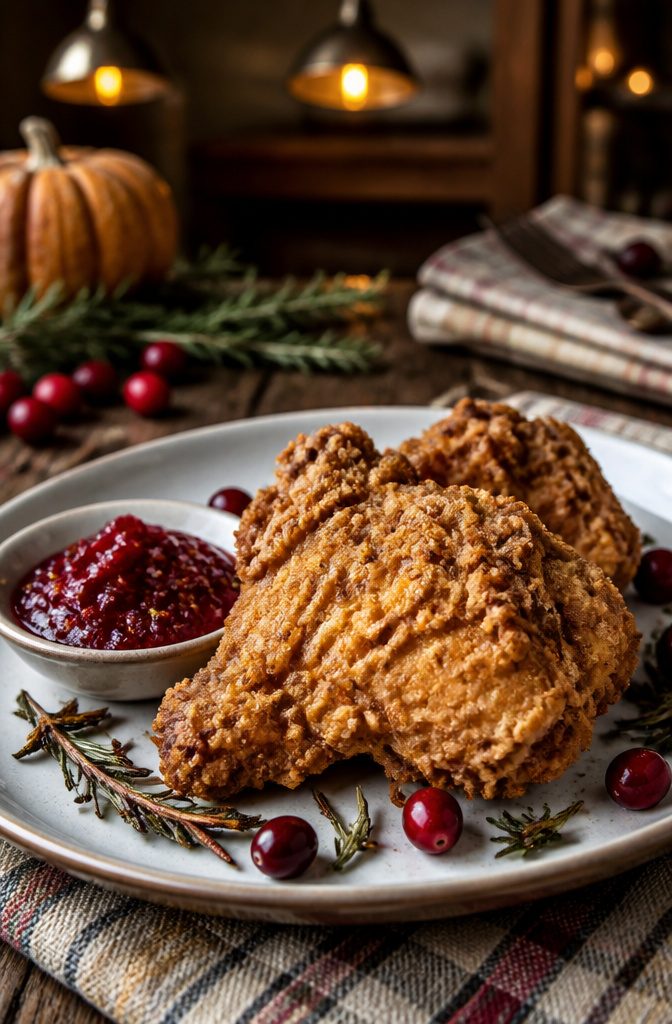
Cranberry sauce deserves better than a spot beside the gravy boat where half the table ignores it. Frying chicken for Thanksgiving pulls it into the center of the plate, and the leftover jelly becomes the base for a pan sauce that actually tastes like something.
The double-dredge is what gets you skin that shatters when you bite. Dredge in seasoned flour, dip in buttermilk, then back into the flour with a press so the coating clings in thick, craggy layers. Let it rest on a wire rack while the oil comes up; that ten minutes of sitting makes the difference between coating that slides off and coating that stays put.
I fry in two batches in a Dutch oven, not a skillet. The high walls keep the splatter off the backsplash and the oil holds steady at 350°F without the usual temperature swings. Less mess, less babysitting, more reliable results.
For the sauce, whisk cranberry jelly with Dijon and a spoonful of the seasoned drippings left in the pot. The mustard cuts the sweetness, the drippings add depth, and the whole thing comes together in the time it takes the second batch to rest. Serve it warm, spooned over the chicken or on the side for dragging.

7. Whole Fish Ssam
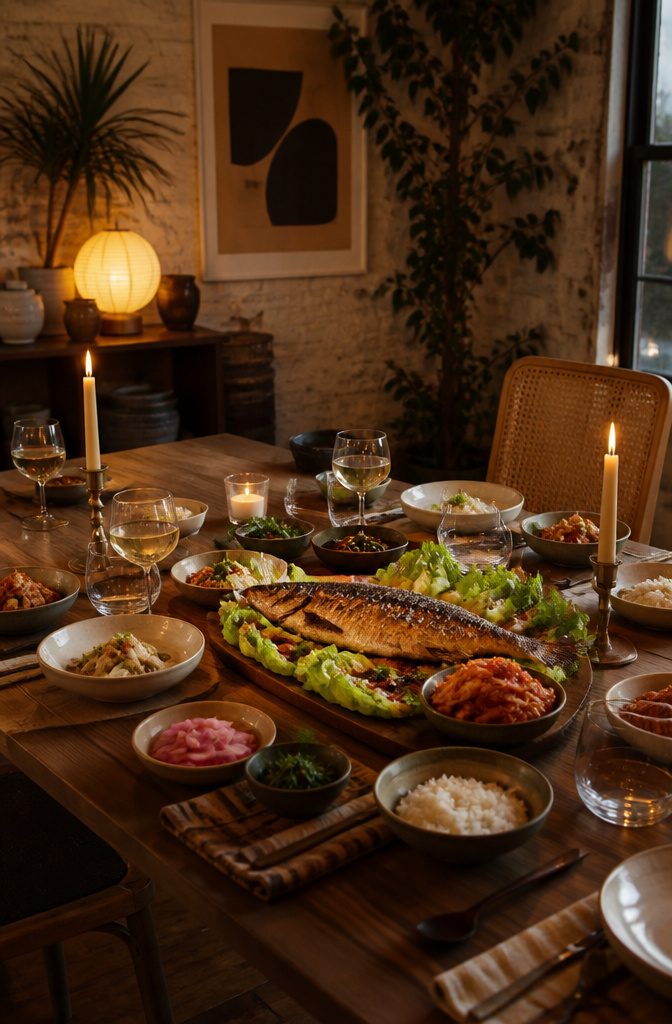
A whole roasted fish on the Thanksgiving table reads celebration without demanding much beyond a hot oven and a sharp knife. Branzino or black bass holds moisture even if you push it five minutes past ideal, which matters when you’re pulling stuffing and rolls from the same oven. The skin crisps at 450°F while the bones insulate the flesh underneath.
The ssam setup happens at the table: lettuce cups, short-grain rice, kimchi, maybe quick-pickled radish if you planned ahead. Guests build their own wraps, which turns the meal into something they handle rather than something you carve under pressure.
I used snapper the first year, back in 2017. Too many fine bones. Two guests pulled half-chewed pinbones from their mouths mid-dinner, and I spent the rest of the meal watching everyone else eat with suspicion. Branzino has a cleaner skeleton, easier to lift away in one piece if you score the skin first and work a thin spatula along the spine. One fish feeds four comfortably, two fish handle six with rice and banchan on the side.

One 24 oz jar of Ragu Chunky Tomato, Garlic and Onion Pasta Sauce, Made with Olive Oil

PREMIUM - Treat your dishes to Tuscanini’s rich and flavorful tomato sauce collection. From the San Marzano to the Fiorintino and Pantano, each variety of our Italian tomatoes is cultivated, cared for, and artfully jarred in order to ensure you get the finest of Italian perfection.

CLASSIC CREAMY ALFREDO SAUCE – A rich white pasta sauce with a smooth, creamy texture, perfect for fettuccine alfredo, penne, tortellini, ravioli, and baked pasta dishes.
8. Pumpkin and Cheddar Strata
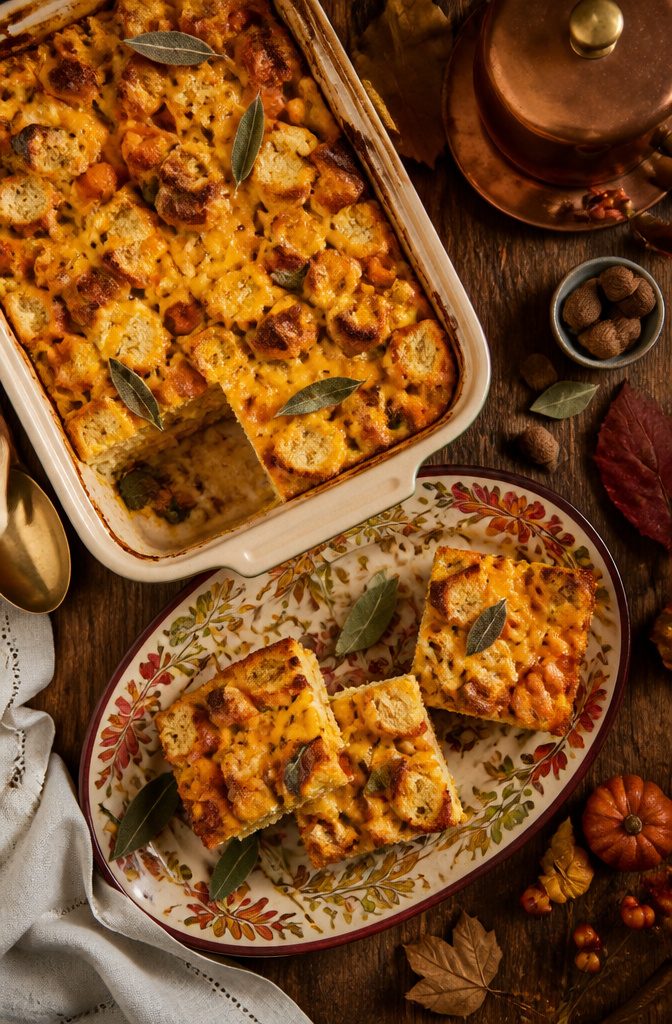
A strata solves the Thanksgiving timing problem by working the night before. Cubed sourdough soaks overnight in a custard where pumpkin puree replaces half the milk, which thickens the base and adds color without turning the dish sweet. Sharp cheddar balances that natural sweetness and keeps the whole thing firmly in the savory column.
Nutmeg and herbs go light. The pumpkin needs no competition.
I assemble this Wednesday evening while the kitchen is still clean, then slide it into the oven Thursday while the turkey rests. It bakes in about an hour and comes out puffed and golden at the edges. For tables where no turkey exists, it carries enough weight to anchor the plate, especially with a bitter greens salad alongside. The leftovers reheat better than dressing, which matters when Friday dinner needs to happen without effort.
Overnight soaking is not optional. Dry bread drinks up the custard; fresh bread turns to pudding.

Flavorful Roast Enhancer - Bring your Sunday roast's flavor palette to life with our Grub Kicker Public House Sunday Roast Seasoning. This expertly crafted blend combines onion, garlic, paprika, turmeric, and other spices for a robust flavor that transforms any pot roast or prime rib into a culinary masterpiece.

100% grass fed
AUTHENTIC FLAVORS: Our Traditional Rub Beef Tenderloin Roast, 32 oz each, boasts authentic flavors, infused with savory garlic, sweet onion, and classic thyme, ensuring an unparalleled dining experience that satisfies every palate.
9. Pomegranate-and-Honey-Glazed Duck With Rice
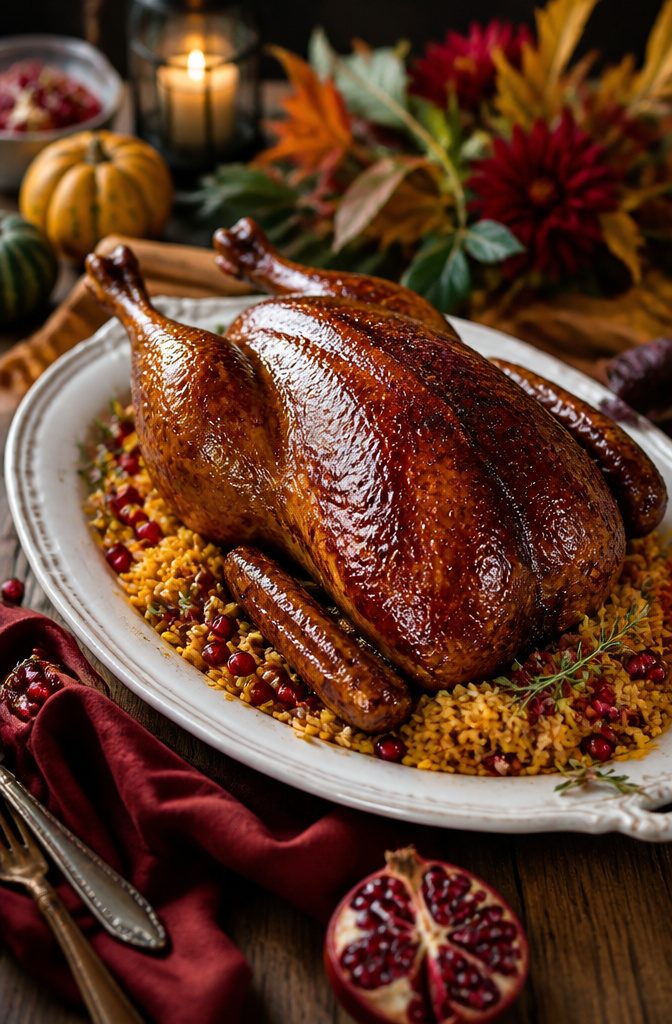
Two ducks, scored across the breast and slow-roasted breast-up, will feed the same eight people a turkey feeds for about ten dollars less. The fat renders differently than turkey skin; you want that layer crisp and the meat still rosy, which means a longer, lower hold that actually improves the texture instead of drying it out.
The glaze is pomegranate molasses and honey, reduced until it clings to a spoon and painted on in the last twenty minutes. It darkens fast, so the oven door stays closed between coats. Saffron rice cooked in the rendered duck fat underneath catches the drippings and turns the color of old gold. Two ducks run roughly $35; a comparable turkey is closer to $45, and the duck holds longer on a buffet without going mealy.
The Persian influence is in the sweet-sour balance and the saffron, not in hard-to-find ingredients. Pomegranate molasses sits in most grocery stores near the vinegars now. The rice is the only side you need, and the whole thing feels less like a substitution than like a decision.
10. Texas Chili
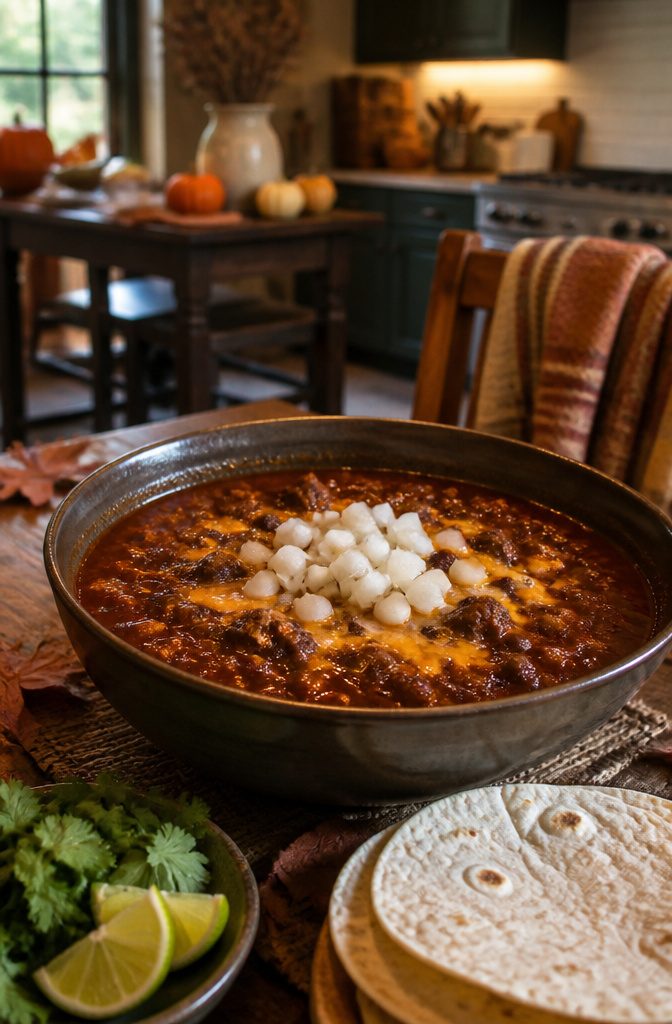
Texas chili is the one main dish for Thanksgiving dinner that starts an argument the moment you set it on the table. No beans, no tomatoes, just beef chuck and a stack of dried chiles rehydrated into a deep red paste that stains the spoon. The three-hour simmer is non-negotiable; anything less and the chuck stays tough, the chile flavor stays raw. I add masa harina at the very end, off the heat, whisking until the pot goes from soup to something that coats a tortilla chip.
Raw white onion and grated Longhorn cheddar are the only toppings that belong here. The sharpness cuts through the fat, and the cheddar melts on contact into little orange pools. The flavor improves so much over three days that I make it Monday every year; by Thursday the heat has mellowed into something complex and the meat has relaxed completely. Serve it in deep bowls with a stack of warm tortillas on the side.
11. Cá Kho (Fish With Coconut Caramel)
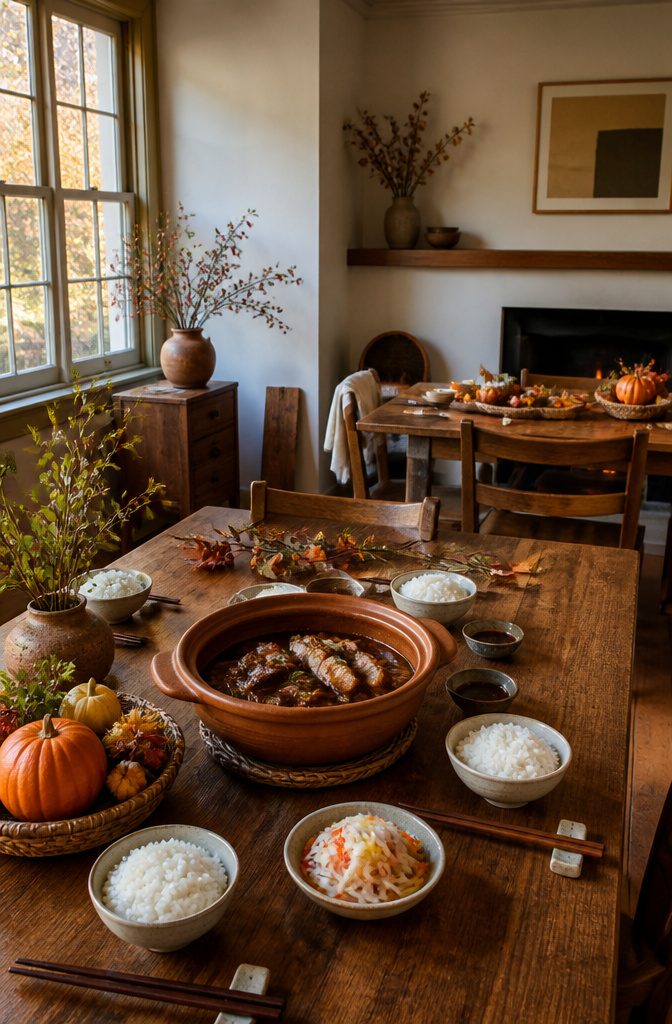
Catfish in caramel sounds like a risk for a Thanksgiving table, and that is exactly why it works. The dish is cá kho, a Vietnamese clay-pot braise I first tasted at a neighbor’s table in Houston, where she served it room temperature alongside rice and pickled vegetables while the rest of us talked for an hour before sitting down. The fish did not suffer; the reduced glaze had already seeped into every flake, and the fat held the moisture in place.
A clay pot is traditional, but a heavy Dutch oven does the same work. Coconut water, fish sauce, and shallots reduce down with the catfish over low heat, then the lid comes off for 45 minutes uncovered so the liquid turns thick and sticky. The clay or enamel retains heat evenly, which matters more than the material itself.
What makes this practical for Thanksgiving is the holding time. Most main dishes tighten or dry as they sit, but cá kho stays supple at room temperature for a solid hour, maybe longer. That gap between when the turkey would have come out and when everyone actually gathers is built into the recipe, not a flaw to manage around. Serve it with rice, a quick cucumber pickle, and let people help themselves when they are ready.
12. Cheesy Roasted Cabbage Wedges
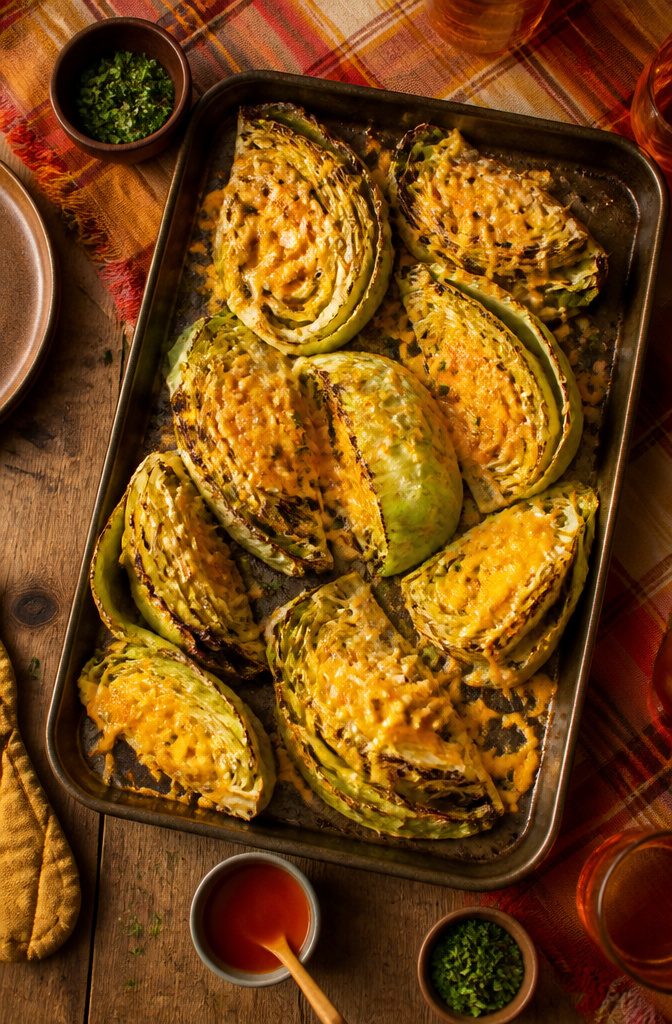
A whole head of green cabbage runs about two dollars at most grocery stores this time of year, which makes this one of the few Thanksgiving main dishes that feeds six for under eight dollars without feeling like a compromise. The technique is simple: quarter the cabbage through the core, leaving that stem intact so each wedge holds together, then roast cut-side down at 425°F until the outer leaves blacken and curl. That takes roughly thirty-five to forty minutes on a half-sheet pan with plenty of olive oil and salt.
The cheddar goes on only in the final ten minutes. Sharp works better than mild here; the bitterness of the char needs something assertive to stand up to it. I grate it thick enough that some melts down the sides while the top browns in spots.
The hot sauce is non-negotiable at my table. The fat and dairy tame the heat just enough that children will still pick at the cheesy centers, though in my experience they abandon forks entirely for the crisp outer leaves. Those leaves shatter like chips once cooled slightly, and no amount of reminding about manners changes what happens next.
13. Brisket Bourguignon
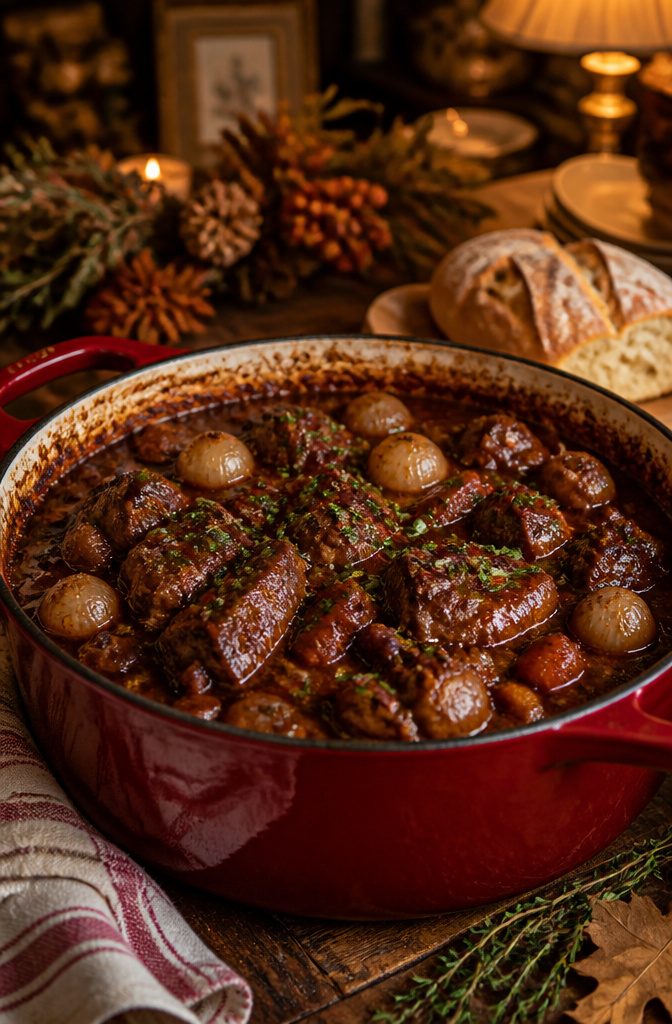
Brisket Bourguignon lands on my table when the barbecue joint down the street overorders and I catch the surplus, or when chuck goes on sale the week before Thanksgiving and I want something that feels built for a holiday without the turkey theater. The method is Burgundian: a slow red wine reduction, pearl onions sweated in butter, lardons rendered crisp and added back at the end for texture against the collapsed meat.
Three hours at a low simmer is where the magic happens. Collagen-dense cuts like brisket or chuck need that window to surrender; the connective tissue softens into gelatin, and what started as tough shreds into fork-tenderness. I build the base with a full bottle of decent red, reduced by half before the meat ever touches liquid, plus carrots, thyme, and enough beef stock to almost cover.
The onions and bacon go in at the finish so they keep their shape and snap. Serve it straight from the Dutch oven with nothing more than mashed potatoes or crusty bread to catch the sauce. Leftovers, if there are any, tighten into something even better by day two.
14. Vegetarian Enchiladas
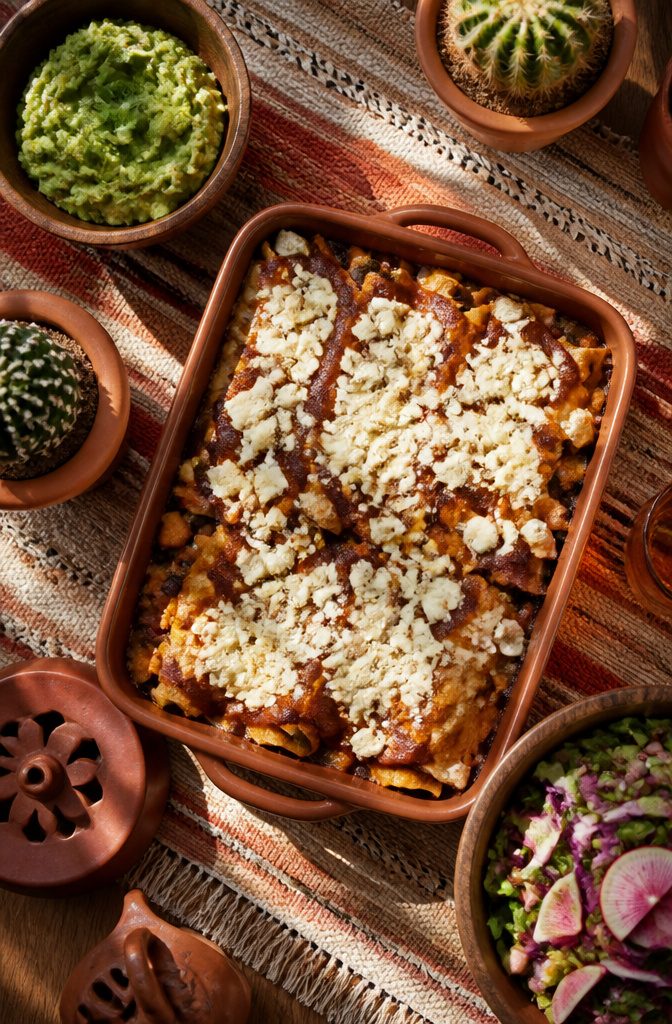
The first time I made these enchiladas for Thanksgiving, I boiled the squash like every recipe suggested. Waterlogged filling leaked straight through the tortillas and pooled at the bottom of the dish. Never again.
Now I roast cubed butternut until the edges caramelize and the interior turns almost creamy. That dry heat concentrates the sweetness and, more importantly, keeps the filling structurally sound. Black beans go in straight from the can, rinsed, with no extra cooking. Queso fresco crumbles better when cold, so I keep it in the fridge until the last minute.
The sauce starts with guajillo chiles steeped in hot water until soft, then blended with their soaking liquid, garlic, and a little cumin. It should coat the back of a spoon but still pour easily.
Frying the tortillas in a thin layer of oil before rolling is nonnegotiable. Thirty seconds per side creates a barrier that keeps the sauce from turning the whole construction to mush. They stay pliable enough to roll without cracking.
Assembled enchiladas hold covered in the refrigerator for a full day before baking, which makes the actual holiday mercifully simple. I pull them out while the oven preheats, add the sauce and cheese, and bake until the edges bubble.
15. Smoked Ham
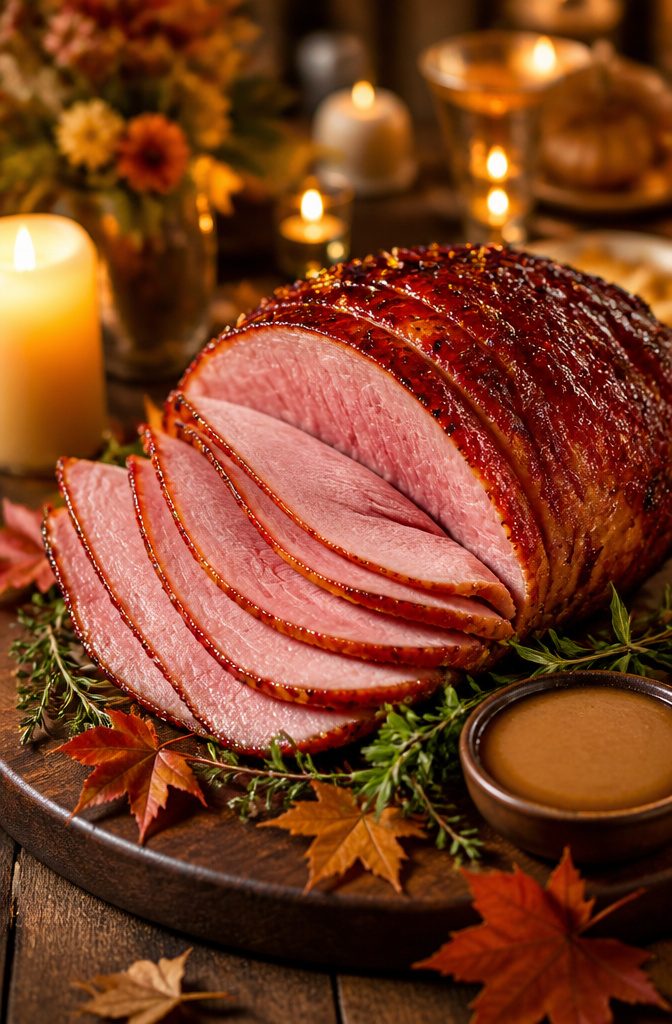
Smoked ham is the main dish I put on the table when I want the oven free for sides and the cook free to actually talk to people. A ten-pound bone-in ham feeds fifteen with enough thick slices left over for a week of sandwiches, and the per-person cost runs about half what turkey works out to once you account for the bones and skin you discard.
The spiral-cut package looks convenient but the slices dry out around the edges during warming. Bone-in holds moisture better and the leftover bone gets you a pot of beans later. Either way, the ham only needs to warm through at 275°F for roughly two hours; you are not cooking it, just bringing it to temperature.
I save the glaze for the last thirty minutes. Pour off the drippings into a small saucepan, whisk in brown sugar and a spoonful of mustard until it tastes sharp-sweet, then brush it over the surface and return the ham uncovered. The sugar sets into a lacquer that cracks when you slice, which is what you want. No thermometer needed, no resting, no carving drama. The work happens in the oven while you mash potatoes.
16. Oven Poached Salmon
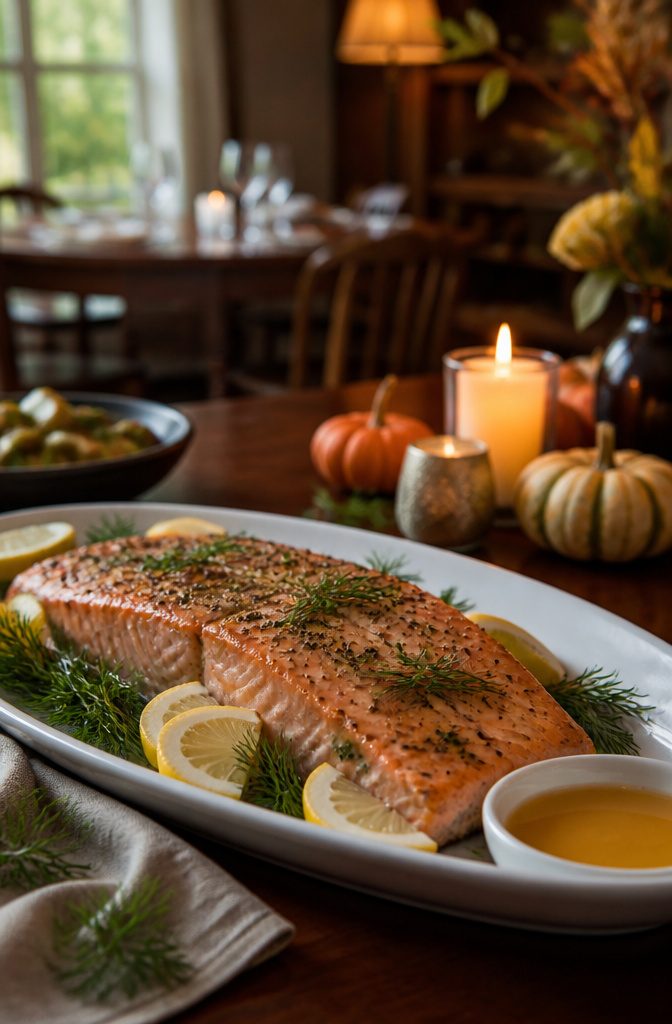
A three-pound fillet feeds six and takes about twenty-five minutes, which is the number that saved Thanksgiving at my house the year the turkey went in too late. The shallow-pan method with white wine and dill is gentle enough that the fish won’t punish you for checking the oven twice. The pull temperature is 125°F, and a cheap instant-read thermometer is worth more than any timing chart here; carryover will take it to medium, and anything past 130°F in the pan turns the center chalky.
The same liquid becomes the sauce. Strain it, reduce by half while the salmon rests, then whisk in cold butter and lemon juice off the heat. The butter emulsifies into something that tastes like you planned it for days. A pescatarian table or a smaller gathering where nobody wants to carve makes this feel like the point, not the backup plan.
17. Vegetarian Lasagna
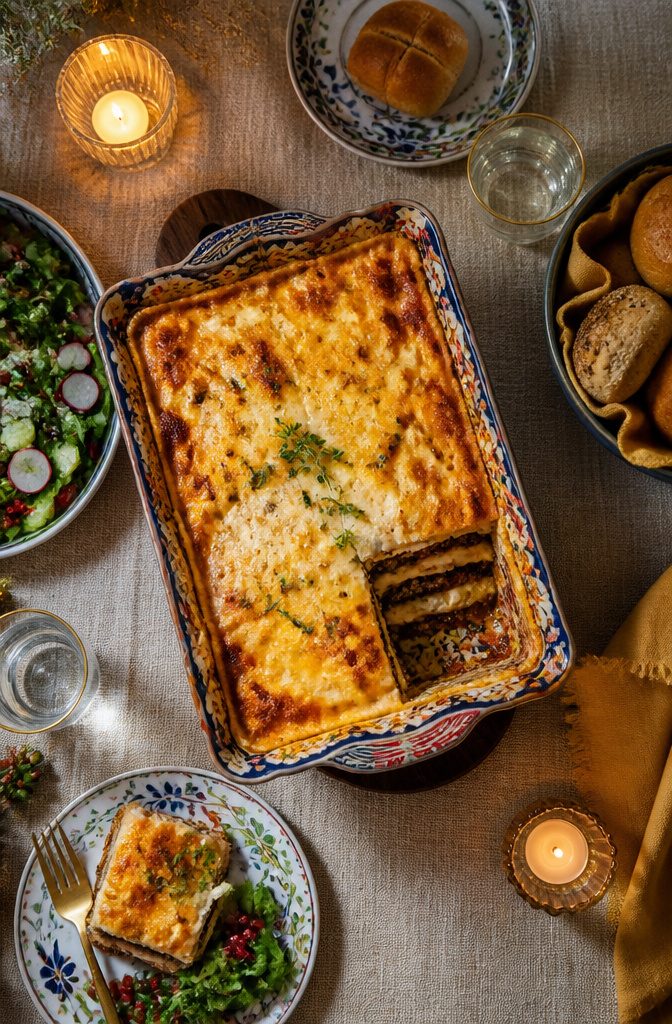
A vegetarian main that satisfies meat eaters needs the same architecture as any lasagna: distinct layers that hold their shape on the plate. No-boil noodles are the move here; they absorb moisture from the sauce and set into clean, sliceable strata without the hassle of pre-cooking.
The ricotta layer matters more than most recipes suggest. One egg per pound of ricotta binds the mixture so it firms up in the oven rather than oozing out when cut. Under-season this layer and the whole dish goes flat; a heavy hand with salt, pepper, and grated Parmesan fixes that.
Mushroom duxelles carries the umami load. Finely chopped mushrooms cooked down with shallots and a splash of wine until nearly paste-like spread thin between layers. The moisture cooks out, concentrating into something that reads as savory depth rather than explicitly mushroom. Meat eaters notice the richness, not the absence.
I assemble two pans every time I make this. One bakes for the meal; the other, wrapped tight and frozen unbaked, has rescued two separate Thanksgivings when the headcount shifted. Thaw it overnight, bake it straight from the refrigerator with an extra fifteen minutes, and it performs exactly like the first.
18. Lemon Chicken Breast
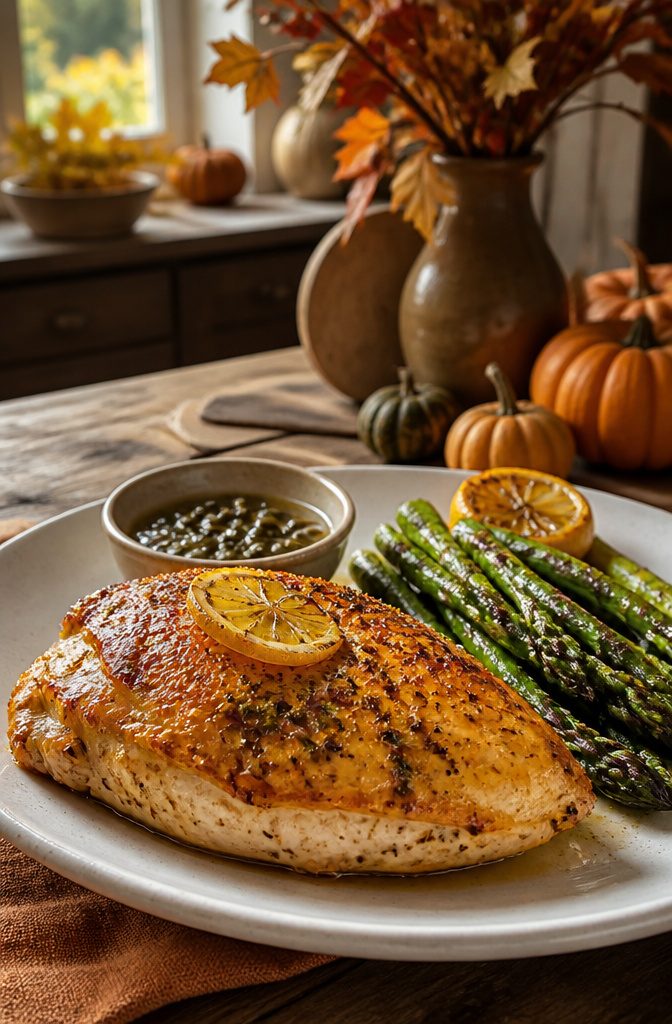
A lighter main for Thanksgiving tables that want protein without the weight of turkey lands well after three sides of stuffing and pie. Lemon chicken breast gets there with a simple brine of lemon juice, salt, and water for two hours, which seasons the meat through and buys some insurance against drying out. I set the bird on a rack over a sheet pan and roast it hard, 425°F or higher, so the skin crisps before the interior has time to overcook.
Chicken breast dries past 155°F, so I pull it at 150°F and let carryover finish it on the counter. I adopted that thermometer habit after too many sand-dry birds, and it has saved every one since. The drippings left in the pan, deglazed with a splash of the brine and finished with capers, make a sharp, salty sauce that needs no reduction or butter mount. The whole thing reads as deliberate rather than apologetic, which matters when you are the one person at the table who skipped the turkey.
19. Golden Garlic Roast Turkey With Golden Turkey Gravy
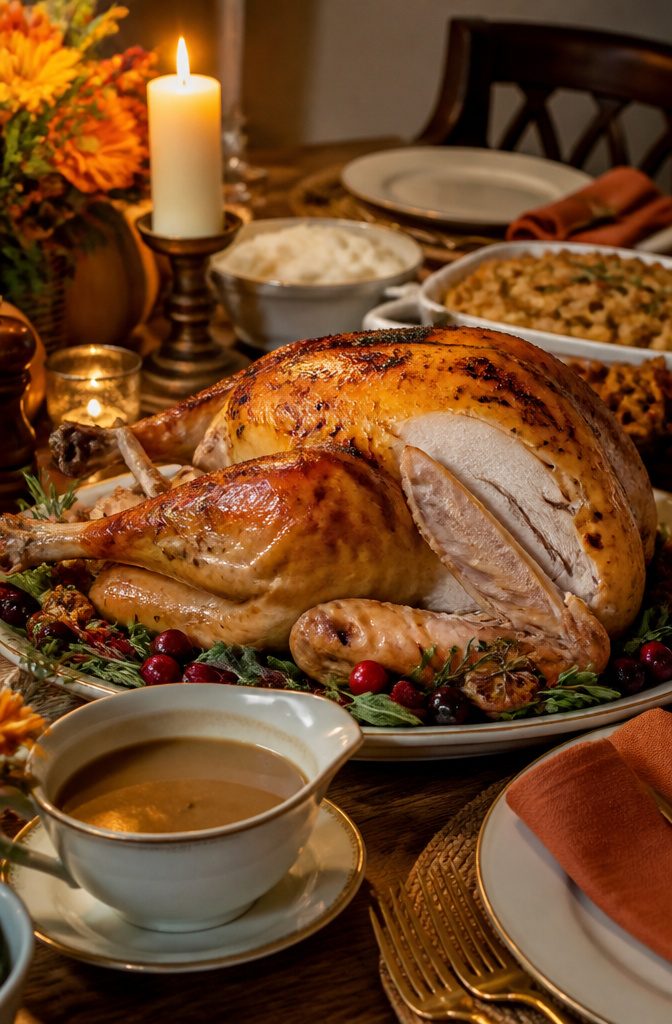
My grandmother roasted her turkey breast-down for the first hour, and the meat stayed moist enough that she never bothered with brine. The fat from the dark meat bastes the white meat while you are not even in the kitchen. After that hour, you flip the bird and the skin browns across the top for the rest of the roast.
The garlic butter goes under the skin, not just on it. Work your fingers between skin and breast from the cavity end and spread the mixture in a thin layer; the fat insulates and the garlic roasts soft and sweet against the meat. What drips into the pan becomes the base for gravy. Squeeze the roasted cloves from their skins into the drippings, whisk in flour and stock, and you have a gravy that tastes of turkey and garlic without either one shouting.
I pull this recipe out when the table fills with cousins and aunts who drove in from the same three towns they have always driven in from. Nobody asks what is new on the menu. They want the gravy they remember, and the turkey that tastes like the one before it.
20. Veg-Table Chana Masala Pumpkin Pots
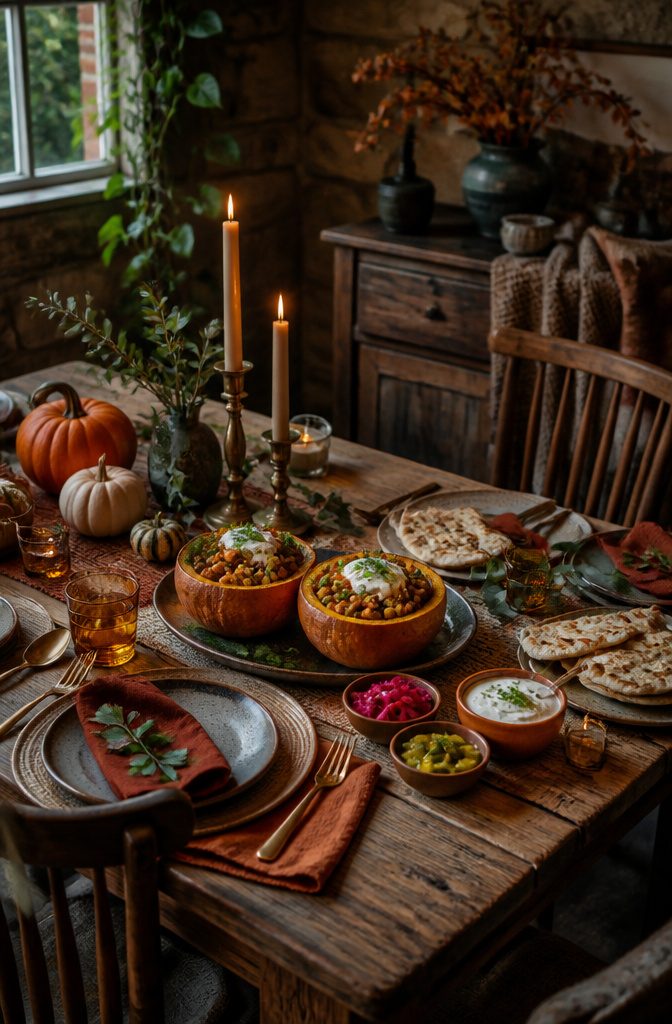
Sugar pie pumpkins collapse into a creamy, spoonable bowl after about ninety minutes in the oven, which makes them the right vessel for a vegetarian main that still feels like Thanksgiving. I stuff the roasted halves with chana masala built from canned chickpeas and crushed tomato, spiced with cumin, coriander, and enough cayenne to warm the back of your throat. The pumpkin flesh softens into the curry as you eat, so the shell becomes both bowl and side dish.
A two-pound sugar pumpkin feeds one person generously; the recipe scales to whatever fits on your sheet pans. I serve these with store-bought naan and a quick raita, though the sources also mention warm forbidden rice underneath. The whole dish lands at roughly ninety minutes, most of it hands-off roasting, and the cleanup is one sheet pan plus the pot you made the curry in.
Frequently Asked Questions
What are some Thanksgiving main dishes besides turkey?
The article lists twenty options including char siu wellington, lobster pasta, beef tenderloin, skillet lasagna, porchetta-style turkey breast, fried chicken with cranberry-mustard sauce, whole fish ssam, pumpkin and cheddar strata, pomegranate-glazed duck, Texas chili, cá kho, roasted cabbage wedges, brisket bourguignon, vegetarian enchiladas, smoked ham, oven-poached salmon, vegetarian lasagna, lemon chicken breast, and golden garlic roast turkey. Each carries enough weight to anchor the plate without relying on traditional turkey preparation.
How can I make a Thanksgiving main dish vegetarian?
The article features several meatless options built around substantial ingredients rather than substitutions. Spicy skillet lasagna with ricotta and spinach uses no-boil noodles and Calabrian chiles for depth. Vegetarian enchiladas layer roasted butternut squash and black beans with guajillo chile sauce. Vegetarian lasagna relies on mushroom duxelles for umami richness that satisfies meat eaters. Pumpkin and cheddar strata soaks sourdough overnight in pumpkin custard for a savory, sliceable centerpiece.
What is a good make-ahead Thanksgiving main dish?
Pumpkin and cheddar strata assembles Wednesday evening and bakes Thursday while the turkey rests, with overnight soaking required for the bread to absorb the custard properly. Vegetarian enchiladas hold covered in the refrigerator for a full day before baking; fry the tortillas first so they stay intact. Texas chili improves over three days, so Monday prep yields the best flavor by Thursday. Vegetarian lasagna can be wrapped and frozen unbaked, then thawed overnight and baked with an extra fifteen minutes.