The best Thanksgiving menu balances what you can make ahead against what demands oven space in the moment.
That tradeoff runs through every recipe here, from a Basque cheesecake that actually improves with a day of rest to Brussels sprouts that finish in five minutes on the stovetop because the oven is already full by 10 a.m.
The deciding factor is not how impressive a dish sounds, but whether your kitchen’s constraints on Thursday can handle it.
1. Cheesy Hasselback Potato Gratin
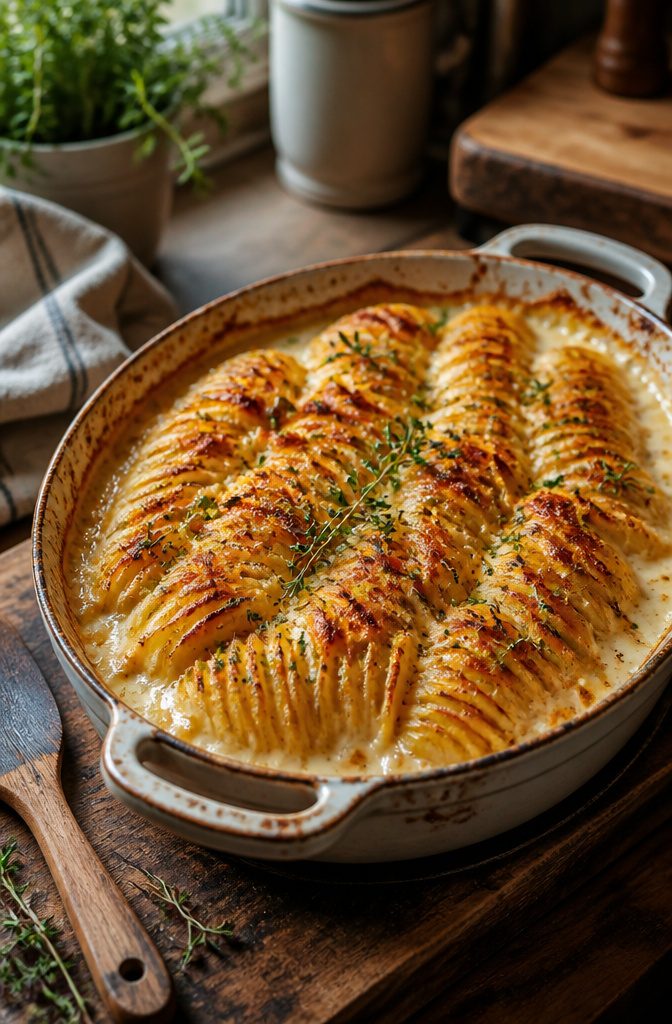
Thin slices of Yukon Gold potato fan out in the baking dish like a deck of cards held loose, each slit catching melted cheese and cream.
Gruyère gives the gratin its backbone, and a little sharp cheddar on top turns golden and crackling in the last few minutes. Parmesan in the béchamel adds depth without fighting the other two.
The hands-on work is maybe twenty-five minutes of careful slicing and layering. After that, the dish sits for an hour and change at moderate heat, which means it can slide into the oven once the turkey comes out to rest.
The potatoes need that full hour to soften through without collapsing, so plan the rest of your sides around that window.
A mandoline makes the slicing faster, but a sharp chef’s knife and patience work fine. The dish rests well and reheats better than most potato sides, so making it ahead is not just possible; it is probably smarter.

AU GRATIN POTATOES: Enjoy Betty Crocker's thinly sliced potatoes in a rich, creamy cheese sauce; A family favorite food and pantry staple for generations

One 4.7-ounce box of Au Gratin Potatoes mix

Embrace your love for culinary creativity with this entertaining design. Perfect for anyone who enjoys cooking or just loves a fun food pun.
2. Hashed Brussels Sprouts With Lemon
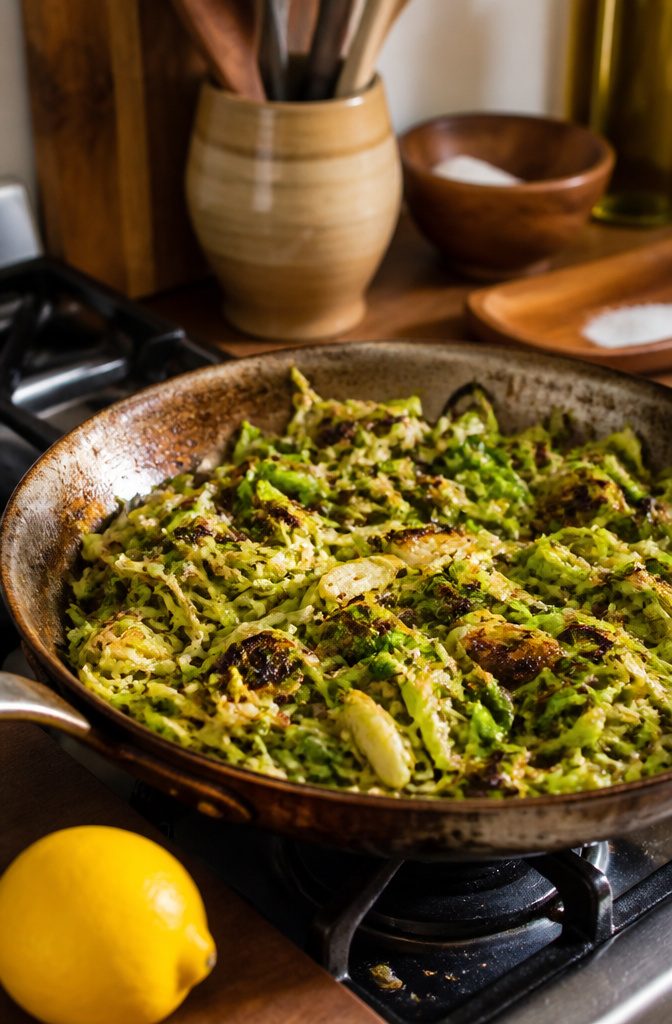
Most Thanksgiving Brussels sprouts recipes send you to the oven for forty minutes or more of roasting. This one takes about five minutes on the stovetop, and the difference is worth planning around.
You shred the sprouts raw, either on a mandoline or with a sharp knife, then hit a hot pan with olive oil. The thin strips cook unevenly on purpose.
Some leaves char and crisp. Others stay bright and barely wilted.
That raw-to-cooked ratio is the whole point. You want about half the shreds soft enough to bend, half still holding a snap.
A hit of lemon juice at the end, off heat, keeps everything sharp against the heavier dishes on the table.
No garlic, no bacon, no cream. Just the sprouts, the oil, and the acid.
I make this when the oven is already full of gratin and turkey, which is every Thanksgiving after about 10 a.m. The pan comes out clean, and the sprouts actually taste like themselves.

Perfect Hasselback Slicing System – The included guide ensures evenly spaced slices without accidentally cutting all the way through, guaranteeing perfect accordion-fanned slices every time

Get Just the Right Slice: The handheld mandoline slicer for kitchen easily adjusts to 1 mm, 2.5 mm, or 4 mm so you can perfectly slice a range of vegetables and fruit.

Contains (1) PrepSolutions Adjust-A-Slice Mandoline in Green – adjustable slicing thickness for all your prep needs.
3. Slow-Cooker Turkey Breast With Lemon-Garlic Gravy
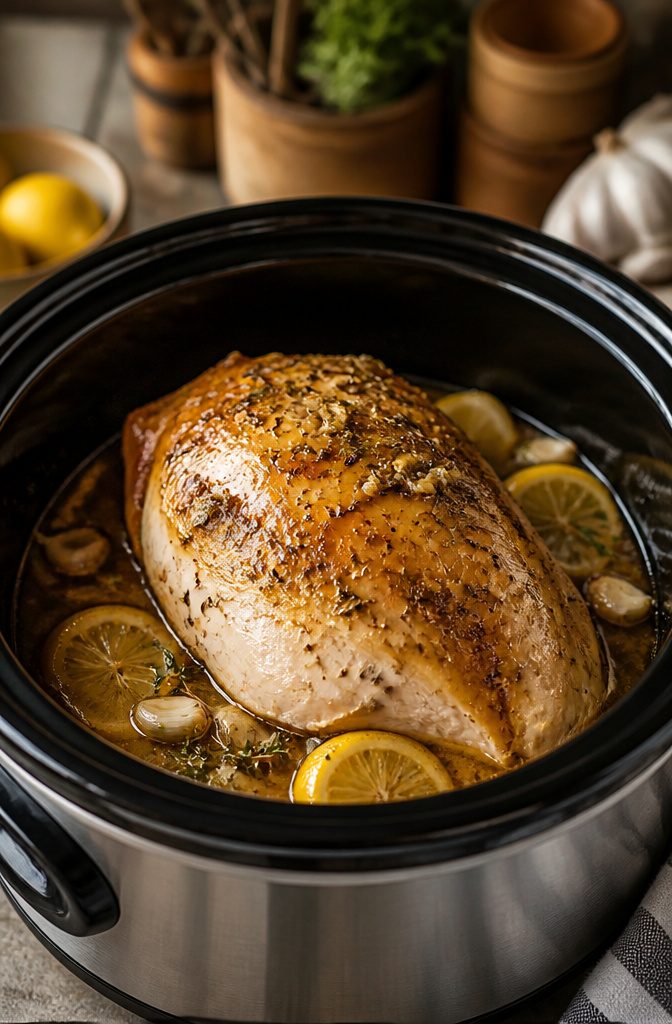
A three-pound bone-in turkey breast fits most six-quart slow cookers and feeds four to six people with the usual sides.
That leaves the oven free for the dishes that actually need it, which is the main reason this recipe earned a permanent spot in my Thanksgiving rotation.
The lemon-garlic gravy builds right in the cooker from the drippings, a few smashed cloves, and thin lemon slices tucked under the breast.
The acid keeps the white meat moist through the long, low heat in a way that plain broth does not.
Sarah DiGregorio’s method calls for a quick finish under the broiler to crisp the skin, though the meat underneath is already done and succulent.
I pull the breast out at 165°F and let it rest while the gravy strains into a pan.
The result slices cleanly and tastes like Thanksgiving without the four-hour oven commitment. Leftovers, if there are any, work better than roasted dark meat in sandwiches the next day.
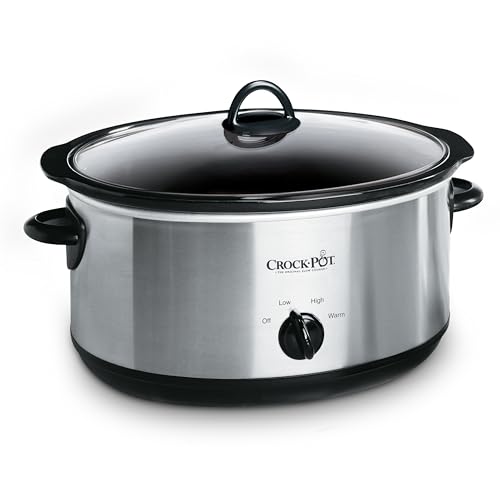
Generous Capacity: 7-quart slow cooker that comfortably serves 9+ people or fits a 7-pound roast

PERFECT FOR FAMILY MEALS AND ENTERTAINING: The slow cooker has a large 6 quart stoneware crock that holds enough to serve 7+ people. It will fit a whole 6 lb. chicken, a 4 lb. roast or enough barbecue to make up to 25 sliders
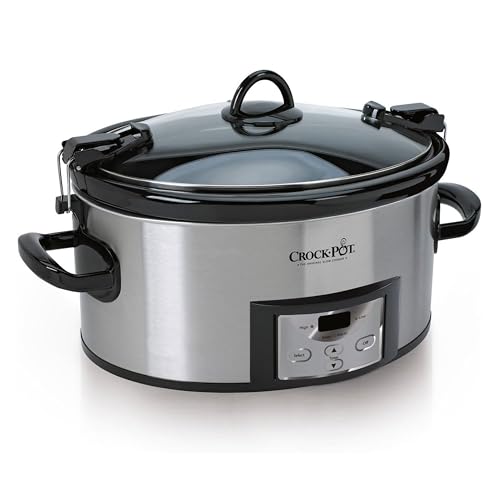
Programmable Digital Timer: Control cooking times from 30 minutes up to 20 hours
4. Basque Cheesecake
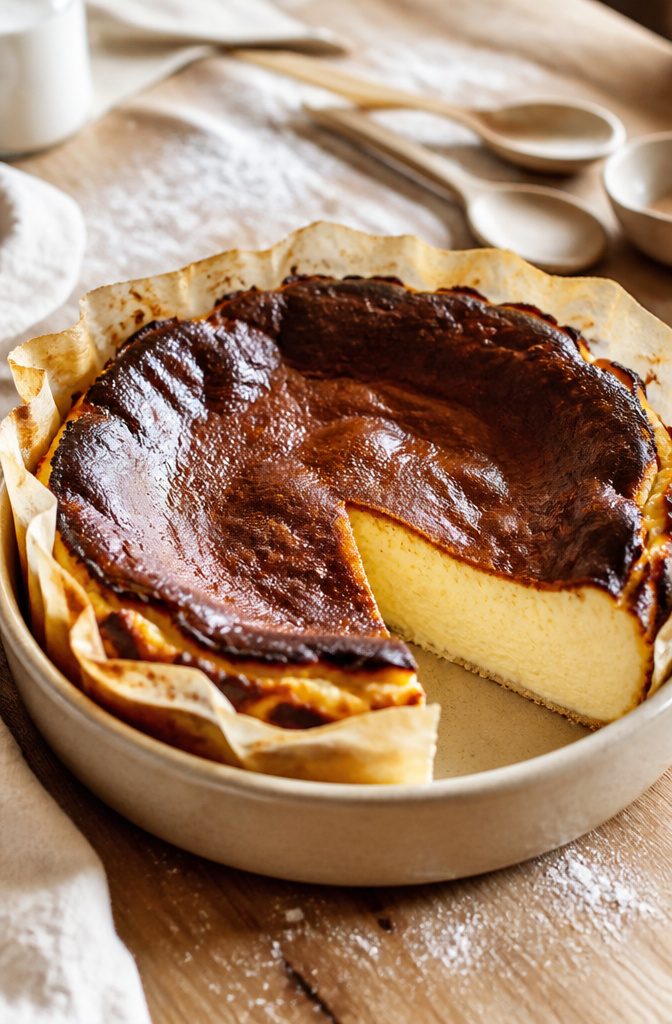
The burnt top on a Basque cheesecake is not a mistake. That deep, crackled caramelization is the point, and it gives way to a center that stays custardy and soft in a way standard cheesecake never does.
I make mine the day before Thanksgiving and let it sit at room temperature until serving; the texture actually improves with the rest.
What sells this dessert for a busy holiday is what it skips. No water bath, no springform wrap, no crust to press or parbake.
The batter comes together in one bowl, bakes at high heat, and the oven does the dramatic work. The surface collapses as it cools into that signature rustic look that needs no garnish.
The pandan variation I tried last year, steeping the leaves in cream and adding extract for color, turned the flavor vanilla-forward and grassy.
Guests finished the plate and asked for the rest to go. A plain version with good vanilla works just as well if you do not want to hunt leaves down.
Either way, the make-ahead timing is built in, and the lack of fussy steps means oven space and attention stay free for the turkey.

AU GRATIN POTATOES: Betty Crocker's thinly sliced potatoes in a rich, creamy cheese sauce; A family favorite food and pantry staple for generations

The information below is per-pack only

Made with 100-Percent Real Idaho potatoes
5. Nonalcoholic Dirty Lemon Tonic
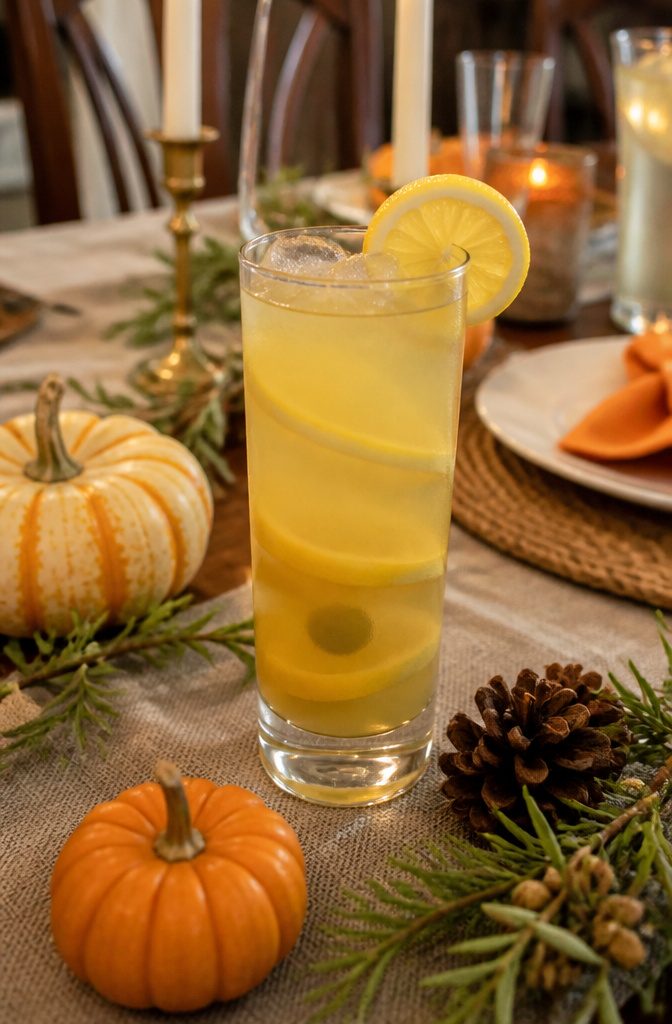
A few glugs of olive brine turn an ordinary lemon tonic into something savory enough to stand before a heavy Thanksgiving meal.
The dirty lemon tonic balances bright citrus against that saline, faintly vegetal note, so guests who skip the wine still have a drink with backbone.
Rebekah Peppler’s version keeps things light and tangy rather than cloying, which matters when stuffing and gravy are still to come.
The olive brine is the quiet detail that makes it work: just enough to register as savory, not so much that the glass reads as a failed martini.
Batching ahead is straightforward. Build the base in a pitcher, adding the brine and lemon juice together so the flavors meld while you finish the turkey.
Pour over ice and top with tonic water at the last second; the carbonation goes flat fast if you try to pre-mix everything.

QUALITY CONSTRUCTION: Base made of polypropylene, slicing teeth made of 18/8 stainless steel

An innovative mandolin slicer that will make you addicted to chopping: It is equipped with 6 interchangeable razor-sharp blades for effortless ingredient preparation. The expanded hand guard ensures the safety of your fingers, while its detachable design facilitates easy cleaning. The food collect container of the vegetable slicer features a scale for precise measurement of ingredients, and has been reinforced to enhance overall durability.
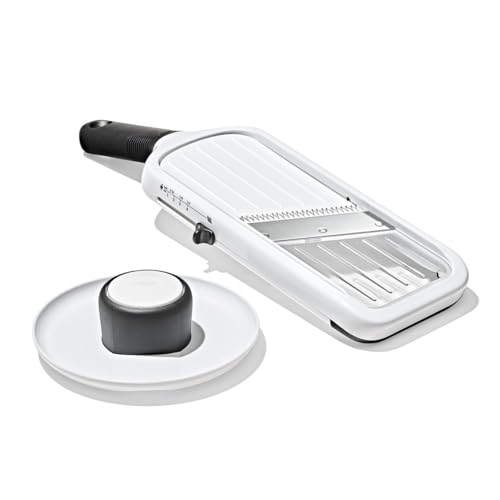
Precision slicing control: Designed as a mandoline slicer for kitchen use, this handheld tool offers five cutting options, including julienne, thin, medium, thick and extra thick
6. Pumpkin Bread With Brown Butter and Bourbon
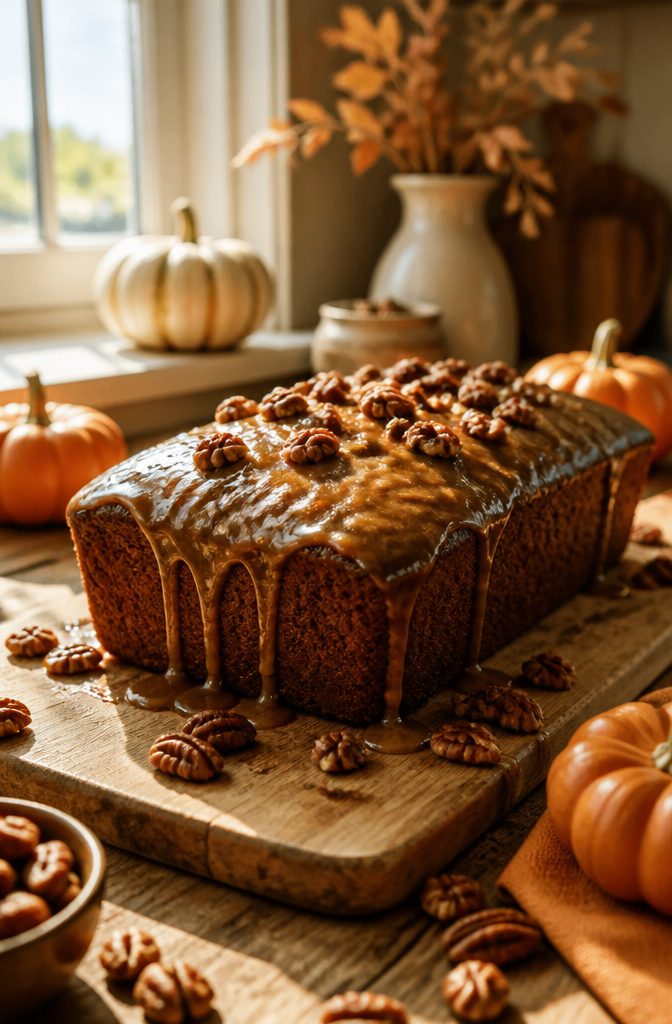
Brown butter is the step that turns ordinary pumpkin bread into something worth putting on the Thanksgiving table. The butter foams and darkens until it smells like hazelnuts, and that depth carries through the whole loaf.
A splash of bourbon goes in with the wet ingredients, and most of the alcohol bakes out in the oven, leaving behind a subtle caramel note that reads as vanilla’s darker cousin rather than anything boozy.
Kids ate it without comment at my table last year.
The bread keeps wrapped at room temperature for about three days, or you can freeze a loaf for up to a month. I usually bake two the Sunday before Thanksgiving and pull the second from the freezer Wednesday night.
Sliced thick and toasted Thanksgiving morning, it works better than pie for breakfast, especially with salted butter and coffee while the turkey’s still raw and the house is quiet.


1800-watt 3/5-cubic-foot 4-slice cooker with 8 preset functions and Element IQ technology. The lid should be left unlocked while cooking, as the additional pressure can result in the food being overcooked
7. Beef Empanadas
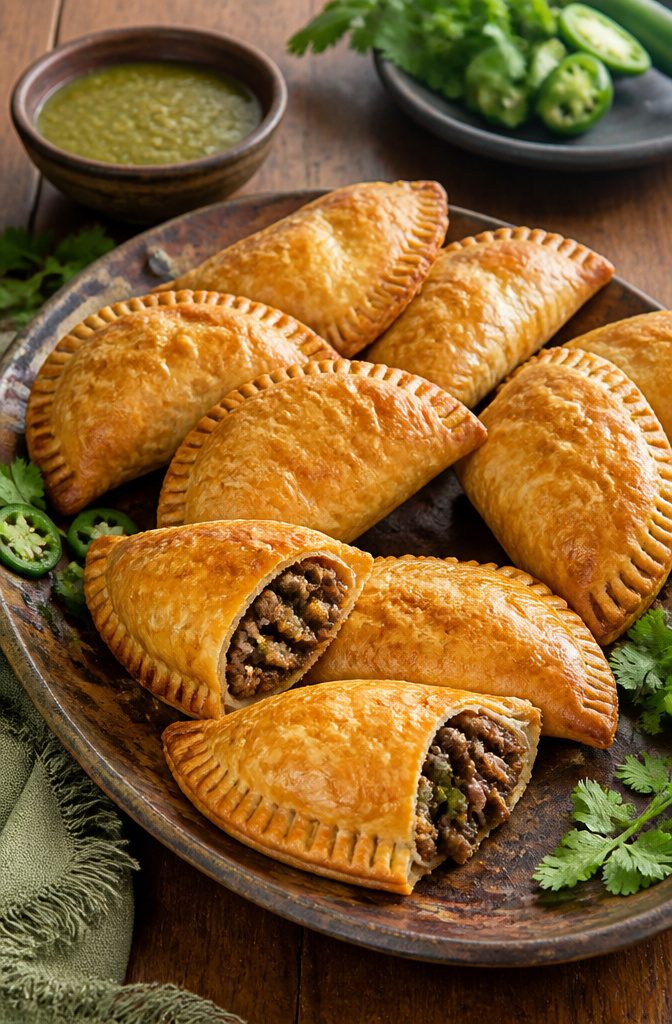
Beef empanadas have a way of showing up at Thanksgiving whether you planned for them or not.
Angela Dimayuga’s version is built for exactly that kind of holiday chaos: the filling holds well, the batch scales up without complaint, and people treat them as an appetizer right up until they become the main event.
I have seen a platter disappear before the turkey even comes out of the oven.
The dough decision matters more than the filling. Store-bought discos save roughly an hour and hold up fine if you seal them aggressively; homemade dough cracks less but demands chilling time most Thanksgiving schedules do not have.
Frying gives the shatter you want; baking at 400°F with an egg wash gets you close with less oil to manage and no pot to watch.
Either way, crimp with a fork, not your fingers. The seal fails less often, and that matters when you are making thirty.
A roasted jalapeño in the beef keeps them from reading as too heavy against the rest of the table.
Serve them with a sharp salsa verde, not a creamy dip. The acid cuts through the fat in a way the rest of the meal probably will not.

Ready in minutes by simply adding water, milk, and butter

INDULGE IN HOLIDAY LUXURY: Treat your loved ones to our Festive Potatoes Au Gratin 8 count, 3 oz each, made with golden potatoes, butter, cream, garlic, and Gruyere and cheddar cheeses.
Ready in minutes by simply adding water, milk, and butter
8. Lemon-Garlic Kale Salad
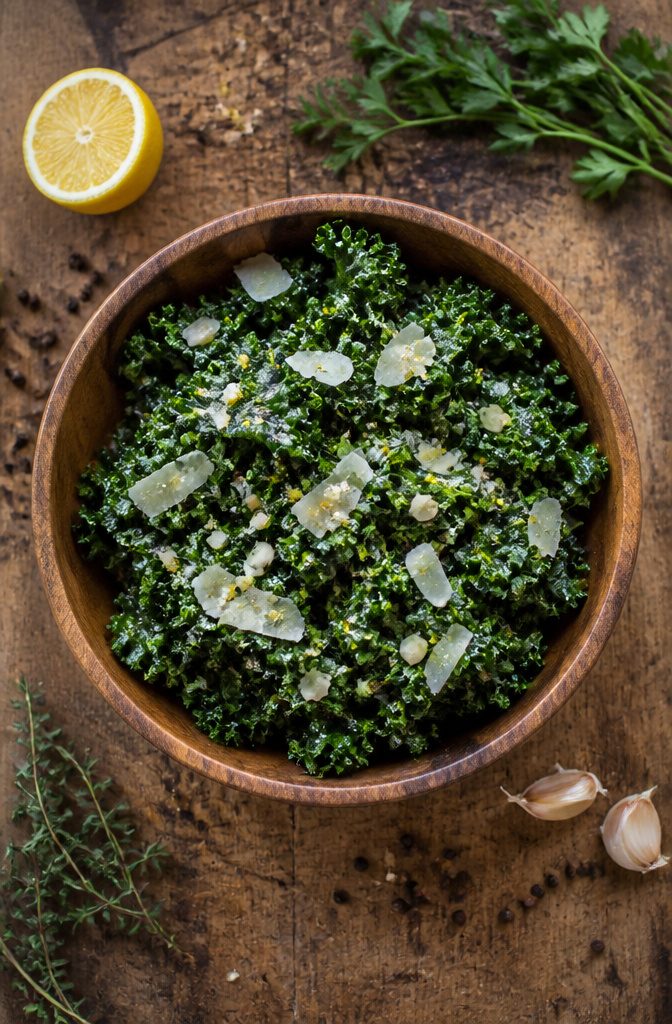
Some people give a side eye to salads at Thanksgiving. The brown stuff on the plate already wins, and adding greens can feel like a consolation prize.
Julia Moskin’s lemon-garlic kale salad changed my mind. The leaves hold up to a bold dressing, and the massaging step matters more than you’d think.
Working the lemon-garlic mixture into the raw kale with your hands for two or three minutes breaks down the fibers that make raw kale taste like a chore.
The dressing can go on a full day ahead without wilting the leaves, which is unusual for a green salad.
Kale’s sturdy structure means you can prep this Tuesday night and serve it Thursday without the sad, soggy result you’d get from lettuce.
The garlic stays sharp, the lemon keeps its edge, and the whole thing reads as intentional rather than an afterthought. An eight-year-old reportedly loves it, which is the test most Thanksgiving vegetables fail.

STAINLESS STEEL VEGETABLE CHOPPER: This kitchen slicer is made in stainless steel material, have fun making crunchy salads or exciting veg dishes, direct contact with food safety, providing a long life for your kitchen. Non-slip, safer and more comfortable to use.

SAFE DESIGN — This safety mandoline slicer adopts hidden blade structure to avoid direct contact with sharp blades. This vegetable slicer effectively prevents accidental cuts, providing safer food prep when slicing potatoes, cucumbers and other fruits and vegetables

【Useful and Cheerful】Packaged included 1pcs Multi Handheld Mandoline Slicer and 1pcs Peeler, designed for elevating your culinary skills effortlessly, ensuring precision in every slice for every chef, even for beginners
9. Cranberry Curd Tart
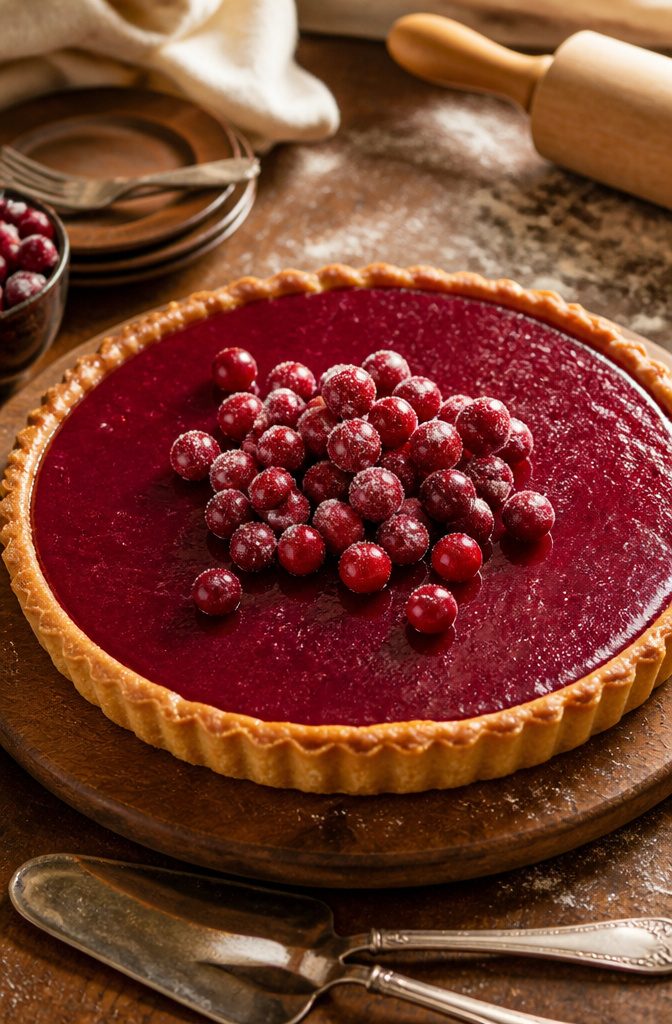
Cranberry curd sets into something completely different from the jellied sauce most of us grew up spooning from a can.
Where that sauce wobbles and slices clean, a proper curd stays soft and spoonable, tart enough to cut through the heavy plates that come before it.
The texture lands somewhere between lemon curd and pastry cream, which makes it feel like an actual dessert rather than a condiment that wandered onto the wrong shelf.
The tart shell is the part that needs thinking through for Thanksgiving timing. A fully baked shortcrust will hold for two, maybe three days if you keep it wrapped and cool, but it does soften slightly as it sits.
Filling it the morning of gives you the cleanest snap between crust and curd. If you are the type who spreads prep across the week, bake the shell Wednesday and fill it Thursday before guests arrive.
Between this and the Brandied Pumpkin Pie, the choice comes down to texture preference and what else is on the table.
The pumpkin pie is deep and custardy, familiar, the safe bet that empty plates always prove right. The cranberry curd is brighter, more surprising, and reads as the sophisticated option without requiring any harder technique.
If you are serving one pie only, the pumpkin pie wins for crowd safety. If you have room for two desserts, the curd tart is where you stop playing it safe.
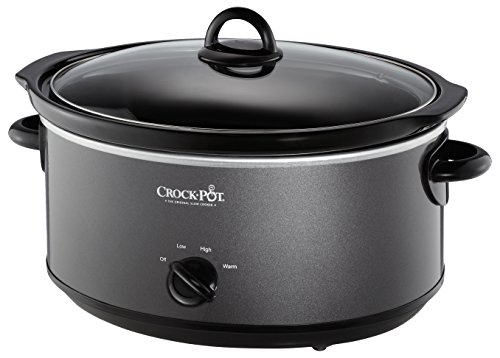
Spacious 7-quart manual slow cooker serves 8+ people or fits a 6-lb. roast

NOT YOUR MOM’S SLOW COOKER: Smart technology allows you to cook a recipe to either a desired cooking time or specific temperature, before automatically switching to Warm when it’s done.

BIG BATCH COOKING: With a 6 qt capacity, our slow cookers are ideal for making large batches of soups, chili, or a whole roast chicken. They're perfect for feeding a crowd or meal prepping, making every meal an effortless and delicious experience
10. Buttered Stuffing With Celery and Leeks
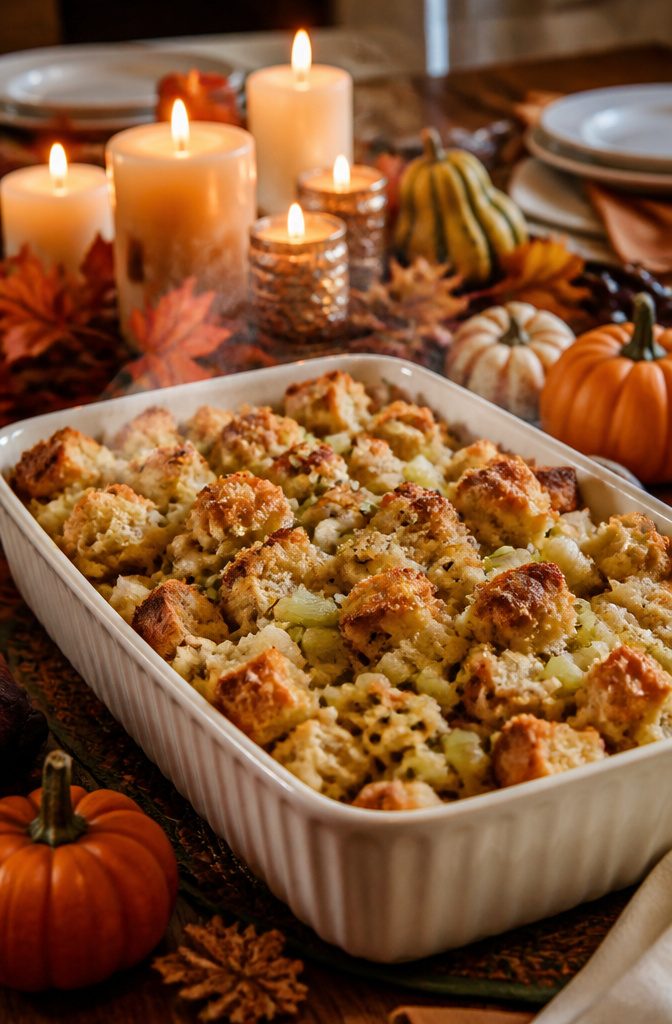
Leeks melt down sweeter than onions ever could, and that sweetness against celery’s clean crunch is why this stuffing works so well as a standalone side.
The vegetables soften in enough butter to coat every cube of bread before anything hits the oven, so the finished dish bakes up moist inside with a crackly lid of browned edges on top.
This one stays outside the bird, which means you control the texture and avoid any last-minute juggling with turkey timing.
A dry bread base is non-negotiable here. Day-old sourdough or a sturdy country loaf holds up without turning to mush.
The leeks need a thorough wash, grit loves to hide in those layers, and celery wants a fine dice so it softens through in the same time the leeks collapse.
Everything gets tossed while the butter is still warm, then pressed into a buttered dish and baked until the top turns deeply golden.
For making ahead, the vegetable-butter mixture keeps refrigerated for two days.
The bread can sit out overnight to stale. Bring both to room temperature, combine, and add a splash of warm stock if the mix feels dry before baking, since refrigerated leeks lose some moisture.
A 350°F oven for about 45 minutes brings it back to life with the same crust you would get fresh.

Ready-to-cook potato casserole Made with 100% real Idahoan potatoes Contains milk, soy, and their derivate 0 g trans fat
11. Buttermilk-Brined Turkey Breast
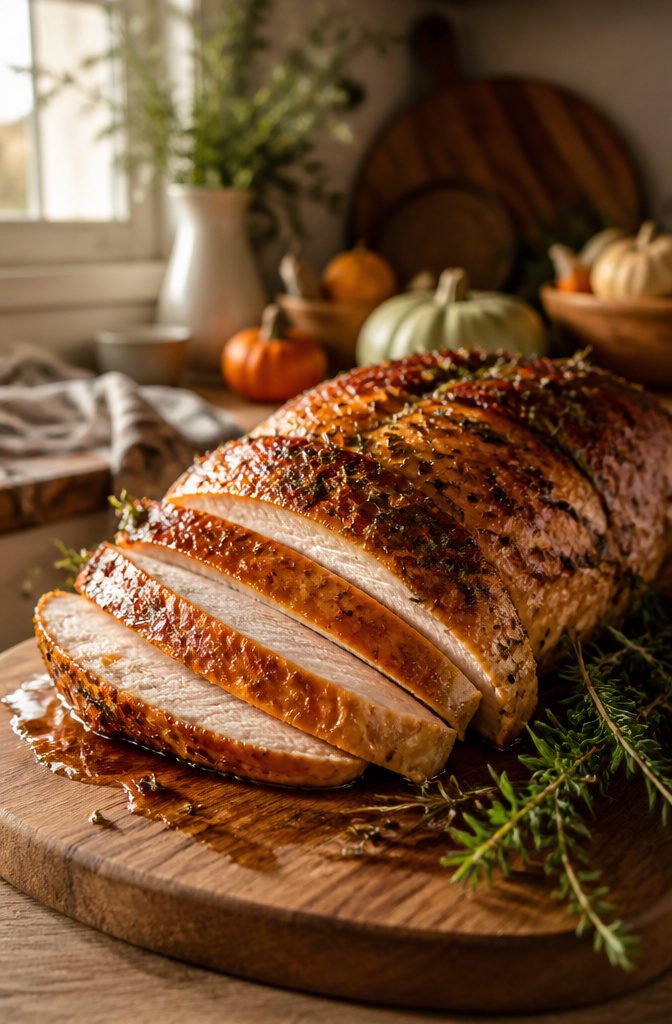
A buttermilk-brined turkey breast sits on the other end of the effort spectrum from the slow-cooker version elsewhere on this list. Both solve the same problem: a small gathering that does not need a whole bird.
The slow-cooker route is mostly hands-off. This one asks for 24 hours in the brine, minimum, and the payoff is a different kind of texture.
The lactic acid in buttermilk does the tenderizing work. It breaks down muscle fibers more gently than saltwater brine, and the fat in the buttermilk carries flavor into the meat in a way water cannot.
You end up with breast meat that stays moist through a high-heat roast, not just low-and-slow cooking.
Roasting logistics are straightforward once the brine is done. A half breast, bone-in, fits a standard sheet pan.
Skin goes crisp in the dry oven heat, which the slow-cooker version sacrifices for convenience. The drippings make a simple pan sauce without much fuss.
This is another smaller-gathering option.
For four to six people, one breast carves neatly at the table without the production of a whole turkey. Leftovers are manageable: a few sandwiches, maybe a pot of soup, not a week of forced creativity.
12. Crispy Ginger Sticky Rice
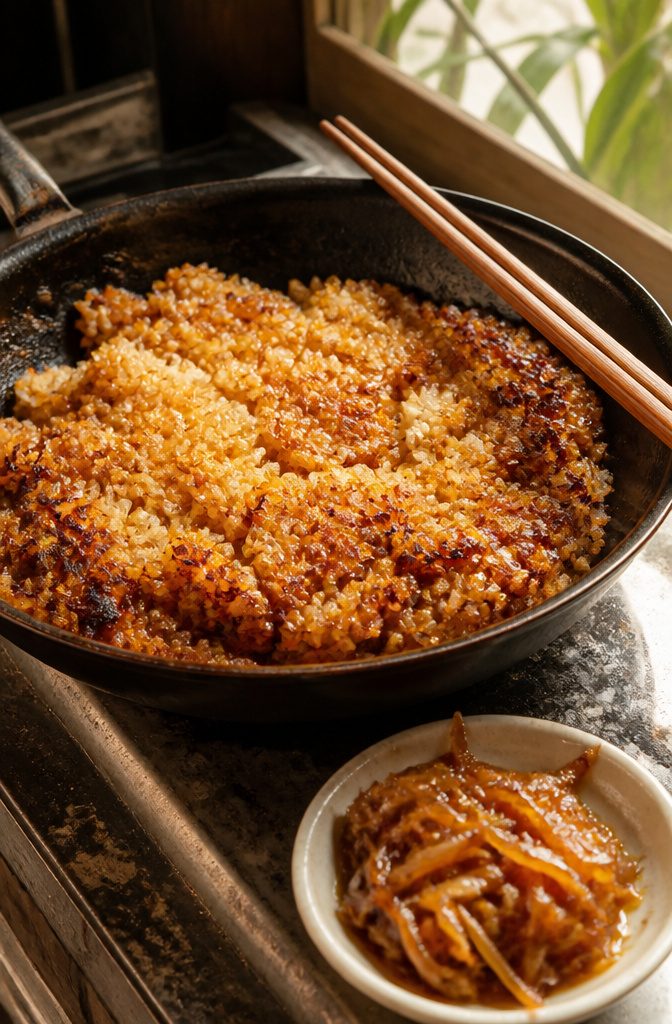
Sticky rice on Thanksgiving started as a workaround in families who lost a recipe along the way, and it stuck because the texture answers something bread stuffing never quite does.
The rice fries up with a shattering crust while the inside stays densely chewy, almost elastic, and the ginger runs through both layers so the heat doesn’t land in one bite but hum underneath.
Short-grain sweet rice is the only type that works here, the kind sometimes labeled mochi rice.
It needs an overnight soak, but after that a regular pot with a tight lid does the job; no rice cooker required unless yours already lives on the counter.
The crisping step happens in a hot skillet with enough oil to coat the bottom, pressed flat and left alone until the bottom turns lacquered and brown.
Where this sits on the table depends on who’s coming. For a mixed crowd, it holds its own alongside standard stuffing without competing, the way a second potato dish might.
If the goal is to replace bread stuffing entirely, the ginger and bacon in this version still read savory and familiar enough that nobody misses the sage.
13. Parker House Rolls
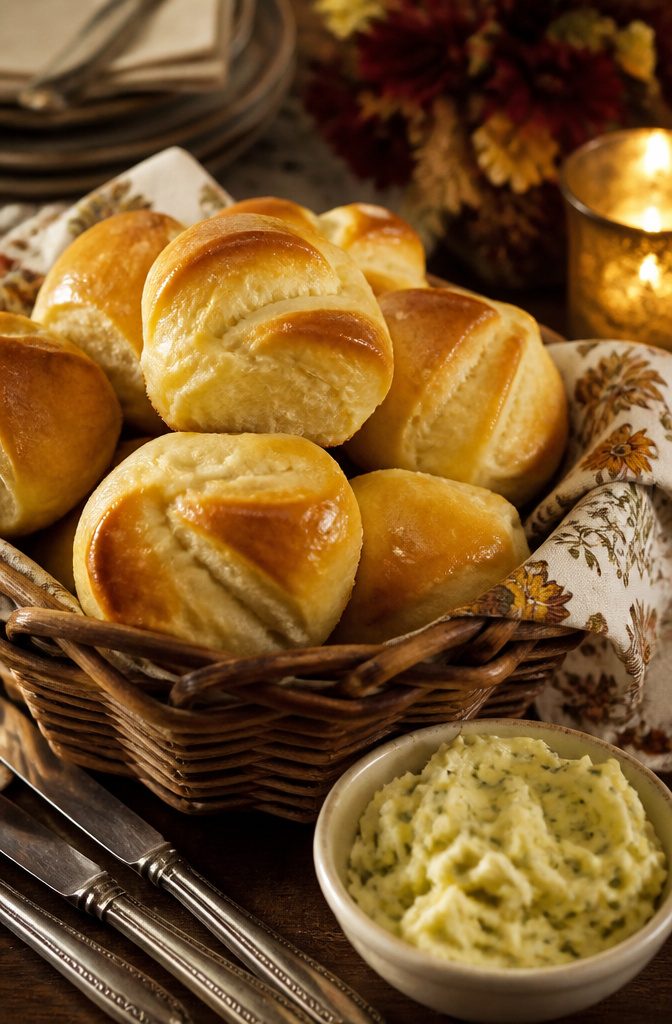
The folded, butter-dipped shape is what separates a Parker House roll from every other dinner roll on the table.
You stamp out an oval, fold it almost in half, then press the seam just enough that it holds while baking but still opens like a tiny book.
The bottom half gets dipped in melted butter before the fold, which creates that pale, soft hinge and a darker, crisped base.
Yeast timing is the part that trips people up.
These need a real rise, not a rushed one. Cold butter firms the folded seam and the rolls come out lopsided, so room-temperature butter for the dip is worth the extra few minutes.
You can shape them the night before, set them on the baking sheet, and refrigerate covered.
They rise slowly in the cold and go straight into the oven while the turkey rests, which saves the one thing you never have enough of on Thanksgiving: counter space.
Cloverleaf rolls, also on this list, use the same soft dough but divide it into three small balls per muffin cup. Those pull apart; these split open.
Parker House rolls win for stuffing with leftover turkey the next day. Cloverleaf wins if you want a roll that children can dismantle bite by bite without a knife.
14. Ale-Braised Collards With Ham
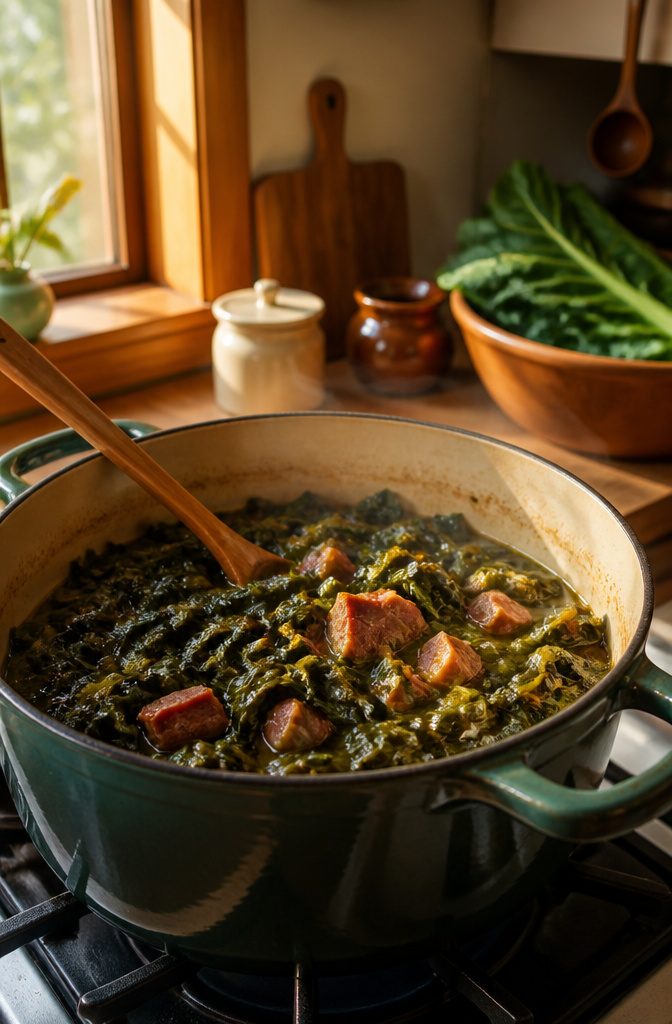
Amber ale does something to collards that water never quite manages. The hops cut through the bitterness, and the malt leaves a faint sweetness in the potlikker that you end up sipping with a spoon.
I braise mine for about two hours, which is long enough for the leaves to go silky without falling apart.
Ham hocks are the traditional move, but a smoked turkey leg works if you want less fat drifting to the surface.
Smoked ham shanks give you more meat to pull off the bone and fold back through the greens. Salt pork is too lean and too salty; it tightens up rather than melting into the broth.
The vegetarians at your table can be sorted without a separate dish. Skip the ham entirely and build the braising liquid from a dark vegetable broth, a splash of soy sauce, and the same ale.
The collards need the smoke, though, so add a half teaspoon of smoked paprika or a few drops of liquid smoke.
These are better the day before. The collards settle into the liquid overnight, and reheating takes fifteen minutes on the stove while the turkey rests.
15. Southern Macaroni and Cheese
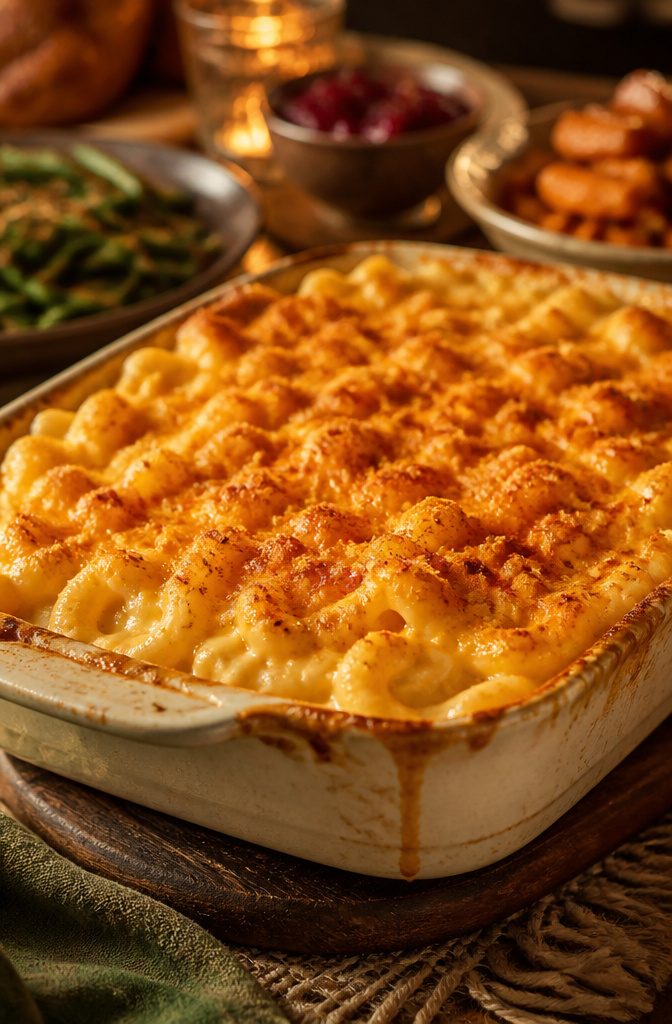
Southern macaroni and cheese belongs on a Thanksgiving table for one reason: people will notice if it disappears. I learned this the hard way the year I tried to lighten the menu, and the complaints still echo.
The distinction that matters is custard-style versus stovetop. Custard-style, baked in the oven with eggs and evaporated milk, sets into squares you can serve from a buffet without it weeping into a puddle.
Stovetop mac and cheese goes silky in the pot and seizes up within twenty minutes of sitting out.
For the cheese, sharp cheddar carries the dish, but a layer of something softer, like Monterey Jack or fontina, keeps the custard from turning grainy. I grate by hand; pre-shredded bags come coated in starch that resists melting cleanly.
A 9-by-13-inch ceramic baking dish gives the best crust-to-center ratio, though a deep casserole works if you are feeding more than twelve.
The real constraint is timing: this dish is heavy, easily the richest thing on the table after gravy, so I plan the rest of the sides lighter. A bright salad or acid-driven vegetable becomes non-negotiable.
Left at room temperature, custard mac and cheese holds safely for about two hours, which covers most Thanksgiving buffets. Beyond that, it goes back in a warm oven or into the refrigerator.
16. Hot Crab and Oyster Dip
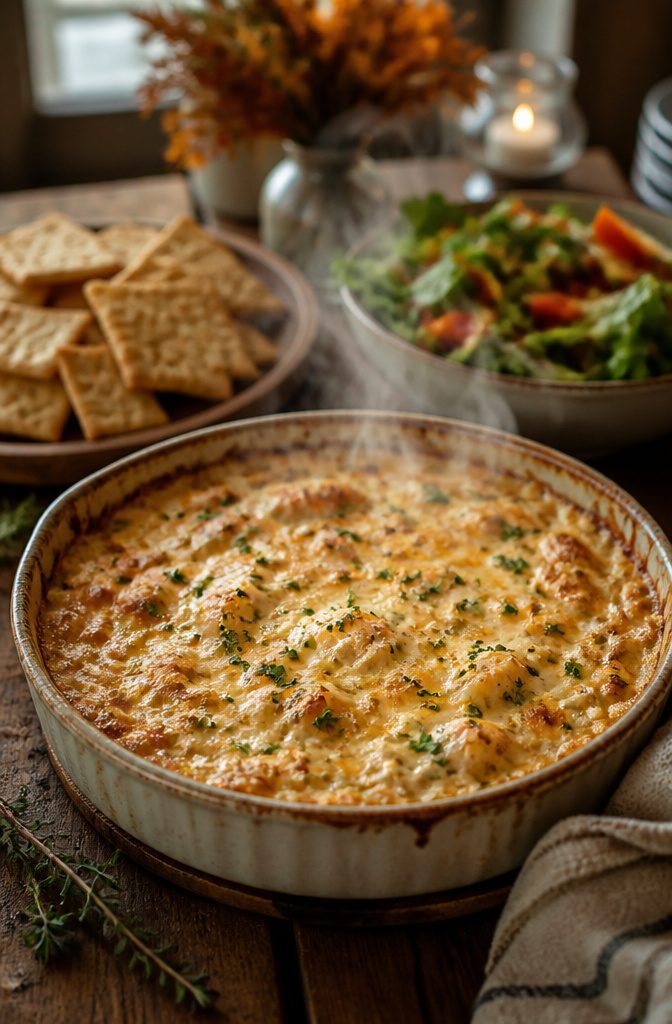
Hot crab dip on its own is already a reliable Thanksgiving opener, but adding chopped Gulf oysters changes the conversation.
The brine cuts through the cream cheese richness in a way that crab alone never quite manages, and the two seafoods stay distinct enough that you taste both instead of a muddy middle.
Melissa Clark’s version runs with this, and it has become the closing act of the holiday in the households that keep it on rotation.
A heavy ceramic baking dish holds heat better than metal, which matters when the dip sits out during the cocktail stretch.
Bread versus crackers is the pairing question, and the answer depends on timing. A toasted baguette slice supports a generous scoop without cracking, but it goes soft fast against the hot base.
Crackers stay crisp longer, though the saltier ones fight the oysters rather than frame them. A plain water cracker or a thin slice of sourdough, barely dried in the oven, splits the difference.
Assembly ahead is where this one earns its keep.
Mix everything, spread it in the dish, cover and refrigerate. The bake time runs roughly ten minutes longer from cold, so plan the oven space accordingly.
17. Chocolate-Pumpkin Layer Cake
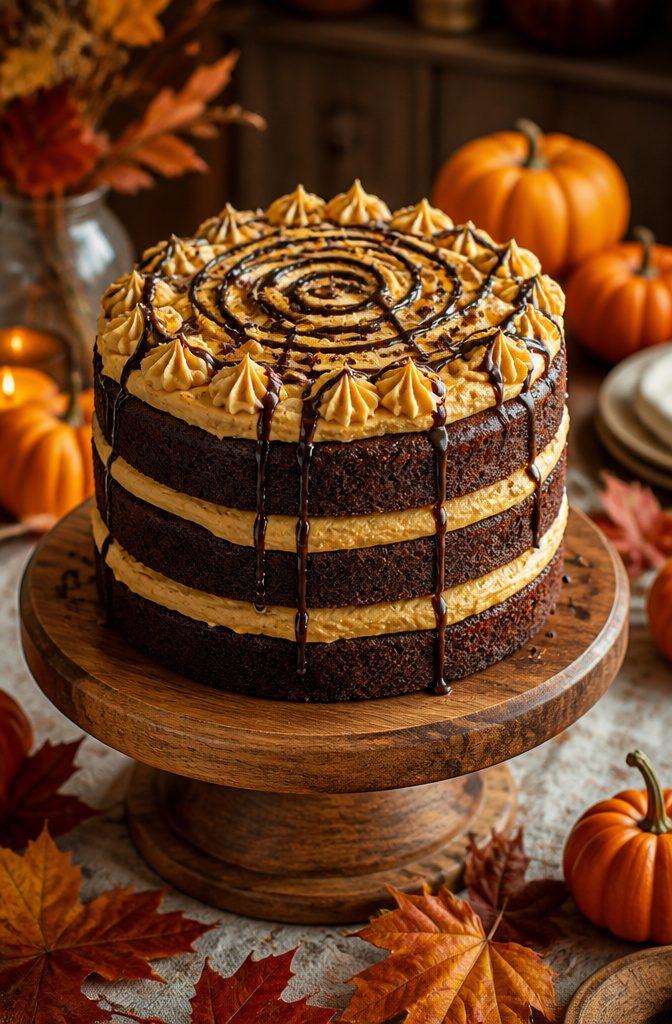
A chocolate-pumpkin layer cake solves the Thanksgiving dessert problem of feeding two camps at once: the people who want something dark and rich, and the people who expect pumpkin somewhere on the table.
The pumpkin here is structural as much as it is flavor. It keeps the layers dense and moist, almost like a fudgy torte, while the chocolate dominates what you actually taste.
The pumpkin registers as a subtle earthiness in the background, a warmth that makes the chocolate taste deeper rather than standing up and announcing itself.
I build this in three layers with a cream cheese frosting that cuts the sweetness.
The tang matters more than decoration here. A smooth ganache would bury the pumpkin entirely; the cream cheese lets it peek through.
The cake holds well for two days once fully assembled, which is the real win for Thanksgiving.
The pumpkin keeps it from drying out the way an all-chocolate cake might, and the frosting seals the cut edges if you need to slice it ahead.
Wrap the unfrosted layers in plastic and refrigerate them for up to a day before you stack; the cold actually makes them easier to split and level. Frosted and boxed, it sits on the counter fine through dinner service.
18. Roasted and Raw Brussels Sprouts Salad
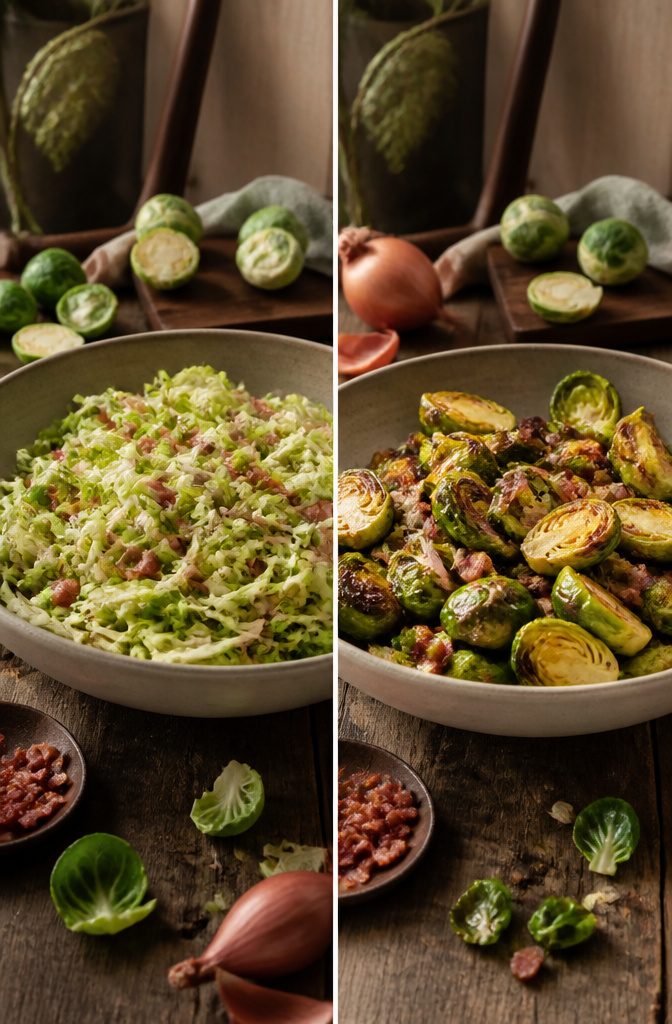
Raw shaved Brussels sprouts give a crisp bite that disappears if they sit too long in dressing, so the roasted half of this salad does the heavy lifting on flavor while the raw half waits until the last minute.
I build the base with roasted wedges first, tossed in a warm bacon-shallot vinaigrette that softens them slightly, then fold in paper-thin raw slices right before serving so they still crack between your teeth.
The dual texture solves the Thanksgiving salad problem: some guests want something green and lively, others want the comfort of roasted vegetables with depth.
The same dressing bridges both camps, picking up smoky fat from the bacon and enough acid to cut through the rest of the menu’s richness.
Elsewhere on this list, hashed Brussels sprouts with lemon keeps everything raw and bright, while the chorizo version leans fully into browning and spice. This recipe splits the difference, which is why it works for a divided table.
Shave the raw sprouts no more than 30 minutes ahead and keep them chilled; any longer and the cut surfaces oxidize to that dull gray nobody wants on their holiday plate.
19. Five-Spice Roasted Carrots With Toasted Almonds
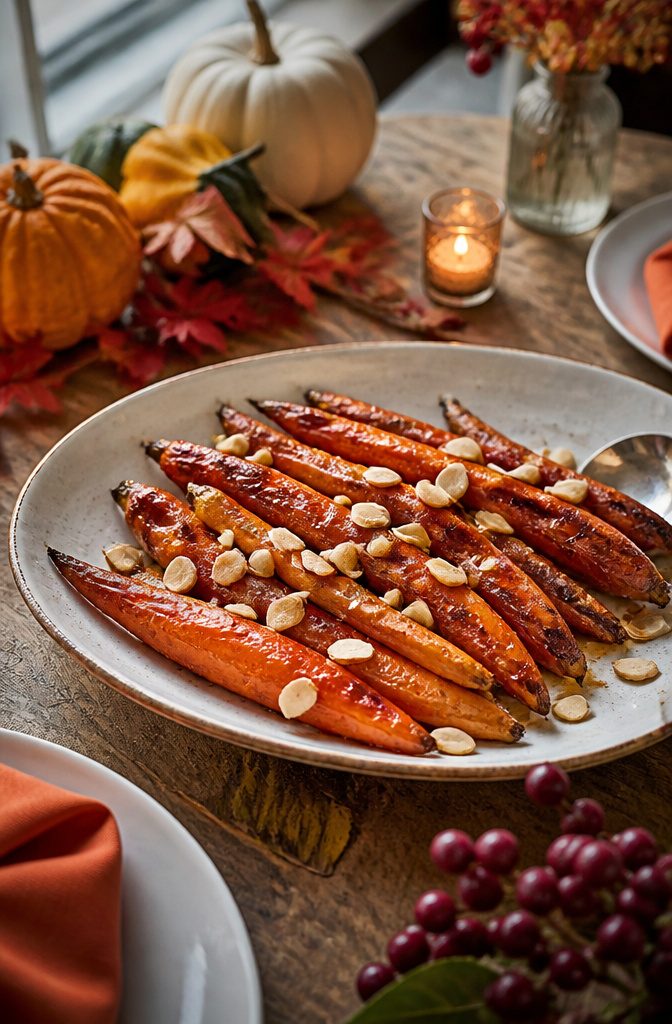
Five-spice powder does most of the heavy lifting here, and the warm aroma it throws off while the carrots roast is enough to make people drift into the kitchen asking questions.
I use whole carrots about the thickness of my thumb, peeled and halved lengthwise so the flat sides sear against the hot pan and everything finishes in the same half hour.
Toss the almonds in only for the final five to seven minutes; they go from toasted to bitter fast, and there’s no recovering them once they’ve crossed that line.
The dish holds beautifully at room temperature, which matters more than you’d think on Thanksgiving when oven real estate is currency and sides end up waiting on the turkey.
Last year I pulled these out early and set them on the counter while the bird rested, and they were the first thing to disappear.
20. Persimmon Pudding
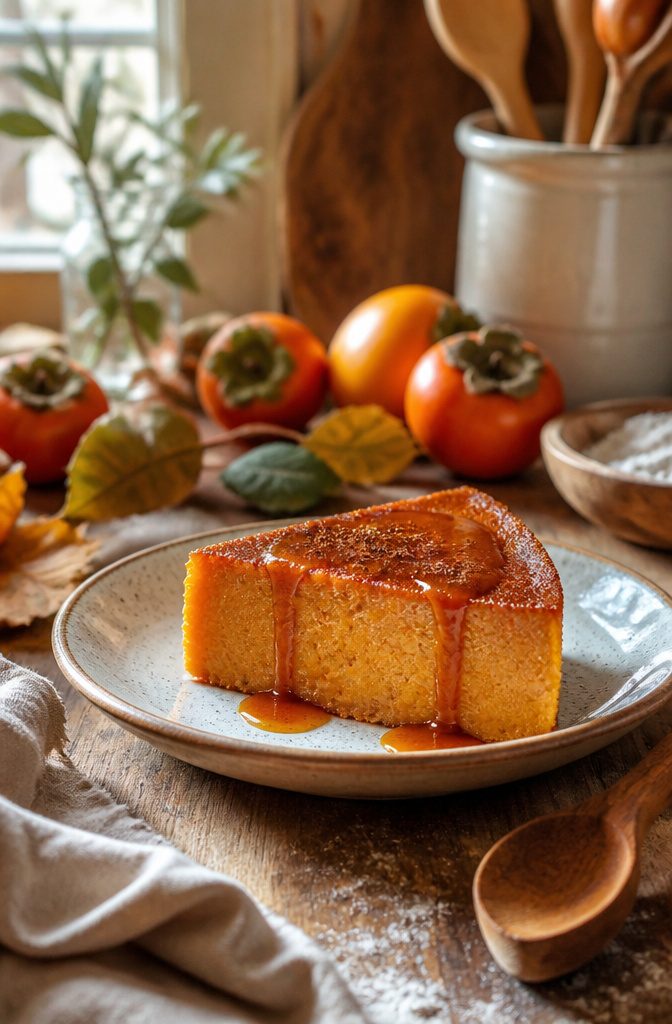
Persimmons hit their stride right around Thanksgiving, which is why this pudding lands on my table when the fruit drawer overflows.
Fuyu persimmons work best here; their firm flesh blends into a smooth puree that stays light and almost bouncy, nothing like the dense brick some holiday desserts become.
The texture sits between cake and custard, closer to a steamed English pudding than anything boxed. A spoon sinks through a soft, moist crumb with real weight behind it, none of the fluff that would compete with pie later.
After pumpkin bread at brunch and maybe that chocolate-pumpkin layer cake on the dessert table, another orange wedge of squash feels like a rerun.
Persimmon brings a different fruit note, honeyed and faintly tropical, without fighting the cinnamon and clove already in the air. It fills the same warm-spiced niche but reads as its own thing.
The season is short and the window is now. By mid-December the good ones are gone, so this is a now-or-wait-until-next-year proposition.
Frequently Asked Questions
What are some classic Thanksgiving side dishes?
The article covers stuffing, potatoes, and Brussels sprouts in several forms.
Buttered stuffing with celery and leeks bakes outside the bird so you control the texture, while cheesy Hasselback potato gratin feeds a crowd and slides into the oven once the turkey rests.
For greens, hashed Brussels sprouts with lemon cook in about five minutes on the stovetop when oven space runs out.
How do I prepare a turkey for Thanksgiving?
The article offers two approaches for smaller gatherings. A three-pound bone-in turkey breast fits a six-quart slow cooker, cooks with lemon and garlic, and finishes under the broiler for crisp skin.
For a roast version, a buttermilk brine needs at least 24 hours; the lactic acid tenderizes gently and the fat carries flavor into the meat before a high-heat roast.
What desserts should I serve for Thanksgiving?
The article includes a Basque cheesecake that bakes without a water bath or crust, a chocolate-pumpkin layer cake that satisfies both chocolate and pumpkin camps, and a cranberry curd tart that reads brighter and more surprising than standard pie.
If you are serving only one dessert, the article notes that brandied pumpkin pie wins for crowd safety; the cranberry curd tart works best as a second option.