The fourteen vegetable sides that actually earn their place on a crowded Thanksgiving table are the ones you can build ahead. Most fail because they demand oven space or last-minute attention you do not have, and the article’s make-ahead timeline sorts which recipes cooperate with a Tuesday prep schedule and which ones will rattle you when five people are already in your kitchen asking where the corkscrew is. Sweet potato casserole and green bean casserole both freeze fully assembled; creamed spinach and garlic mushrooms demand the stove while the turkey rests.
1. Green Bean Casserole
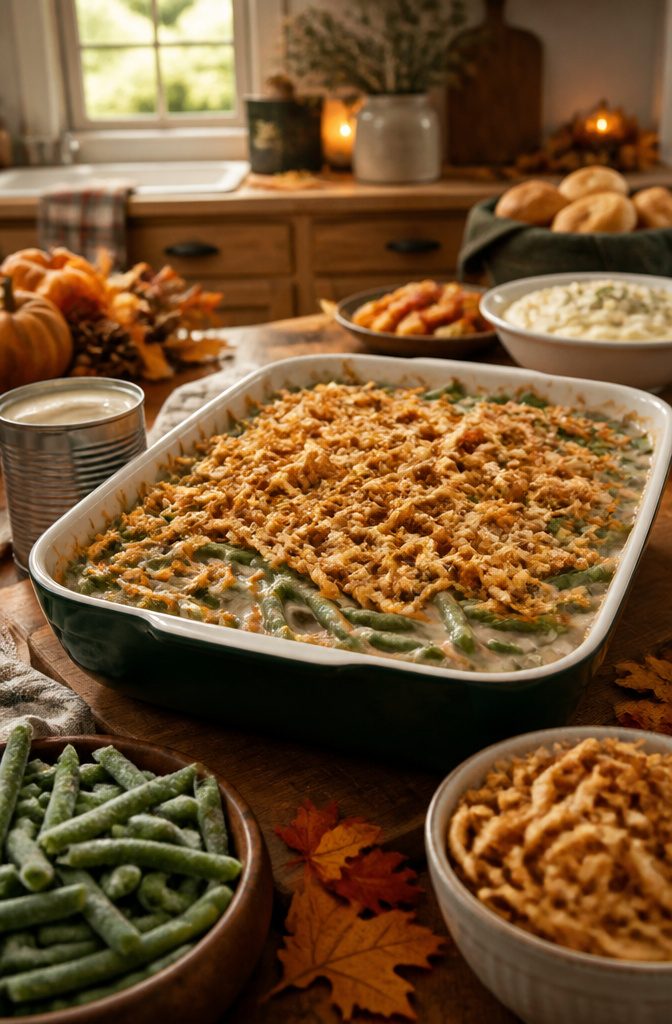
Green bean casserole lands on almost every Thanksgiving table for a reason, and the reason is speed. Thirty-five minutes from opening the cupboard to pulling it out of the oven leaves room for everything else that day demands. The version most of us grew up on builds from a can of cream of mushroom soup, frozen green beans, and those crispy fried onions from the grocery store baking aisle. That combination still works, still tastes like the holiday, and still draws the first spoonfuls from the serving dish.
The whole pan can be assembled a day ahead and refrigerated, or frozen for a week or two if freezer space allows. Thaw overnight in the refrigerator before baking, and add the onion topping in the last few minutes so it stays crisp. A homemade sauce with fresh mushrooms and cream takes the dish in a richer direction, but the classic version feeds a crowd without a cutting board. On Thanksgiving morning, that counts for more than technique.


Suitable Size For Daily Use-The Howise Ceramic Baking Dish Set includes 2 pieces bakeware of difference dimensions (excludes the ears' size): 13"L x 9.25"W x 2.75"H and 9"L x 6.5"W x 2.08"H, suitable for lasagna, spaghetti, chicken, meat, beef, roasting, vegetables, storing and reheating leftovers and etc.

Spacious 150oz Capacity for Large Batches & Family Meals – Designed for cooking generous portions, this extra-large baking dish is perfect for feeding a crowd. Whether you’re making a hearty lasagna, cheesy baked ziti, roasted vegetables, or a golden-brown casserole, this baker can handle it all with ease. Its deep sides help prevent spills and overflow, keeping your oven clean while allowing for layered and saucy dishes.
2. Sweet Potato Casserole
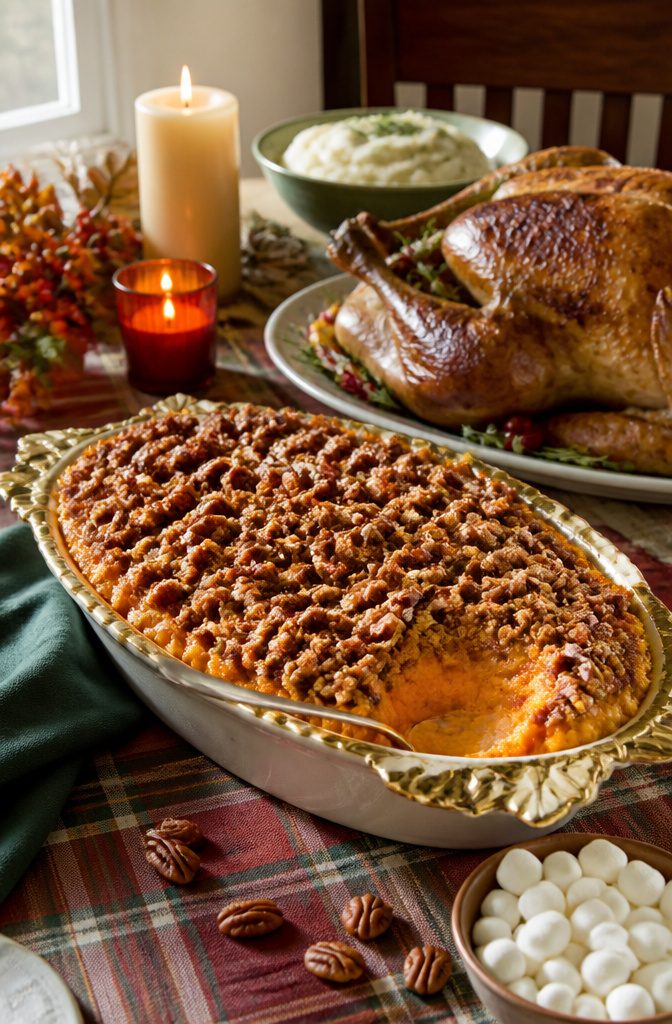
Sweet potato casserole sits in that odd space between side dish and dessert, which is exactly why it survives every year. Two hours gets you a dense, buttery mash under a crunchy sweet brown sugar pecan crumble that covers every bite. The topping is where the fight starts. Some tables still demand marshmallows, torched until they blister and weep; others hold that pecans are the only serious choice. Neither side is wrong, but the nut camp has the textural advantage of actual crunch against all that softness.
What makes this one genuinely useful for Thanksgiving is the make-ahead structure. The assembled casserole can sit refrigerated overnight or go straight to the freezer before any baking happens. That frees the oven for the bird and the stuffing, and it means the only work on the day is the final bake and the decision of whether to add those pecans now or let a marshmallow holdout do it at the table.

Includes one 20 ounce resealable bag

Gourmet Gift Tin: This 7.5 lb tin of glazed praline pecan halves is sized for real gifting: corporate client baskets, office holiday parties, or a household that goes through pecans fast. Each half is coated in a light cinnamon praline glaze for a crunchy, caramelized bite that works as a standalone snack, a charcuterie addition, or a dessert topping for pies and salads.

Convenient Resealable Bag: Our 2 lb bag is designed for easy storage, with a resealable closure that keeps pecan pieces fresh and flavorful.
3. Roasted Brussels Sprouts
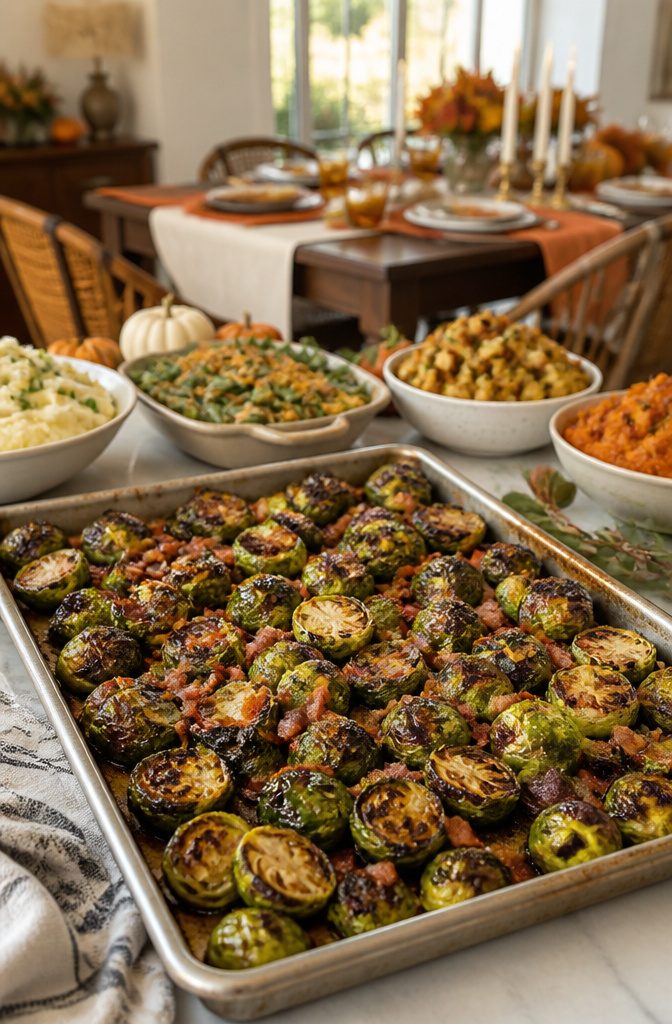
Brussels sprouts earned their spot at Thanksgiving sometime in the last fifteen years, and high-heat roasting is the reason why. The oven needs to run hot enough that the cut halves char at the edges while the centers go creamy, a transformation that boiling never managed. A sheet pan, some oil, and roughly forty minutes are the whole setup.
Bacon fat or chopped bacon tossed in midway adds smoke and salt that balances the slight bitterness, though the sprouts themselves carry enough sweetness once caramelized that pork is optional rather than required. What matters more is spacing: crowding steams them instead of roasting, so two sheet pans beat one piled high.
This dish sits naturally beside the creamed spinach and casseroles that dominated holiday tables for decades, and the contrast is part of why it works. The vegetable-forward approach does not replace the old sides; it gives the meal a rhythm between heavy and crisp that keeps people reaching back for more.
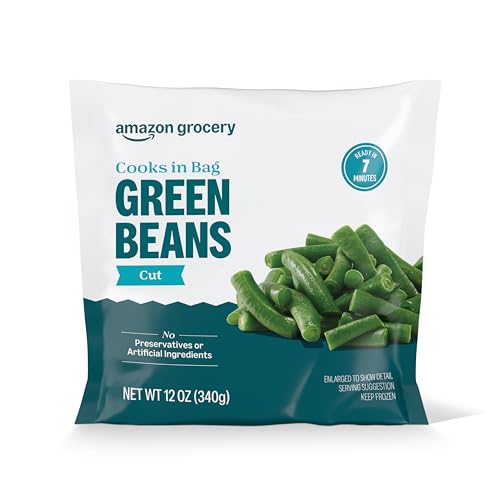
One 12 ounce bag of Frozen Cut Green Beans

Brought to you by Whole Foods Market

One 10 oz bag of Birds Eye Steamfresh Seasoned Steakhouse Green Beans
4. Cornbread Stuffing
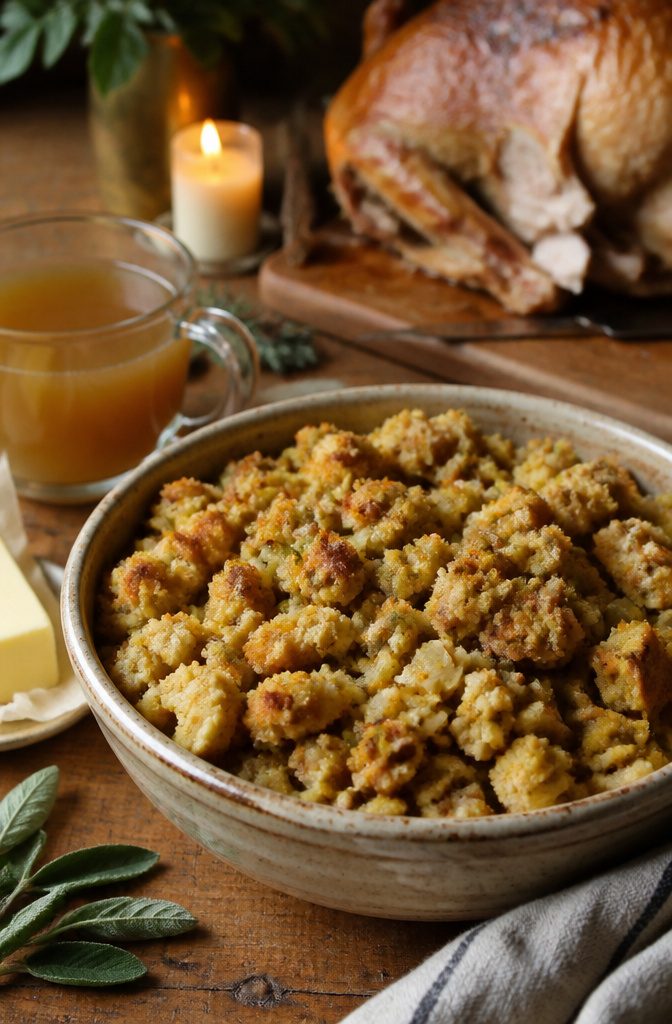
Cornbread stuffing carries a different weight than the bread-cube kind I grew up seeing in magazine spreads. The crumb is looser, the sweetness more pronounced, and the whole thing sits on the plate like a side dish with its own opinions. Southern kitchens built this style from leftover skillet cornbread, which crumbles into mealier pieces than sandwich bread ever could. That texture soaks up stock differently, yielding something more pudding-like in the center with a crust that still crackles.
The method stays forgiving. Day-old cornbread breaks apart by hand into rough chunks, then gets tossed with sautéed onion and celery, plenty of butter, and enough liquid to bind without turning to mush. Sage and thyme are the usual herbs, though I have seen versions with crumbled sausage or diced jalapeño slipped in. Store-bought cornbread works if you dry it in a low oven first; the staler, the better, since fresh cornbread dissolves into paste.
What makes it worth the slot on a crowded Thanksgiving table is that familiarity-plus-difference factor. Guests recognize stuffing, but the cornmeal base reads as intentional rather than default. It pairs with turkey without disappearing beside it, and the slight sweetness answers the savory pulls of gravy and dark meat.

One microwaveable cooking pouch Best quality product
5. Creamy Mashed Potatoes
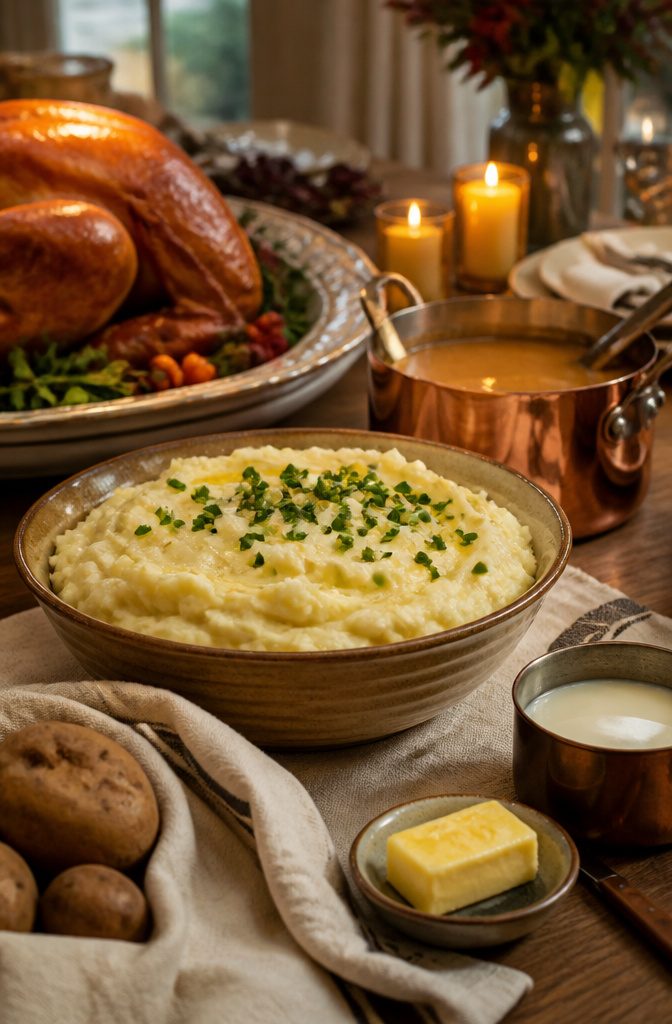
Mashed potatoes stretch the definition of a vegetable side, yet no Thanksgiving plate feels complete without them. The risk is gumminess, and that comes from overworking.
I start with starchy russets, peeled and cut into even chunks so they cook at the same rate. They go into cold, salted water and simmer until a knife slides through without resistance. Drain thoroughly; lingering water dilutes flavor and texture. A potato ricer or food mill produces the smoothest base. A hand masher leaves more texture, which some prefer, but it also increases the chance of lumps that turn gluey under a beater.
Butter goes in first, while the potatoes are still hot. Warm milk or cream follows, added gradually. Stop once the texture looks slightly looser than you want; potatoes tighten as they sit. Folding with a spatula beats whipping with a mixer, which activates starch and creates that unfortunate paste. The whole process, including peeling and simmering, runs about an hour and three quarters. For a holiday table, that time is non-negotiable.

Brought to you by Whole Foods Market
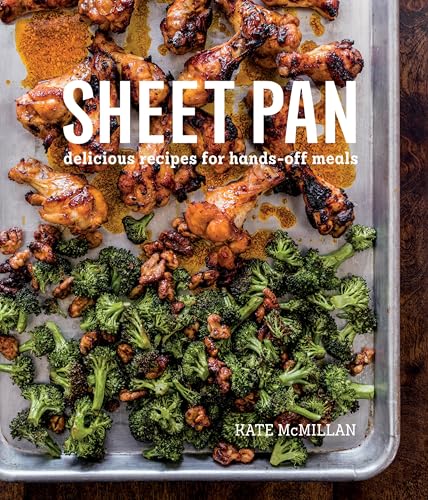

Restaurant-Grade Durability: Crafted with commercial-grade carbon steel, our premium bake pans promise unmatched durability and reliability. Designed for use at home, these cookie sheet oven pans bring professional baking performance right into your home kitchen.
6. Roasted Butternut Squash
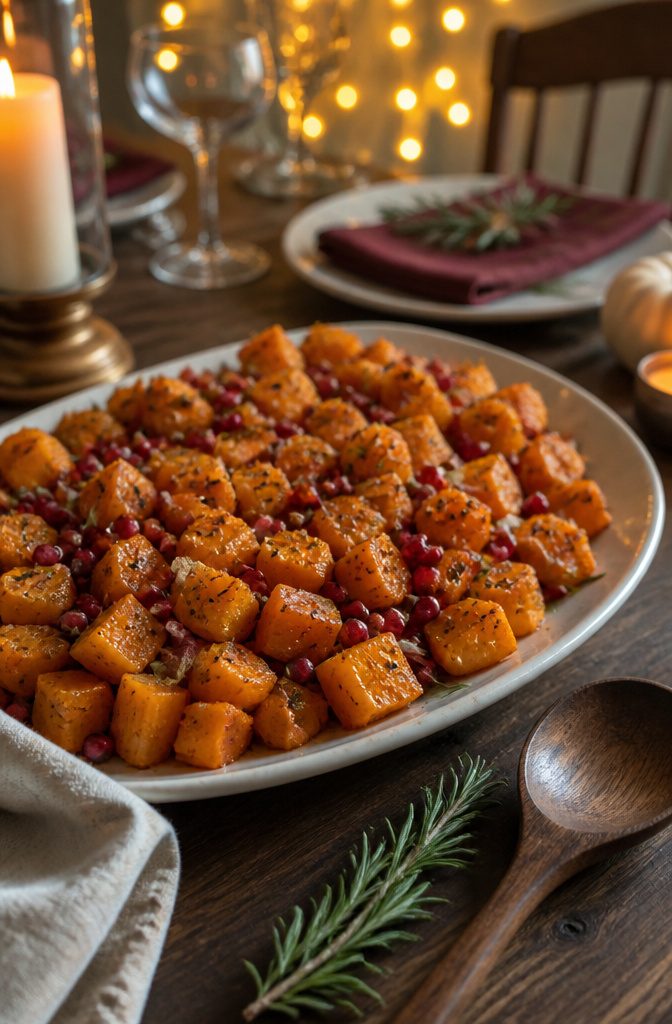
A heavy chef’s knife and a sturdy vegetable peeler are the only tools you need to break down a butternut squash into rough cubes or thick wedges. The prep takes maybe ten minutes, and from there the oven does the work. I roast the pieces at fairly high heat until the edges turn deeply brown and almost candied, which happens somewhere past the thirty-minute mark depending on how crowded the pan is.
The natural sweetness intensifies as the squash caramelizes, so the finished dish needs little more than salt, pepper, and a light gloss of olive oil or melted butter. That restrained approach keeps it comfortable beside classic turkey and stuffing, though the same squash works on a more contemporary table with a scattering of pomegranate seeds or a thread of hot honey.
What makes this a reliable choice for a busy Wednesday or Thursday is the forgiveness. Undercooked squash is still edible; slightly overcooked squash just has more crunch and char. One large squash feeds six to eight people as a side, and the pan can hold other vegetables if oven space is tight. Cleanup is the sheet pan and the cutting board.

Simple varsity typography celebrates the classic holiday side Green Bean Casserole with a clean casserole dish icon, perfect for home cooks and Thanksgiving hosts.


7. Maple-Roasted Carrots
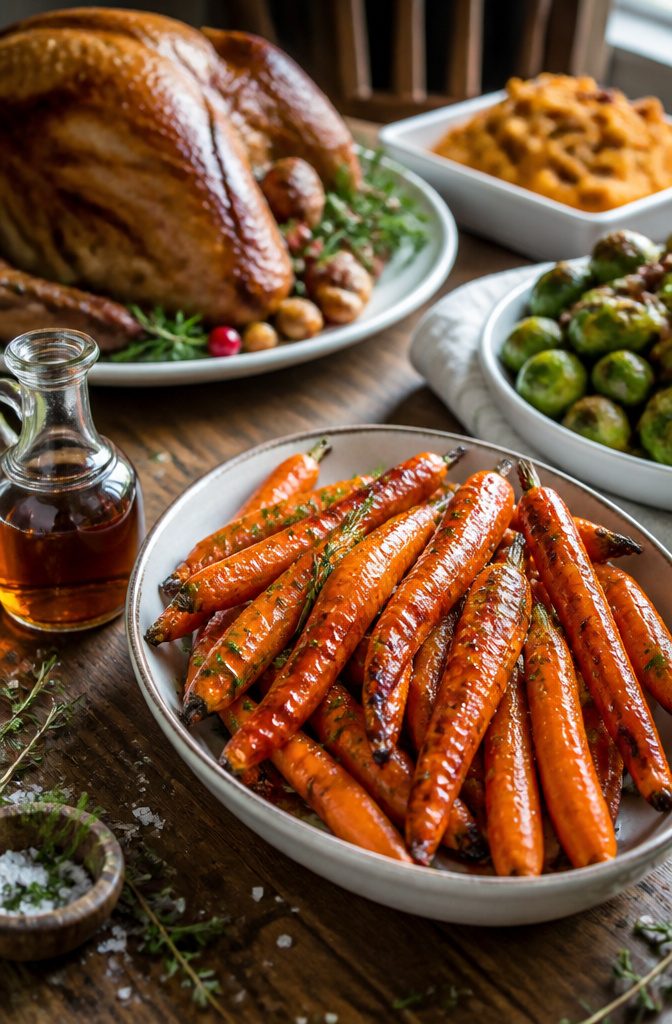
Plain steamed carrots disappear fast on a crowded Thanksgiving table, and not because anyone’s reaching for seconds. Maple syrup changes the math entirely: it reduces in the oven’s dry heat into a thin, lacquered glaze that reads as savory first and sweet only after, especially with a fat pinch of salt and some thyme leaves crisped right onto the surface.
The method is weeknight-simple. Cut the carrots on a long bias so more flat edge hits the hot pan, toss with oil and a modest pour of grade A maple, then roast at fairly high heat until the tips char and the middle goes tender. The syrup bubbles and darkens where it pools; you want that, though you’ll need a soaked baking sheet or a liner you can throw away, because scrubbing caramelized sugar off bare metal is not how anyone wants to spend the holiday.
What sells this to the traditionalists at my table is that the carrot still tastes like itself. The maple amplifies rather than masks, and the finished dish sits comfortably between the marshmallow-topped casserole and the unadorned green beans without confusing the plate.

PREMIUM QUALITY: Bruce's Candied Yams are made from carefully selected sweet potatoes, kettle-simmered to perfection in sweet syrup CONVENIENT PACK: Set includes three...
8. Vegetable Pakoras
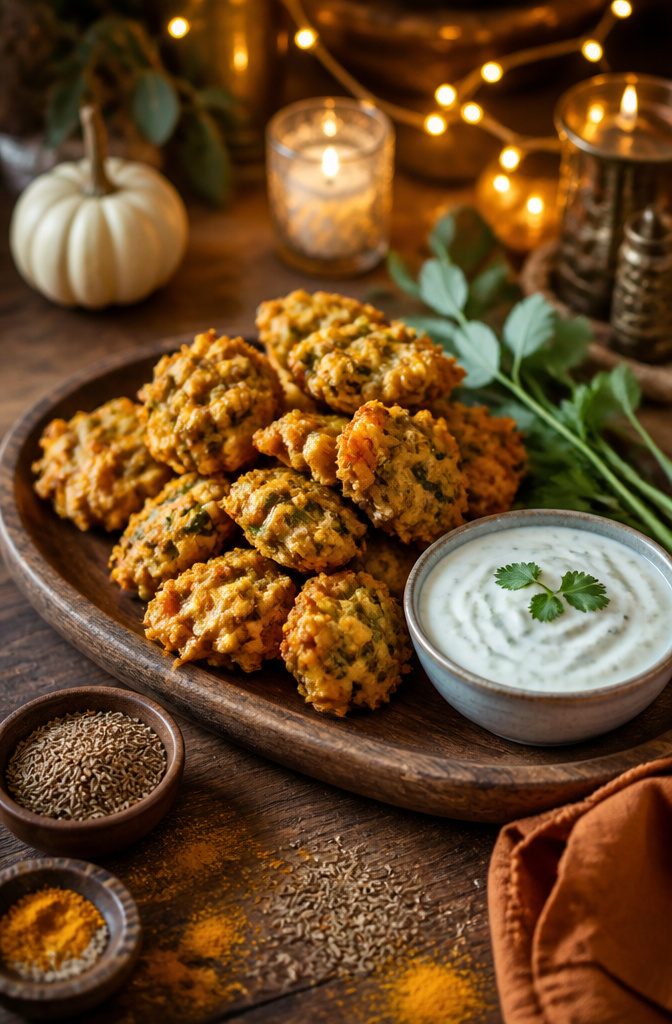
A 35-minute chickpea flour batter turns sliced potatoes, onion, and spinach into crisp vegetable pakoras that hold their own against heavier Thanksgiving plates. The batter mixes chickpea flour with water, turmeric, cumin, lemon juice, and salt; a little all-purpose flour stiffens it, though you can leave that out for gluten-free eaters and accept a more delicate texture. Whole coriander seeds and red chili flakes toasted briefly in oil give the fritters the bright, pointed heat that makes them taste like proper restaurant takeout rather than a freezer-aisle compromise.
This is not a traditional Thanksgiving side, and that is exactly its use. At a table where one guest eats vegan, another gluten-free, and a third simply cannot face another casserole, the pakoras answer three requests with one batch. Fried in about an inch of oil in a small saucepan, two or three at a time, they emerge golden and protein-dense enough to satisfy as more than a token gesture. The mixed vegetables shift with what you have; the chickpea flour is the constant, and it carries enough flavor that the fritters need no sauce, though a cilantro raita does not hurt.

One 10.8 oz bag of Birds Eye Steamfresh Whole Green Beans Frozen Vegetable
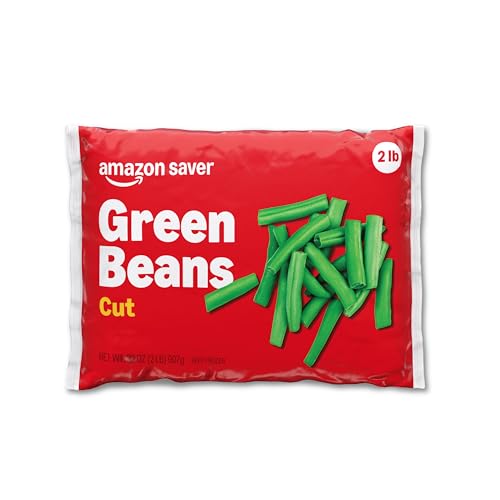
One 32 ounce bag of Frozen Cut Green Beans

Brought to you by Whole Foods Market
9. Creamed Spinach
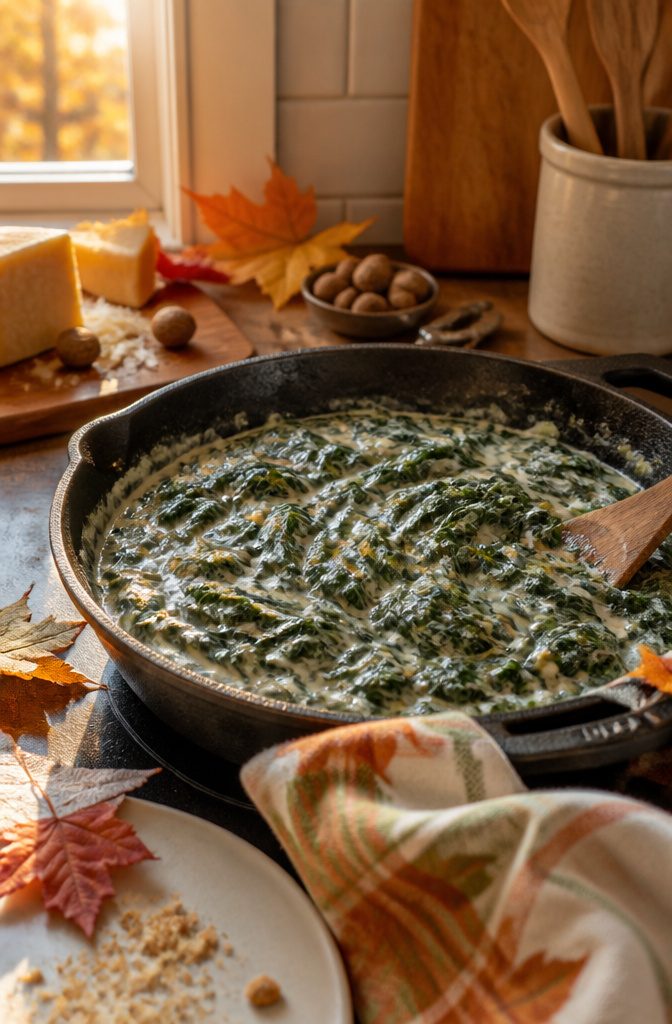
Creamed spinach is one of the few Thanksgiving sides that stays entirely on the stovetop, which already makes it attractive when oven space is the real estate everyone fights over. The base is a straightforward béchamel: butter and flour cooked together until sandy, then milk whisked in until it thickens enough to coat the back of a spoon. Fresh spinach goes in by the armful and wilts down to almost nothing, so what looks like too much greens ends up being just right.
Timing this one matters more than most dishes on the table. Creamed spinach does not reheat well; the sauce breaks and the spinach turns army green and weepy. The goal is to make it just before you sit down, not an hour ahead. If you need something that can hold, the baked casseroles are the better call.
A little nutmeg in the béchamel keeps it from tasting flat, and a grate of parmesan at the end adds salt without making the sauce stringy. I have tried finishing it with lemon zest, but the acidity fights the cream more than it helps. Keep it simple, keep it last, and serve it as soon as it comes off the heat.
10. Garlic Butter Mushrooms
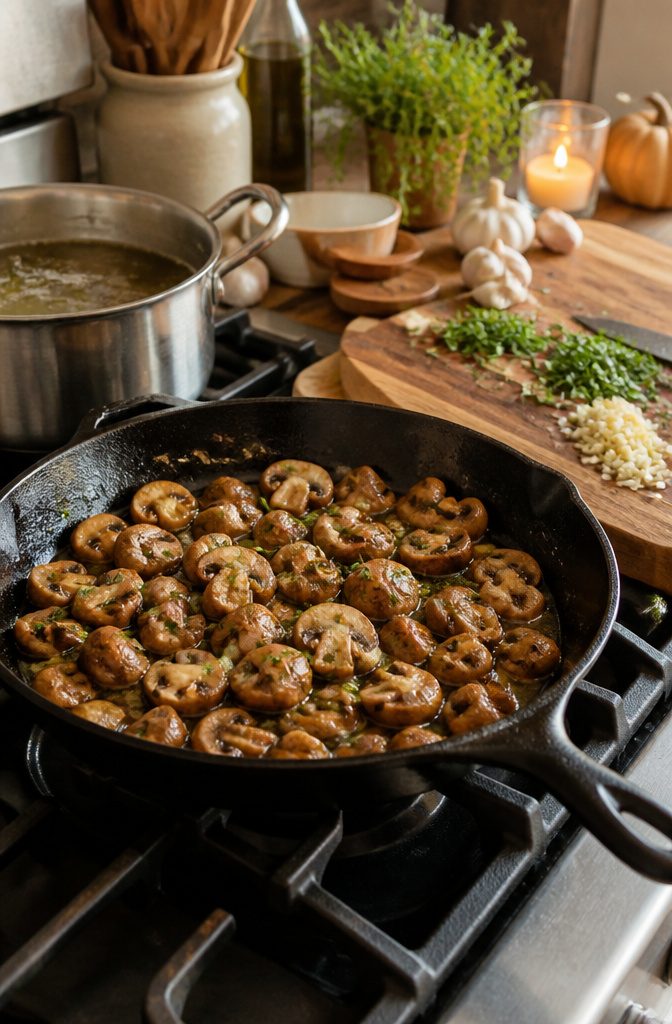
Garlic butter mushrooms clock in at about half an hour from cutting board to serving bowl, making them one of the fastest options on this list. The method is straightforward: a heavy skillet, enough butter to coat the bottom, and garlic minced fine so it perfumes the fat without burning.
What makes this dish worth the slot is its flexibility on Thanksgiving day itself. The mushrooms can be sautéed early and held in a low oven, where the butter keeps them glossy for an hour or more. They also tolerate being finished at the last minute, since the cooking happens entirely on the stovetop and requires no oven space already crowded with turkey and casseroles.
I tend toward creminis for their deeper flavor, though white button mushrooms work if that is what the store stocks. The key is not crowding the pan, which steams them instead of searing. Two batches in the same skillet beats one soggy batch every time.


11. Broccoli Casserole
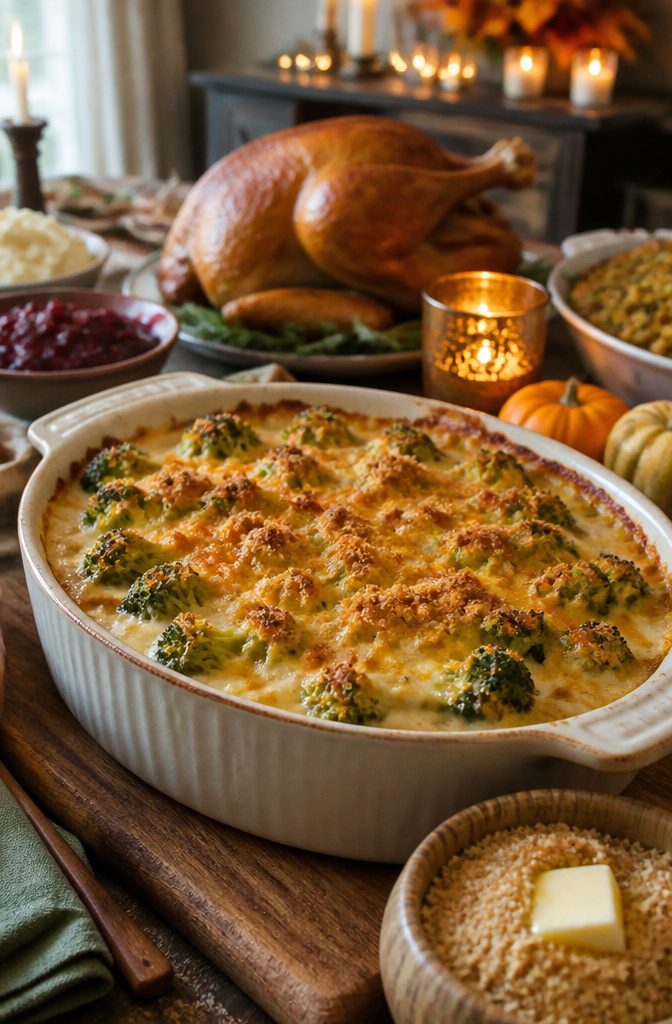
Broccoli casserole follows the same cold-weather logic as the green bean version that shows up on every Thanksgiving table: a creamy base, a vegetable that softens into something almost spoonable, and a crunchy lid of buttered crackers or breadcrumbs. The method is nearly identical. You blanch the broccoli until it still has some pushback, then fold it into a sauce built from condensed soup or a quick béchamel, top with shredded cheese, and bake until the edges bubble and the center goes molten.
What separates a good broccoli casserole from a gluey one is draining the cooked broccoli thoroughly. Water left in the florets will thin the sauce and leave you with a soupy dish that no amount of extra baking fixes. I spread the drained pieces on a towel for five minutes; the wait matters.
The make-ahead path is straightforward. Assemble the casserole through the topping step, cover, and refrigerate for up to a day. Pull it out while the oven preheats, add the crackers or breadcrumbs then so they stay crisp, and bake. The extra rest time actually helps the flavors settle.
12. Zucchini Casserole
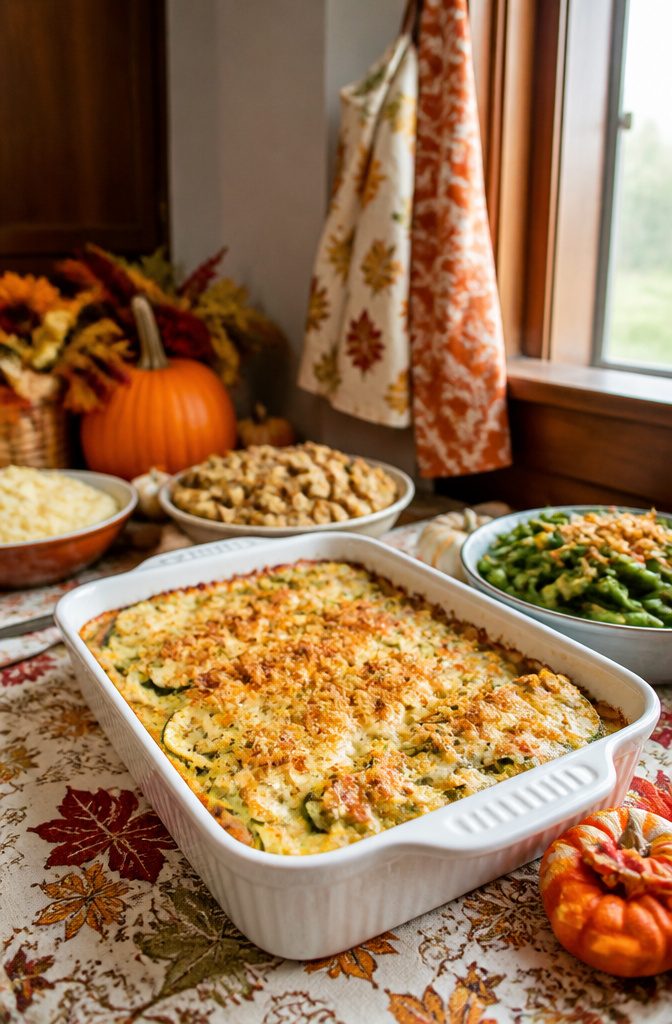
Late-season gardens and overloaded CSA boxes tend to hand you more zucchini than you know what to do with by late November. A savory casserole turns that glut into something that actually belongs on the Thanksgiving table, though the vegetable’s water content makes or breaks the dish. Salting the sliced zucchini and letting it drain for twenty to thirty minutes before baking keeps the casserole from turning soupy, which is the failure mode almost everyone hits the first time.
The setup is straightforward once the moisture is handled. Layer the drained zucchini with sautéed onion, a simple egg-and-breadcrumb binder, and whatever cheese you have around. Cheddar works, gruyere is better. The texture lands somewhere between a bread pudding and a gratin, which feels comforting without competing with the heavier dishes already on the plate. Cleanup is one baking dish and a skillet, which matters on a day when every burner and oven rack is spoken for.
13. Cauliflower Cheese
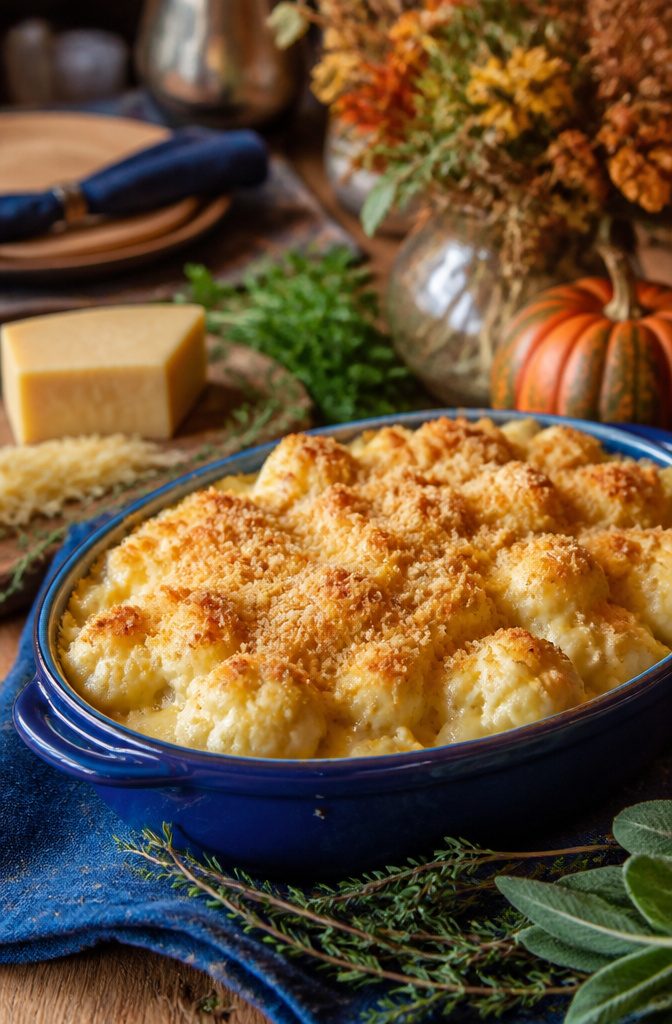
A British pub staple lands on the Thanksgiving table better than you might expect. Cauliflower cheese is exactly what the name promises: tender florets blanketed in a sharp cheddar sauce, sometimes finished with breadcrumbs under the broiler for crunch. The dish carries full comfort-food weight without the heaviness of potatoes, which makes it a practical alternative when half your guests want lighter plates or are watching carbs.
The foreign origin fades once it hits the table. What registers is the familiar combination of roasted brassica and melted cheese, something most American home cooks already understand from cauliflower gratin or mac and cheese experiments. The sauce benefits from a modest hit of mustard powder or Worcestershire to cut the richness; without it, the cheddar can flatten into something one-note.
A broiler finish is worth the extra pan, but a breadcrumb topping turns soggy if it sits more than twenty minutes. Time it to come out just before the turkey is carved, or skip the crumbs entirely and let the browned sauce speak for itself. Either way, the cauliflower should still have some bite before it goes into the dish; mushy florets collapse into the sauce and the whole thing eats like soup.
14. Ratatouille
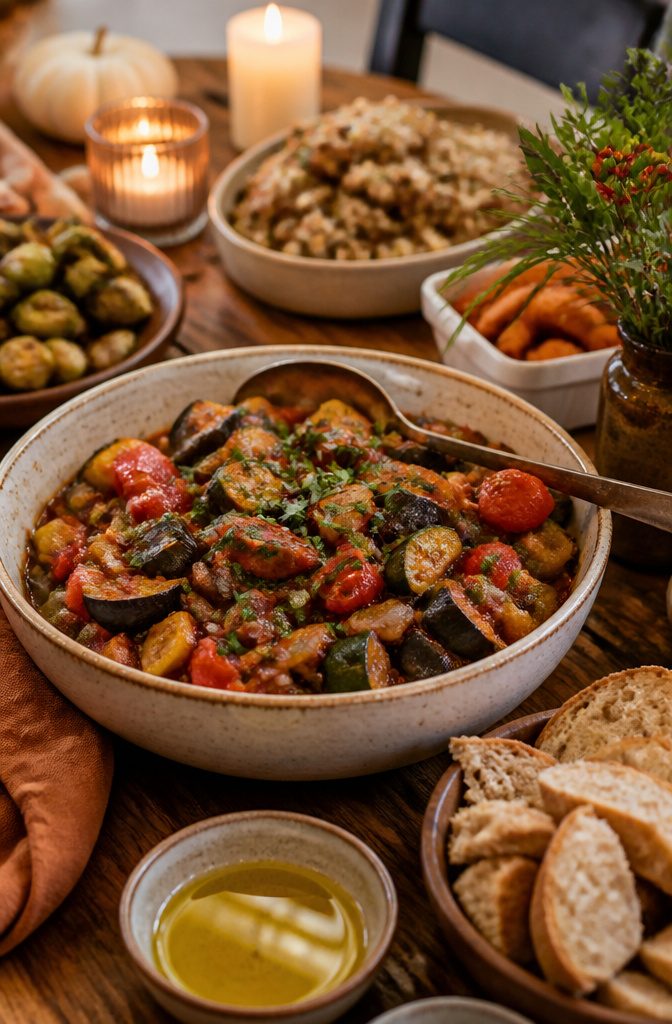
Ratatouille lands on the Thanksgiving table as a quiet rebel: a French vegetable stew that holds its own against heavier classics without trying to outdo them. The slow-cooked tangle of tomatoes, eggplant, zucchini, and peppers collapses into something silkier and more concentrated than the sum of its parts. What starts as a pan of distinct vegetables ends as a unified, almost jammy stew where the edges blur.
The make-ahead advantage is real and worth planning around. A day in the refrigerator lets the flavors settle and deepen, and the texture actually improves as the vegetables continue to soften and absorb the herbed tomato base. Serve it room temperature or gently warmed; either way, it frees up stove space when the turkey demands attention. A heavy Dutch oven and patience matter more than technique here: the vegetables need time to release their water and then slowly concentrate again, which takes the better part of an hour. Rush it and you get steamed vegetables in tomato sauce; give it time and you get the real thing.
Make-Ahead Timeline
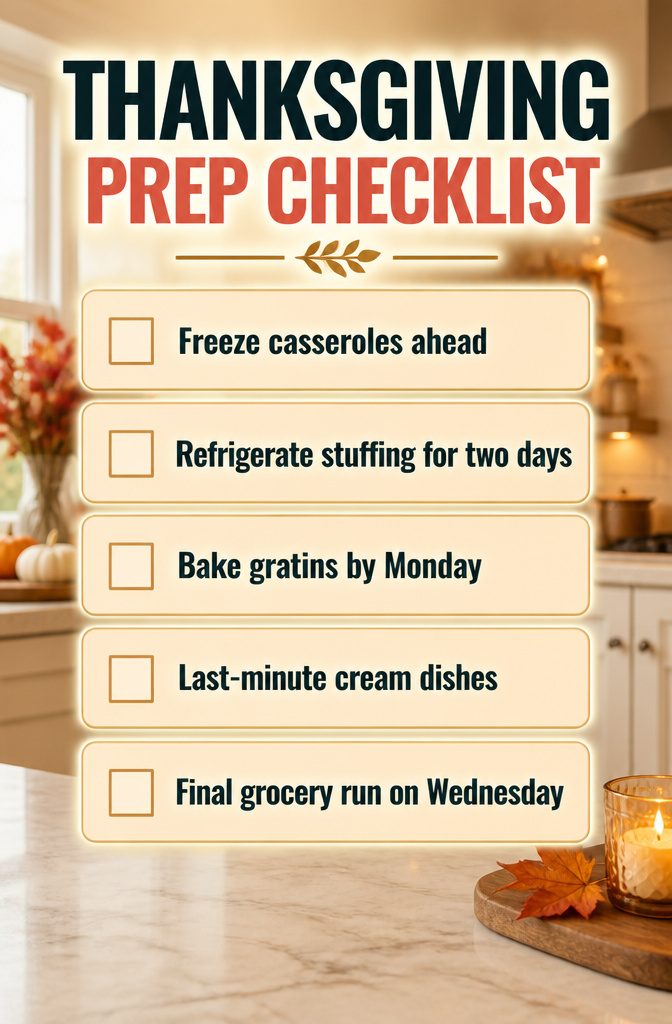
Not every dish on this list cooperates with a busy Tuesday prep schedule, and the ones that do fall into three clear buckets. Sweet potato casserole and green bean casserole both freeze fully assembled, which makes them the real workhorses of this lineup. I build them through the crumble or fried onion topping, wrap tight, and thaw overnight in the fridge before baking.
Refrigerator hold gets you the next tier. Stuffing and gratins sit fine for two days once baked, or three if you stop at assembly and bake day-of. Creamed spinach and garlic mushrooms are the outliers that demand last-minute attention; the dairy breaks and the mushrooms weep if they sit, so those hit the stove while the turkey rests.
The three-day mark is where I personally draw the line for anything with cream or eggs. Gratins get made Monday. Casseroles head to the freezer by Tuesday. Wednesday is for the last cold-weather run to the store, because the one thing no timeline fixes is a forgotten ingredient.
Vegetarian and Vegan Plates
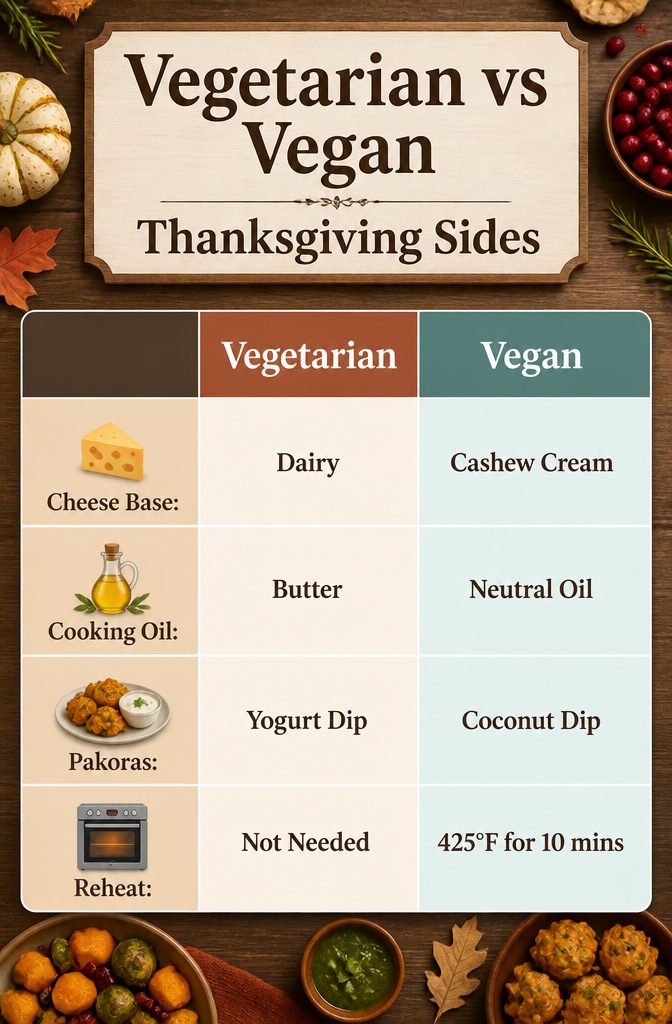
Most of the Thanksgiving vegetable sides in this collection are already vegetarian by default. The cauliflower cheese is the one that needs attention if you are cooking for mixed diets. A cashew cream base, soaked and blended until smooth, replaces the dairy without the grainy texture that store-bought vegan cheeses often leave behind. I have seen that swap work well enough that omnivores do not notice unless someone mentions it.
The roasted vegetables are simpler. Oil instead of butter is an even trade; use a neutral oil with a high smoke point so the squash or Brussels sprouts still brown properly. The flavor shifts slightly, but the technique does not change at all.
For the pakoras, the fritters themselves are vegan as written: chickpea flour, vegetables, and spices bound with water. The yogurt-based cilantro dipping sauce is what breaks the diet. Swap in a coconut or cashew version, or skip a creamy dip entirely and serve them with chutney or sweet chili sauce straight from the bottle. The pakoras reheat at 425°F for 10 minutes if you are frying ahead, which matters more for a crisp result than any ingredient substitution.
Classic Against Modern Balance
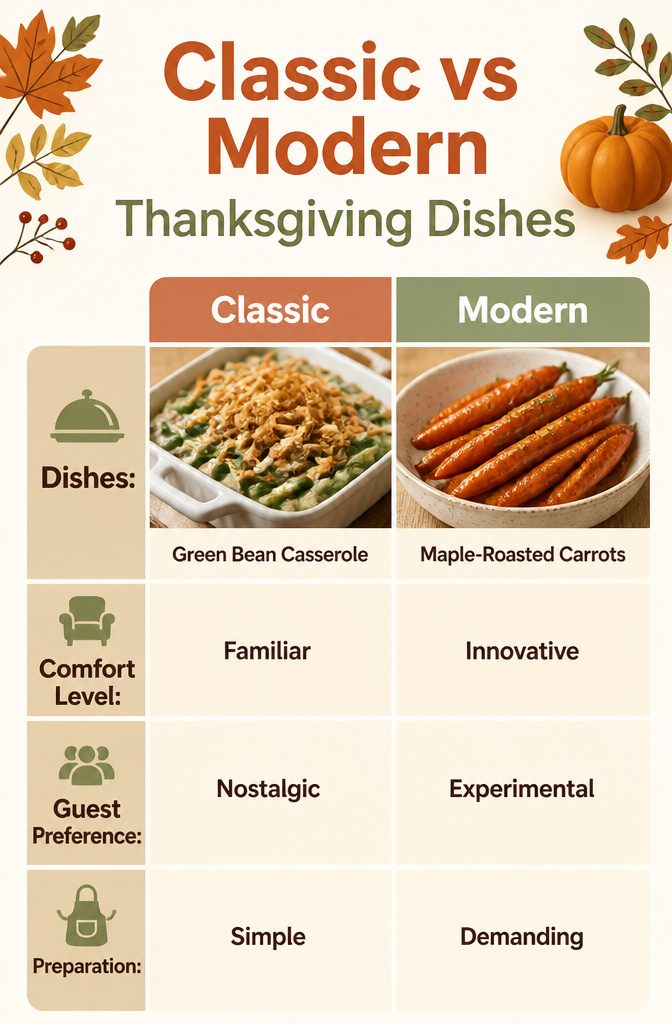
The Thanksgiving table tells a story whether you plan it to or not. Guests who drove four hours for your mother’s stuffing will notice if every dish is new this year, and the cousin who finally agreed to try Brussels sprouts after thirty-two years will retreat to the bread basket if nothing looks familiar.
Two classics for every modern dish keeps both camps fed without turning dinner into a negotiation. That ratio shifts with the crowd: a table of old college friends can handle more experimentation, while the first holiday with new in-laws probably leans heavier on the expected. Green bean casserole and mashed potatoes do the nostalgic work quietly; they let a dish like maple-roasted carrots or vegetable pakoras read as an addition rather than a replacement.
Host comfort matters as much as guest expectation. A new recipe that demands last-minute frying or constant basting will rattle you when five people are already in your kitchen asking where the corkscrew is. The modern dishes that actually make it to my table are the ones I tested on a weeknight in October, not the ones that looked beautiful in a magazine and required six pans. If the pakoras feel risky, serve them as a small passed bite before the meal rather than a plated side. The stakes drop, and you still get the point across.
Flavor Profiles by Method
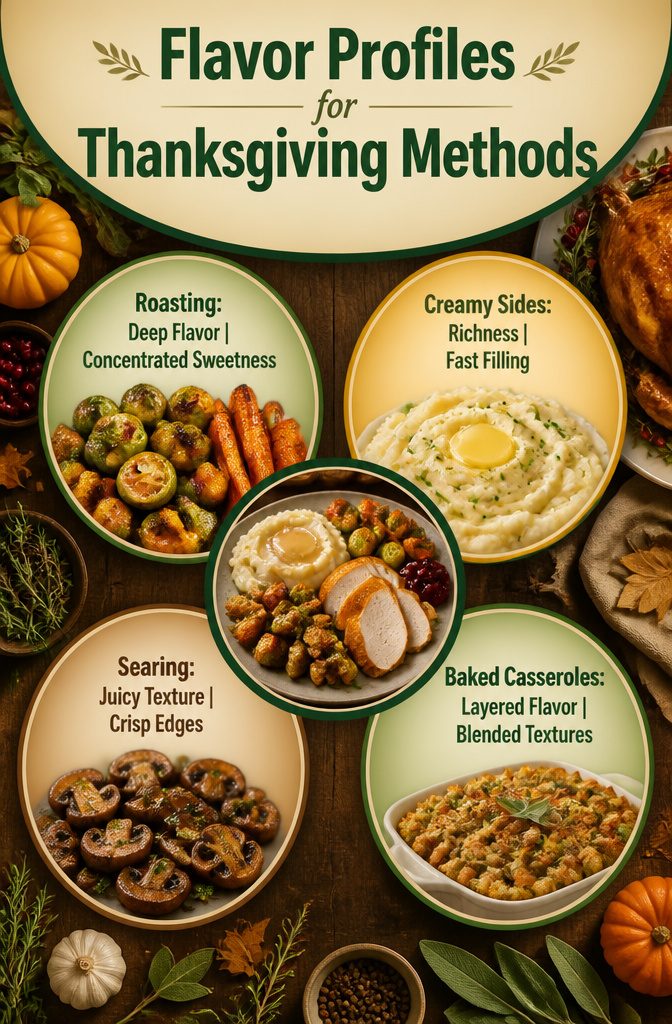
Roasting does something almost unfair to vegetables. The dry heat pulls water out slowly, so the natural sugars concentrate and the edges char while the centers stay tender. Brussels sprouts, butternut squash, and maple-glazed carrots all work this way, and the result is always deeper and more savory than the raw ingredient promised. The risk is stacking too many of them. Three roasted dishes on one plate start to taste like one roasted dish with different shapes.
Creamy sides build richness through a different path. Mashed potatoes, cauliflower cheese, and creamed spinach all rely on dairy fat and starch to carry the flavor, which makes them satisfying in a way that roasted vegetables rarely match. They also fill the plate faster and heavier, so one is usually enough unless your crowd expects seconds of everything.
High-heat searing lands somewhere between the two. Garlic butter mushrooms get crisp at the edges from a hot skillet but stay juicy inside, and that quick cooking keeps the texture assertive rather than soft. They wake up a plate that has gone too smooth.
Baked casseroles and stuffing operate on layering: flavors stacked and fused over time, textures blended rather than distinct. The trick for a balanced Thanksgiving table is mixing exactly two of these methods, never three or four. Two roasted sides compete; one roasted plus one creamy gives you contrast without confusion.
Frequently Asked Questions
What are some easy Thanksgiving vegetable sides?
Easy Thanksgiving vegetable sides include green bean casserole, which comes together in 35 minutes from pantry staples; garlic butter mushrooms, ready in about half an hour on the stovetop; and roasted butternut squash, where the oven does most of the work after ten minutes of prep. These dishes minimize hands-on time when the holiday already demands attention elsewhere.
How do you make a vegetarian Thanksgiving side dish?
Most Thanksgiving vegetable sides are already vegetarian by default, including roasted Brussels sprouts, maple-roasted carrots, and sweet potato casserole. For dishes that normally rely on dairy, like cauliflower cheese, a soaked and blended cashew cream replaces the standard sauce without the grainy texture that store-bought vegan cheeses often leave behind.
What are some make-ahead Thanksgiving sides?
Sweet potato casserole and green bean casserole are the real workhorses; both freeze fully assembled and just need an overnight thaw in the refrigerator before baking. Stuffing and gratins also cooperate well, sitting fine for two days once baked or three days if you stop at assembly and bake on Thanksgiving itself.
What is a good alternative to mashed potatoes?
Cauliflower cheese carries full comfort-food weight without the heaviness of potatoes, making it a practical alternative when guests want lighter plates or are watching carbs. The dish pairs tender cauliflower florets with a sharp cheddar sauce, sometimes finished with breadcrumbs under the broiler for crunch.
How long does it take to prepare Thanksgiving vegetable sides?
Preparation times range widely depending on the dish and method. Green bean casserole and garlic butter mushrooms each clock in around 30 to 35 minutes. Creamy mashed potatoes run about an hour and three quarters including peeling and simmering. Slow-cooked dishes like ratatouille need the better part of an hour for the vegetables to properly concentrate.